

Iran Proposes Toll System for Ships in Strait of Hormuz Amid Ongoing Conflict

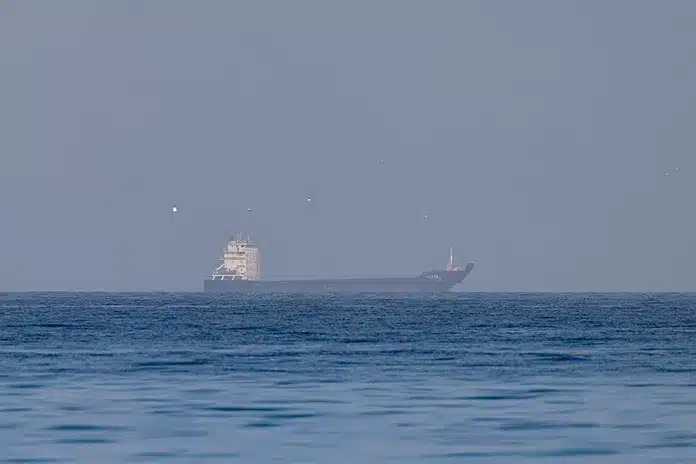
The ongoing conflict in the Middle East has plunged global oil markets into turmoil, primarily due to Iran’s increasing control over the strategically vital Strait of Hormuz. As tensions escalate, Iran has threatened to completely close this crucial passage if the United States targets its power plants. With the situation approaching the one-month mark, Iran is also moving to formalize its authority over the Strait by proposing a system of charges for vessels seeking safe passage, further complicating an already precarious energy supply landscape.
Iran’s Proposed Charges for Passage
As the disruption in shipping nears a month, Iran’s parliament is reportedly drafting a bill that would impose charges on vessels navigating through the Strait of Hormuz. According to the semi-official Fars news agency, this proposal could be finalized soon, granting Iran legal authority to enforce these fees. An unnamed lawmaker indicated that the legislation aims to bolster Iran’s control over this critical waterway.
Since the onset of US and Israeli military actions against Iran, shipping activity has significantly dwindled. Only a handful of vessels, primarily those associated with Iran or China, have managed to cross the Strait, often after receiving clearance from the Islamic Revolutionary Guard Corps. Reports suggest that an informal system is already in place, where ship operators are asked to provide details about their cargo and routes, sometimes facing demands for payments as high as $2 million. This informal toll system, coupled with promises of safe passage, presents a dilemma for shipping companies, who are eager to move cargo but wary of the associated risks and sanctions.
Concerns Over Alternative Shipping Routes
In light of the disruptions in the Strait of Hormuz, some shipping companies are considering rerouting their vessels through the Red Sea. However, this alternative is fraught with its own challenges. Just recently, Iran issued threats regarding the safety of vessels attempting to navigate through the Bab el-Mandeb Strait, which lies between Yemen and Djibouti and is approximately 1,200 miles from Hormuz. The potential for military threats from Iranian proxies adds another layer of uncertainty to global shipping routes already under strain.
The Strait of Hormuz is a critical artery for global oil and gas transportation, and its ongoing disruption has led to reduced tanker traffic and rising fuel prices. As Iran seeks to tighten its grip on the situation by proposing transit fees, questions arise about the international community’s ability to intervene and restore normal shipping operations through this vital passage.
Challenges in Reopening the Strait of Hormuz
The prospect of returning to normal shipping operations in the Strait of Hormuz remains uncertain. Even if hostilities were to ease, significant challenges would still need to be addressed. The Strait’s geography complicates matters, as it stretches approximately 140 miles and narrows to just 25 miles at its tightest point. This constricted space leaves vessels vulnerable to potential attacks from the shore or small boats. Fully loaded tankers take considerable time to cross, and the shallow waters increase the risk of mines being laid.
Security arrangements will be crucial for any reopening of the Strait. Naval escorts could be one solution, with warships accompanying commercial vessels to protect against various threats. However, this would require clearing shipping lanes of mines, a process that can only begin once active hostilities cease. Additionally, air support would be necessary to monitor the area for incoming threats. The complexity of coordinating such efforts among multiple nations adds to the difficulty of restoring safe passage.
Impact on Global Shipping and Energy Supplies
The ongoing conflict and the resulting disruptions have led to rising costs for shipping companies. Many are grappling with increased insurance premiums, additional payments for crews operating in conflict zones, and expenses related to maintaining cargoes as vessels remain stranded or delayed. While a limited number of ships continue to transit under specific conditions, most operators are exercising caution.
The disruption has also adversely affected energy supplies, with oil production in parts of the Persian Gulf being curtailed and some refineries sustaining damage during the conflict. This has tightened supply and driven prices higher, with Brent crude recently surpassing $114 a barrel and remaining above $100. As the situation evolves, the path to reopening the Strait of Hormuz remains fraught with uncertainty, shaped by Iran’s actions, ongoing military tensions, and the risk of further escalation impacting global energy flows.
Observer Voice is the one stop site for National, International news, Sports, Editor’s Choice, Art/culture contents, Quotes and much more. We also cover historical contents. Historical contents includes World History, Indian History, and what happened today. The website also covers Entertainment across the India and World.
Follow Us on Twitter, Instagram, Facebook, & LinkedIn

