

Iran Fully Closes Strait of Hormuz: Implications for India’s Crude Oil, LPG, and LNG Supplies

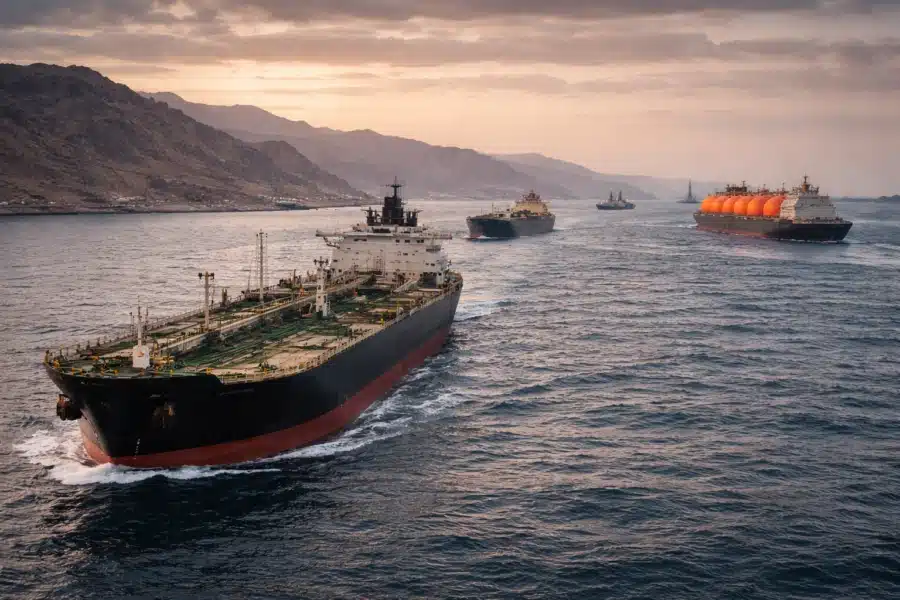
Open and closed, the Strait of Hormuz has become a focal point in the escalating tensions between the United States and Iran. This vital waterway is crucial for nearly 20% of the world’s oil trade, and its blockade has significant implications for economies reliant on Middle Eastern energy supplies. India, in particular, is affected as it depends on this corridor for crude oil, liquefied petroleum gas (LPG), and liquefied natural gas (LNG). Recent developments have seen Iran intermittently allowing Indian vessels to pass, but the situation remains precarious as Iran has once again closed the strait amidst ongoing conflicts.
Iran’s Hormuz Blockade and Attacks on Indian-Flagged Vessels
The situation in the Strait of Hormuz escalated recently when the Indian-flagged tanker Desh Garima successfully navigated through the strait, carrying crude oil. However, two other vessels, Sanmar Herald and Jag Arnav, faced hostile actions from Iran’s Islamic Revolutionary Guard Corps (IRGC) while attempting to transit the area. These vessels were fired upon and forced to retreat, although no crew injuries were reported. In response to these incidents, India summoned Iranian ambassador Mohammad Fathali to express its serious concerns. During the meeting, Indian Foreign Secretary Vikram Misri emphasized the importance of ensuring the safety of merchant vessels and seafarers. He urged the ambassador to communicate India’s position to Tehran and called for the immediate restoration of safe passage for Indian ships through the strait. The Iranian ambassador agreed to relay these concerns to the relevant authorities in Iran.
Impact on India’s Energy Supply
The ongoing tensions have left several Indian and foreign ships stranded near the Strait of Hormuz, awaiting clearance to proceed to Indian ports. Current data indicates that 13 Indian vessels are located in the Persian Gulf, with additional ships in the Gulf of Oman, Gulf of Aden, and the Red Sea. The Indian petroleum ministry has identified 17 vessels for evacuation, including four LPG carriers, three LNG carriers, and ten crude oil tankers. Among these, three are Indian-flagged, while the rest are foreign vessels. Additionally, the chemicals and fertilizers ministry has prepared a list of 16 more ships for evacuation, including the Jag Arnav, which was targeted by the IRGC. The conflict has caused disruptions in India’s energy supply, particularly affecting LPG availability, prompting the government to prioritize domestic consumption over commercial availability.
Geopolitical Ramifications and Future Outlook
As the US-Iran conflict continues, India has faced significant challenges in securing its energy needs. The government has reported ongoing disruptions in domestic LPG supplies, although distribution to households remains a priority. On the commercial side, allocations have been raised to approximately 70% of pre-crisis levels. In response to the conflict, India has increased its procurement of Russian crude oil, with imports nearing their June 2023 highs. This shift has been facilitated by the US administration’s decision to waive sanctions on Russian oil, allowing for continued access to this critical resource. Experts suggest that while India’s crude oil supply appears stable due to diversified sources, challenges may persist in securing LPG and LNG supplies. The situation remains fluid, and should the blockade continue, particularly against Indian-flagged vessels, supply challenges could emerge in the near future.
Observer Voice is the one stop site for National, International news, Sports, Editor’s Choice, Art/culture contents, Quotes and much more. We also cover historical contents. Historical contents includes World History, Indian History, and what happened today. The website also covers Entertainment across the India and World.

