

Impact of 500% Tariff on Russian Oil Purchases: Implications for $120 Billion India-US Trade

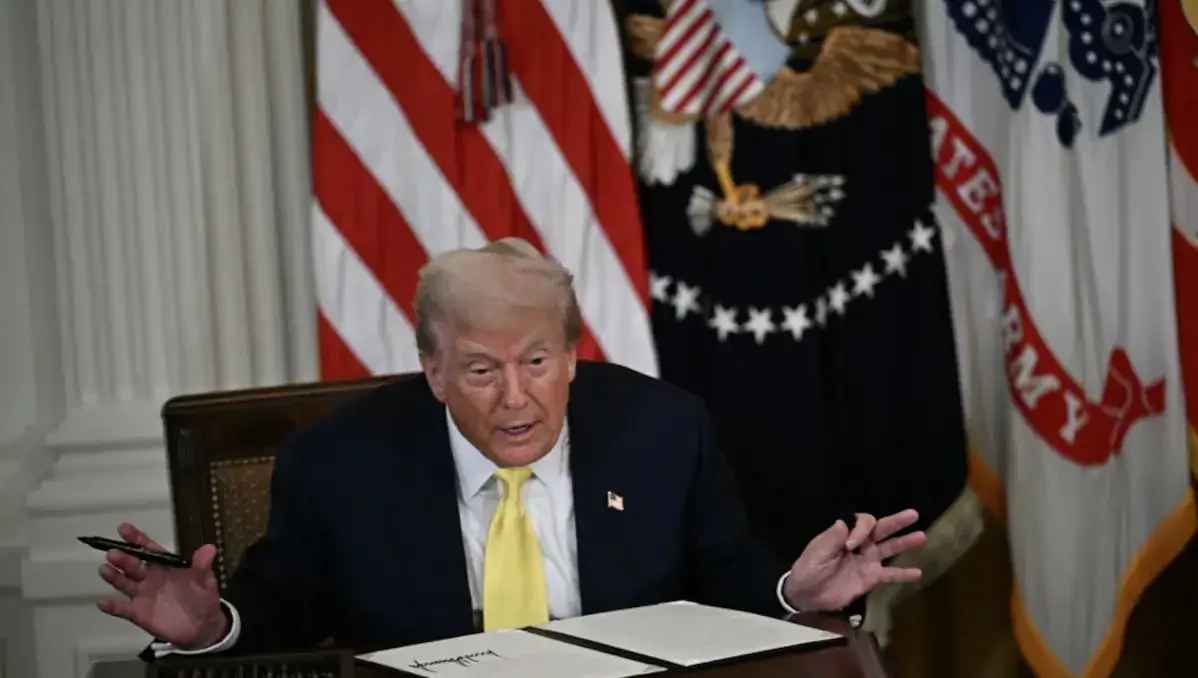
Will India soon face a staggering 500% tariff on its exports to the United States? This pressing question arises following remarks from U.S. Senator Lindsey Graham, who indicated that President Donald Trump has approved a bill aimed at imposing such tariffs on countries trading with Russia. While both China and India are significant importers of Russian crude oil, India appears to be the primary target of this proposed legislation. If enacted, the bill could severely disrupt India’s $120 billion export market to the U.S., raising concerns about the future of trade relations between the two nations.
Understanding the Proposed 500% Tariff Bill
The legislation in question, known as the Sanctioning Russia Act of 2025, has been introduced by Senator Lindsey Graham and Senator Richard Blumenthal. This bill seeks to impose secondary tariffs and sanctions on nations that continue to financially support Russia amid its ongoing conflict in Ukraine. Specifically, it outlines a 500% tariff on secondary purchases and resale of Russian oil. The bill has garnered support from nearly all members of the Senate Foreign Relations Committee, indicating a strong bipartisan push for its passage. Graham emphasized that this legislative move is designed to leverage pressure on countries like China, India, and Brazil, which are seen as enabling Russia’s military actions through their oil purchases. He expressed optimism about securing a robust bipartisan vote on the bill, potentially as soon as next week.
Impact on India-U.S. Trade Relations
If the bill is passed, the implications for India’s trade with the U.S. could be dire. According to Ajay Srivastava, founder of the Global Trade Research Initiative (GTRI), a 500% tariff could effectively halt India’s exports to the U.S., which currently amount to $120 billion annually. The U.S. has already imposed tariffs of up to 50% on Indian goods, including a 25% tariff linked to India’s energy purchases from Russia. This existing pressure raises concerns that the proposed legislation would disproportionately target India, while China, despite being a major buyer of Russian oil, has so far avoided similar punitive measures. The selective nature of these tariffs has led to speculation that India may bear the brunt of U.S. trade actions, further straining bilateral relations.
Legal and Implementation Challenges
The proposed tariff strategy faces significant legal hurdles and uncertainties regarding its implementation. President Trump has previously opted to use emergency powers under the International Emergency Economic Powers Act to impose tariffs, rather than pursuing legislative routes. However, this approach is currently under legal scrutiny, with a Supreme Court decision anticipated soon. Should the Graham proposal advance through the Senate, it would introduce additional complexities to the tariff landscape. Notably, while U.S. customs can impose duties on physical goods, there is no established framework for levying tariffs on services, which could complicate enforcement. Experts suggest that any escalation may manifest as taxes on payments made by U.S. companies for services sourced from India, rather than direct tariffs on goods.
Calls for a Strategic Response from India
The potential for a 500% tariff has prompted calls for India to reassess its position on Russian oil imports and communicate its stance clearly to Washington. Ajay Srivastava has highlighted the need for India to take decisive action in response to the evolving trade dynamics. He also pointed out the contradictions in U.S. policy, noting that while lawmakers seek to penalize countries for purchasing Russian oil, the U.S. is actively pursuing its own interests in global oil markets, such as seizing Venezuelan oil assets. This inconsistency raises questions about the fairness and transparency of the current trading system, which some critics argue operates more like a jungle than a rules-based order. As the situation develops, the focus will remain on how India navigates these complex trade challenges and its implications for future relations with the United States.
Observer Voice is the one stop site for National, International news, Sports, Editor’s Choice, Art/culture contents, Quotes and much more. We also cover historical contents. Historical contents includes World History, Indian History, and what happened today. The website also covers Entertainment across the India and World.
Follow Us on Twitter, Instagram, Facebook, & LinkedIn

