

Friedrich Hermann Schottky: Pioneer of Automorphic Functions

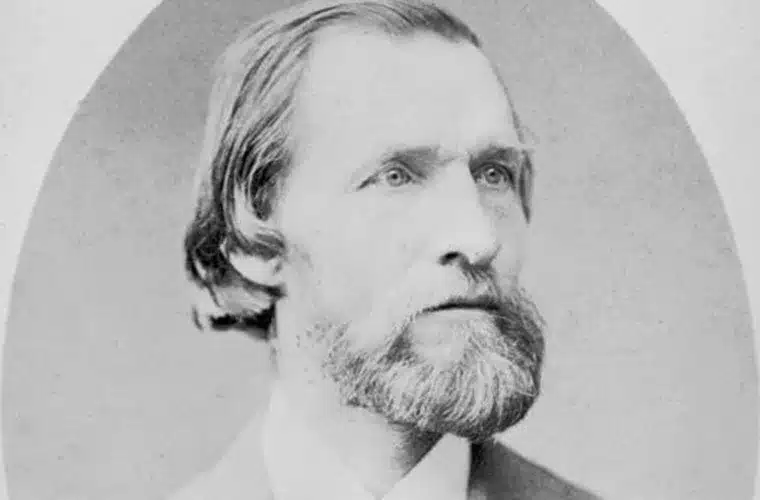
Friedrich Hermann Schottky (24 July 1851 – 12 August 1935) was a German mathematician who worked on elliptic, abelian, and theta functions. He introduced Schottky groups and Schottky’s theorem, foundational concepts in complex analysis and algebraic geometry.
Early Life and Education
Schottky was born in Breslau, Germany (now Wrocław, Poland). His father, Dr. Hermann Friedrich Schottky, was an English teacher, and his mother, Louise Winkler, was a florist. He attended Maria-Magdalenen-Gymnasium from 1860 to 1870, where his classmates included Max Grube, Heinrich Rosin, and Eberhard Gothein. From 1870 to 1874 he studied at the University of Breslau before moving to Berlin.
Career and Achievements
In 1875, Schottky received his doctorate at Friedrich Wilhelm University of Berlin, where he studied under Karl Weierstrass and Hermann von Helmholtz. He began his academic career as a lecturer at the University of Breslau from 1878 to 1882, then served as a professor at the University of Zurich from 1882 to 1892. In 1892, he took a professorship at Philipps University of Marburg, remaining there until 1902.
Through his friendship with Ferdinand Georg Frobenius, Schottky obtained a professorship at Friedrich Wilhelm University of Berlin in 1902, where he remained until his retirement in 1922. He was elected to the Berlin Academy of Sciences in 1903. Schottky authored 55 papers and one book during his career.
Notable Events and Milestones
Schottky’s doctoral thesis on conformal mapping, published in journal form in 1877, introduced automorphic functions and Schottky groups—concepts later developed by Henri Poincaré and Felix Klein. His 1887 paper contributed to the theory of Poincaré series. In algebraic geometry, the Schottky problem—which asks when the abelian varieties of an algebraic curve are Jacobian varieties—originated with Bernhard Riemann but was first addressed by Schottky for the case of genus 4. He made subsequent progress on this problem with his student Heinrich Jung. The problem was formally solved in 1986 by Takahiro Shiota but remains an area of active research.
In complex analysis, Schottky’s theorem establishes the existence of a bound on the value a holomorphic function can take on the unit disk. Among his notable publications were papers in 1887 and 1888 on abelian functions and a 1904 paper on the Picard theorem and Borel inequalities.
Awards and Honors
Schottky was elected to the Berlin Academy of Sciences in 1903, recognizing his contributions to mathematics.
Additional Resources
Schottky married Henriette Schottky (née Hammer, 1858–1947) and had five children, including the physicist Walter H. Schottky and the botanist Ernst Max Schottky. He died in Berlin in 1935. Further biographical and mathematical details are available through Wikipedia and academic historical archives.
Observer Voice is the one stop site for National, International news, Sports, Editor’s Choice, Art/culture contents, Quotes and much more. We also cover historical contents. Historical contents includes World History, Indian History, and what happened today. The website also covers Entertainment across the India and World.

