

Confucius: Ancient China’s Moral Philosopher

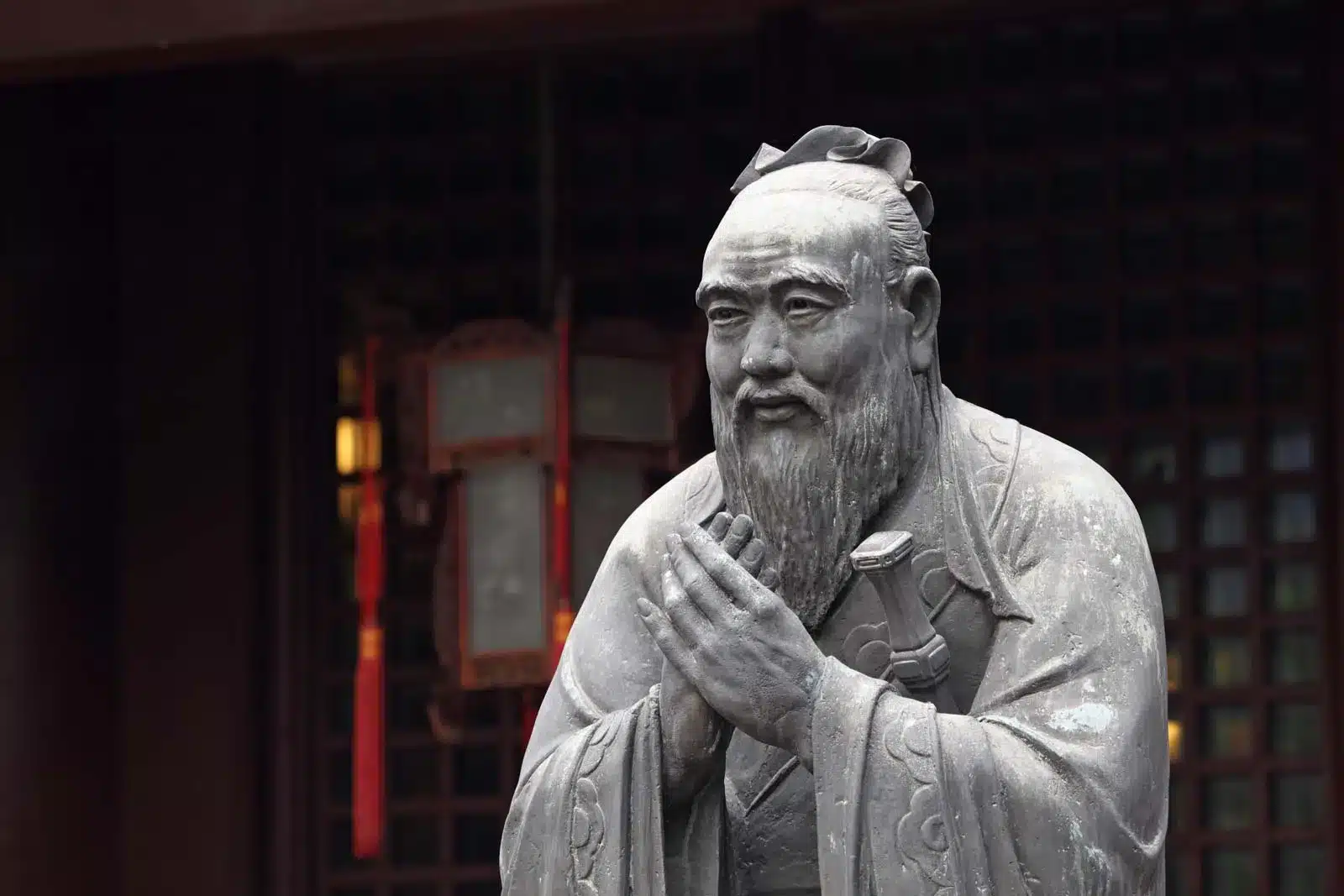
Confucius (c. 551 – c. 479 BCE), born Kong Qiu, was a Chinese philosopher of the Spring and Autumn period traditionally considered the paragon of Chinese sages. His philosophical system, Confucianism, shaped the cultural heritage of the entire Sinosphere and continues to influence Chinese society from ancient times to the modern era.
Early Life and Education
Confucius was born on 28 September 551 BCE in Zou, in what is now Qufu, Shandong. His father, Kong He, was an elderly commandant of the local Lu garrison and died when Confucius was three years old. Raised by his mother Yan Zhengzai in poverty, Confucius was educated at schools for commoners where he studied the Six Arts. At age 19 he married Qi Guanshi, and the couple had their first child, a son named Kong Li, followed by two daughters. When his mother died at less than 40 years of age, Confucius mourned for three years according to tradition, having worked various jobs including bookkeeper and caretaker of sheep and horses to provide her a proper burial.
Career and Achievements
Confucius built a considerable reputation through his teachings during a period of intellectual ferment in Chinese history. In 501 BCE, following the expulsion of the rebel Yang Hu from the state of Lu, Confucius was appointed governor of a town and eventually rose to the position of Minister of Crime. His philosophical teachings emphasized personal and governmental morality, harmonious social relationships, righteousness, kindness, and sincerity. He advocated for filial piety, strong family loyalty, ancestor veneration, and the respect of elders and wives for their husbands, viewing a robust family unit as the cornerstone for ideal government.
Notable Events and Milestones
Confucius considered himself a transmitter of values from earlier periods that he believed had been abandoned in his own time. He championed the Silver Rule, advising, “Do not do unto others what you do not want done to yourself.” His ideas gained prominence during the Warring States period but experienced setback after the Qin conquest. Under Emperor Wu of Han, Confucian ideas received official sanction, with affiliated works becoming mandatory readings for those pursuing careers in government. During the Tang and Song dynasties, Confucianism developed into a system known in the West as Neo-Confucianism. In the 20th century, New Confucianism emerged in the Republic of China as an intellectual movement seeking to apply Confucian ideology in modern contexts.
Awards and Honors
Confucius is traditionally credited with having authored or edited many ancient texts, including all of the Five Classics, though modern scholars exercise caution in attributing specific assertions to him alone, as some associated texts and philosophy originated in more ancient periods. Aphorisms concerning his teachings were compiled in the Analects, though not until many years after his death.
Additional Resources
The life and philosophy of Confucius remain central to understanding Chinese intellectual history and the development of East Asian civilization. Readers seeking deeper exploration of his teachings, the historical context of his era, and the evolution of Confucianism across dynasties will find extensive material in Wikipedia’s biographical entries and specialized academic resources devoted to Chinese philosophy and history.
Observer Voice is the one stop site for National, International news, Sports, Editor’s Choice, Art/culture contents, Quotes and much more. We also cover historical contents. Historical contents includes World History, Indian History, and what happened today. The website also covers Entertainment across the India and World.

