

Documents for Real Estate Transactions: How to Prepare for Signing

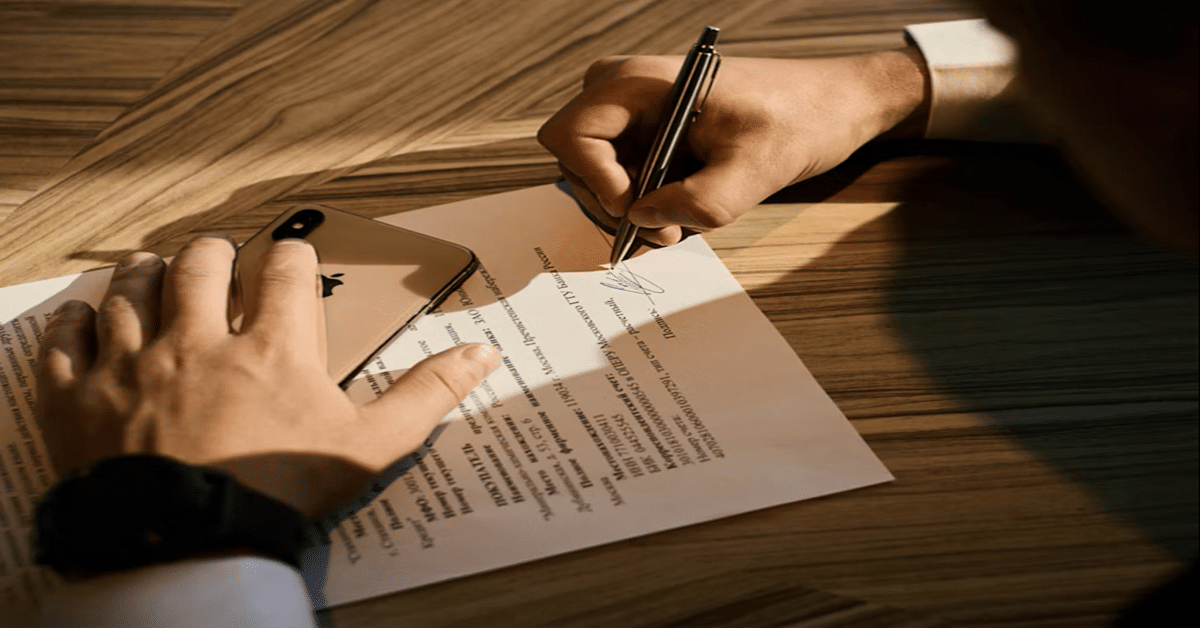
Los Angeles County processes more residential and commercial real estate transactions than almost any other market in the country, and every one of them comes down to the same unglamorous requirement: a stack of paperwork that has to be accurate to the dollar, the date, and the exact spelling of every name on the deed. A title company and a lender don’t close on a verbal agreement between buyer and seller — they close on the documents. California’s own Department of Real Estate makes that point directly in its consumer guide to the escrow process, which walks through how loan documents, prorations, and final closing instructions all have to be reviewed and signed before funds are released. A single missing signature or improperly notarized page is enough to stall a closing that took weeks to arrange.
Preparing to Sign an Agreement
Before a closing is even scheduled, it’s worth confirming that every document has actually been gathered and filled out correctly — not assuming it will get sorted out at the signing table. That review is typically where a notary public LA escrow companies work with comes in: verifying that names, dates, and figures match across every document before anyone signs, rather than catching a mismatch after the fact when it’s harder to fix. Even when documents have already been prepared by professionals, each party still has an obligation to read what they’re signing — checking the property address, the transaction amount, and the closing date against what was actually negotiated, not just trusting that the paperwork reflects the deal correctly. Any discrepancy, however small, is worth resolving before signature rather than after.
California’s Notary Gap — and Why an Out-of-State License Shows Up on Local Paperwork
It can look strange to see a Florida notary commission attached to a Los Angeles closing, but there’s a specific regulatory reason for it. California authorized remote online notarization in 2023 through AB 743 and SB 696, but the state hasn’t actually launched the program yet — full implementation isn’t expected until January 1, 2030, or whenever the Secretary of State finishes the required technology rollout, whichever comes first. In the meantime, California generally recognizes remote notarizations performed by notaries commissioned in states that already permit it, which is why an out-of-state RON notary can legitimately appear on documents for a California property. Florida is one of the states that has allowed remote online notarization since 2019, and under Florida’s notary statute, a Florida-based notary handling a signer located outside the state must confirm — verbally or in writing — that the signer specifically wants a Florida notary to perform the act, since the notarization is then governed by Florida law. Acceptance can still vary by lender, title company, and document type, so it’s worth confirming directly with the receiving party rather than assuming every document qualifies.
Apostilles and Certified Translations for Cross-Border Deals
International buyers and sellers add another layer entirely. A power of attorney or corporate document signed outside the U.S. often needs to be authenticated before a California title company will accept it, and vice versa for documents headed overseas. That’s the purpose of an apostille — a certificate, standardized under the 1961 Hague Convention Abolishing the Requirement of Legalisation for Foreign Public Documents, that lets a public document issued in one member country be recognized in another without a separate embassy legalization process. The U.S. has been a party to the convention since 1981, and the State Department’s Office of Authentications handles apostilles for federal documents, while state-level documents typically go through the relevant secretary of state instead. Documents headed to a country outside the convention need full consular legalization rather than an apostille, and any document not already in English generally needs a certified translation alongside it — two details that are easy to miss until a closing is already delayed.
When a Party Can’t Be There: Power of Attorney Basics
If someone involved in the transaction genuinely can’t attend, the standard fix is a power of attorney — but title companies and lenders scrutinize these more closely than most other closing documents. The American Bar Association’s guidance on powers of attorney recommends that the document clearly name the parties, spell out exactly what authority is being granted, and state any limits the principal wants in place, rather than granting broad, open-ended authority. For real estate specifically, the original — not a copy — generally has to be notarized and recorded in the county where the property sits, and most lenders and title companies strongly prefer a POA limited to that single transaction over a general one, since it narrows the room for dispute later. Expect the title company to contact the absent party directly to confirm they’re aware of the transaction before relying on the document — that verification step is standard practice, not a sign of a problem.
A Practical Checklist Before You Get to the Table
Most closing-day problems trace back to something that could have been caught earlier. Before signing, it’s worth double-checking: that every party’s legal name matches their government-issued ID exactly, that the property address and transaction amount match what was negotiated, that the closing date is correct, and that everyone attending has valid identification with them. If one party can’t attend, the power of attorney should be finalized and — where required — recorded well before the signing date, not arranged the morning of. Any open question, however minor, is worth raising with a notary or document specialist beforehand rather than at the table, where there’s little room to fix it without delaying everyone else involved.
⚠️ We are not an attorney and, therefore, cannot give legal advice about immigration or any other legal matters.⚠️
Observer Voice is the one stop site for National, International news, Sports, Editor’s Choice, Art/culture contents, Quotes and much more. We also cover historical contents. Historical contents includes World History, Indian History, and what happened today. The website also covers Entertainment across the India and World.

