

Delhi High Court Ruling: Absence of Saptapadi Does Not Nullify Hindu Marriage

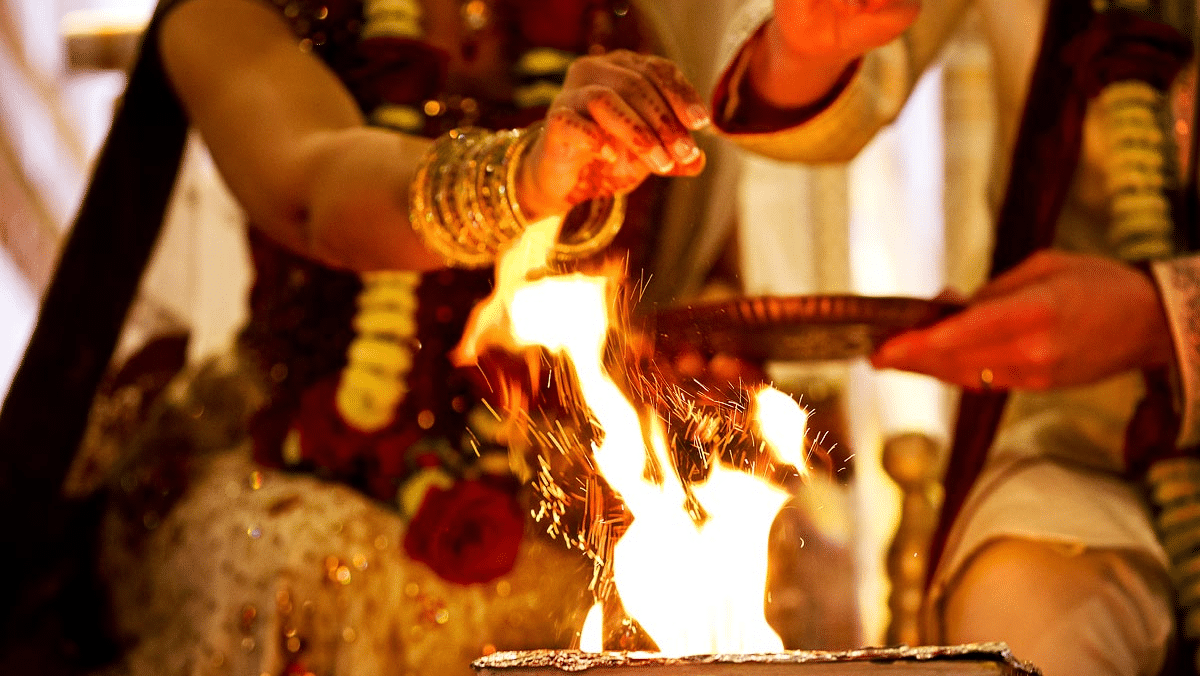
Restating the legal presumption in favor of marriage validity, the Delhi High Court has ruled that the absence of direct evidence for the performance of Saptapadi, the traditional Hindu ritual of taking seven steps before the sacred fire, does not invalidate a marriage. The court emphasized that when parties have undergone some form of marriage ritual and lived together as a couple, the presumption of legitimacy remains strong, especially when a child is born from the union. This decision came from an appeal regarding a Family Court ruling that dismissed a husband’s claim to declare his marriage null and void due to the alleged non-performance of Saptapadi.
Background of the Case
The case arose from a Family Court proceeding where the appellant sought a declaration that his marriage was invalid, claiming essential ceremonies were not performed. The Family Court ruled against him, stating that there was insufficient evidence to support his claims. The husband appealed this decision, arguing that the absence of Saptapadi rendered the marriage void. The Delhi High Court, in its judgment delivered on August 27, 2025, examined the statutory framework under Section 7 of the Hindu Marriage Act, 1955, which governs marriage ceremonies. The court noted that this provision allows for flexibility in the rites and ceremonies performed, rather than mandating a specific ritual.
Legal Interpretation of Marriage Ceremonies
The High Court’s analysis focused on the interpretation of Section 7, which does not require uniformity in marriage rituals. The court clarified that while Saptapadi is significant, it is not an indispensable requirement for a valid marriage. The court stated, “Sub-section (1) of Section 7 confers discretion on the parties to solemnize marriage as per the customs and ceremonies of either party, without mandating any particular ceremony.” This interpretation underscores the importance of examining the surrounding circumstances and evidence rather than strictly adhering to the performance of specific rituals. The court highlighted that the parties had exchanged garlands and lived together as a married couple, which further supported the presumption of a valid marriage.
Arguments Presented in Court
During the proceedings, the appellant’s main argument was based on the lack of evidence for the performance of Saptapadi. He contended that the respondent failed to produce a marriage album documenting the ceremony, which he believed should lead to an adverse inference against her. However, the respondent’s counsel countered that the burden of proof lay with the appellant, who sought to nullify the marriage. The court observed that the appellant did not provide sufficient evidence, such as testimonies from witnesses present at the ceremony, to substantiate his claims. The High Court noted that these omissions significantly weakened the appellant’s argument regarding the absence of necessary marriage rites.
Observer Voice is the one stop site for National, International news, Sports, Editor’s Choice, Art/culture contents, Quotes and much more. We also cover historical contents. Historical contents includes World History, Indian History, and what happened today. The website also covers Entertainment across the India and World.

