

Charles Talbot, 1st Duke of Shrewsbury: Architect of the Glorious Revolution

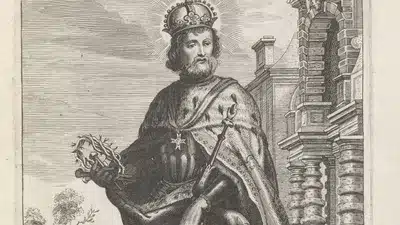
Charles Talbot, 1st Duke of Shrewsbury (15 July 1660 – 1 February 1718) was a British Whig statesman who played a central role in the Glorious Revolution. He was one of the Immortal Seven who invited William of Orange to England to depose King James II.
Early Life and Education
Talbot was the only son of the 11th Earl of Shrewsbury and Anna Maria Brudenell, daughter of the 2nd Earl of Cardigan. His early years were marked by tragedy: his mother became the mistress of the 2nd Duke of Buckingham, who killed Talbot’s father in a duel in 1668. Following this scandal, the young Charles was placed in the care of Protestant relatives, including his grandfather the Earl of Cardigan, despite being raised initially as a Roman Catholic.
He was a godson of King Charles II, after whom he was named. From 1674 to 1678, Talbot studied in Paris. In the spring of 1678 he briefly joined the troops of James, Duke of York, but returned to England in June when the anticipated Anglo-French war did not materialize. In 1679, influenced by the divine John Tillotson, he converted from Catholicism to the Church of England.
Career and Achievements
Talbot was summoned to the House of Lords in 1680 and appointed Gentleman-Extraordinary of the Bedchamber in 1683, indicating favor at the court of Charles II. When James II ascended in 1685, Talbot accepted a military commission to help suppress the Monmouth Rebellion, but resigned in January 1687 after refusing James’s pressure to reconvert to Catholicism.
By 1687 Talbot had begun corresponding with William of Orange, and his home became a meeting place for those opposed to James II. In June 1688 he was one of seven signatories of the letter inviting William to England. He fled to Holland in September and returned with William in November.
Under William III, Talbot became Secretary of State for the Southern Department, succeeding his uncle the Earl of Middleton. He resigned in 1690 due to ill health and disagreements over parliamentary dissolution and the Bill requiring an oath against James. While out of office, he sponsored the Triennial Bill, which the King initially refused to assent to. Talbot returned as Secretary of State in 1694 and was instrumental in securing Commons funding for William’s war against France. On 30 April 1694 he was created Marquess of Alton and Duke of Shrewsbury. He served as one of the regents during William’s absences from England and as Colonel of the Worcestershire Militia in 1697.
In 1696 Sir John Fenwick brought treason accusations against Talbot, though William communicated these to him directly. Talbot’s health remained poor, and in 1700 the King consented to his retirement. From 1700 to 1705 Shrewsbury lived abroad, chiefly at Rome. During this exile he married Countess Adelhida Paleotti.
After returning to England, Shrewsbury avoided politics until April 1710, when he accepted appointment as Lord Chamberlain under the Tory government of Robert Harley, Earl of Oxford. In November 1712 he became ambassador to France and was then appointed Lord Lieutenant of Ireland, returning to England in June 1714. In July 1714 he was made Lord Treasurer, but Queen Anne died in August and George I succeeded her. The new Whig regime forced Shrewsbury from office by 1715, though he retained the position of George’s Groom of the Stool until his death and opposed Whig policies in his final years.
Notable Events and Milestones
Shrewsbury’s signature on the invitation to William of Orange in June 1688 marked his emergence as a leading opponent of James II. His creation as Duke in April 1694 recognized his prominence in William’s government. The treason accusations of 1696 represented a critical moment in his career, though he survived them. His self-imposed exile from 1700 to 1705 was a deliberate withdrawal from public life, during which he married abroad. His return to government service in 1710 under the Tories and subsequent loss of office in 1715 reflected the shifting political landscape following Queen Anne’s death and George I’s accession.
Awards and Honors
Shrewsbury was created Marquess of Alton on 30 April 1694 and Duke of Shrewsbury on the same date. He held the offices of Secretary of State for the Southern Department (1689–1690 and 1694–1700), Lord Chamberlain (1710–1714), ambassador to France (1712–1714), Lord Lieutenant of Ireland (1714), and Lord Treasurer (July 1714). He retained the position of Groom of the Stool to George I from 1714 until his death in 1718.
Additional Resources
For further details on Charles Talbot’s life and role in English political history, readers may consult Wikipedia’s biographical entry and other historical archives documenting the Glorious Revolution and the reigns of William III, Anne, and George I. His correspondence and the records of his various offices provide additional insight into his career and the political complexities of late seventeenth and early eighteenth-century England.
Observer Voice is the one stop site for National, International news, Sports, Editor’s Choice, Art/culture contents, Quotes and much more. We also cover historical contents. Historical contents includes World History, Indian History, and what happened today. The website also covers Entertainment across the India and World.

