

Budget 2026: Streamlining Regulations for Non-Resident Taxpayers

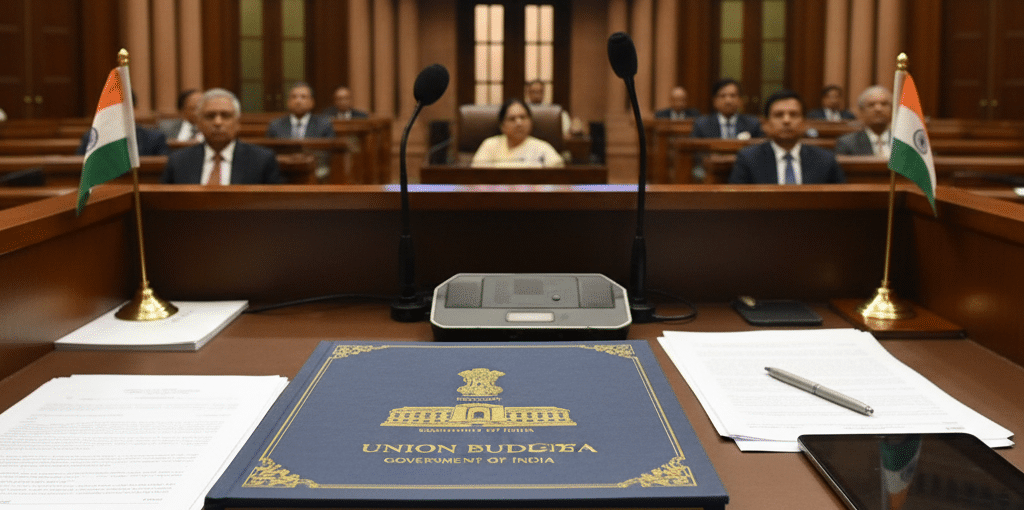
India’s tax system is facing scrutiny as non-resident individuals grapple with complex compliance requirements. As the nation prepares for Budget 2026, industry experts and non-resident taxpayers are advocating for a simplification of tax rules. They argue that the current regulations impose an unnecessary burden, especially for those whose income is minimal or already taxed at source. The call for reform highlights the need for a more streamlined approach to tax compliance for Indians living abroad and foreign investors engaging with Indian businesses.
Current Tax Filing Requirements for Non-Residents
Under the existing tax framework, non-resident individuals must file an Indian tax return if their total income exceeds Rs. 2.5 lakh, even if that income has already been subjected to Tax Deducted at Source (TDS). This requirement applies to various income types, including small interest earnings and dividend income. Tax experts have raised concerns that this leads to unnecessary filings, where no additional tax is owed, thereby clogging the system and imposing extra costs on taxpayers who may have limited financial ties to India. As a potential solution, stakeholders are suggesting that the upcoming Budget 2026 could introduce provisions to exempt non-residents from filing tax returns when no tax is due and they do not have business income in India.
Challenges in Obtaining Tax Residency Certificates
To benefit from tax treaties that often provide lower tax rates, non-resident taxpayers must furnish a Tax Residency Certificate (TRC). This requirement, mandated by Section 90(4) of the Income-tax Act, can be burdensome, especially for small income amounts. The process of obtaining a TRC can be time-consuming and costly, creating hardships for both the non-resident taxpayer and the resident payer. Mahesh Nayak, a tax partner at CNK & Associates, emphasizes that the requirement to file Form 10F electronically to claim treaty relief adds to the complexity. Many foreign tax authorities do not issue TRCs for future residency, complicating matters further. Nayak suggests that allowing alternative documentation to establish tax residency could alleviate some of these challenges, making the process more efficient for non-residents.
Issues with Online Filing of Form 10F
The online submission of Form 10F presents additional hurdles for non-resident taxpayers. If the TRC lacks specific information required by Indian tax rules, the taxpayer must provide that information in Form 10F, which is submitted electronically. However, non-residents without a Permanent Account Number (PAN) in India often face difficulties, such as not receiving One-Time Passwords (OTPs) on foreign mobile numbers. This can lead to unnecessary complications in filing a simple declaration. To address these issues, experts recommend reinstating the option for offline submission of Form 10F, which was previously allowed and could ease the burden on non-resident taxpayers.
Practical Challenges Faced by Non-Residents
Non-resident taxpayers are also required to maintain a bank account in India to facilitate tax payments and receive refunds, even if they do not hold other assets in the country. The e-verification process for income tax returns is linked to Indian bank accounts, Aadhaar-linked mobile numbers, or specific digital signatures. This poses a significant challenge for non-residents who lack Indian mobile numbers, making it difficult to complete their filings by the deadline. As the government prepares for Budget 2026, there is a growing consensus that modernizing the tax compliance framework is essential. Simplifying these processes would greatly benefit millions of global Indians and foreign nationals, making compliance more manageable and efficient.
Observer Voice is the one stop site for National, International news, Sports, Editor’s Choice, Art/culture contents, Quotes and much more. We also cover historical contents. Historical contents includes World History, Indian History, and what happened today. The website also covers Entertainment across the India and World.
Follow Us on Twitter, Instagram, Facebook, & LinkedIn

