

Prince William, Duke of Gloucester: The Protestant Hope

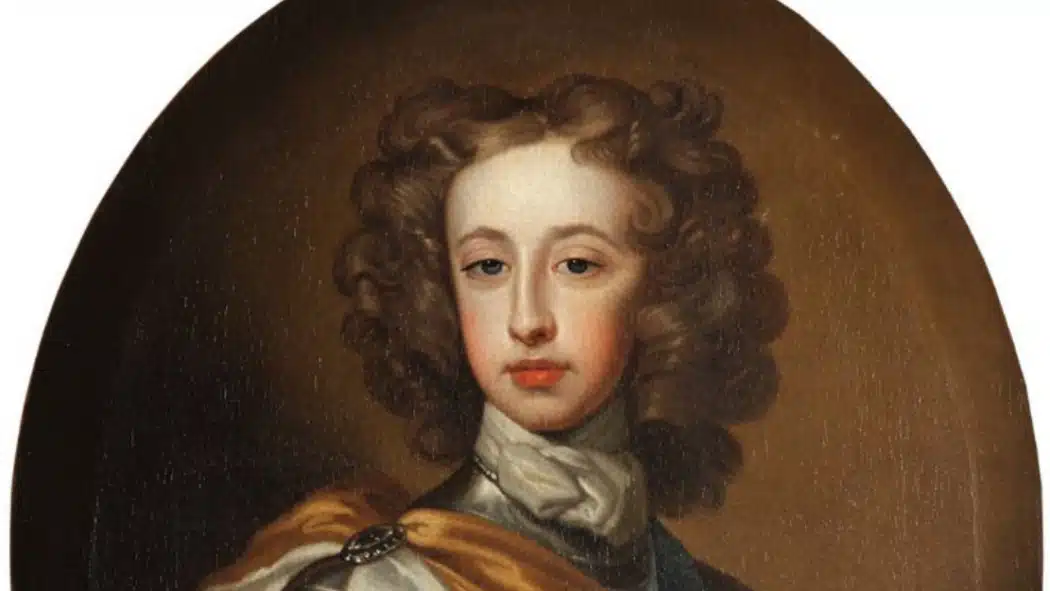
Prince William, Duke of Gloucester (24 July 1689 – 30 July 1700) was an English royal prince, son of Princess Anne and Prince George of Denmark. His birth secured the Protestant succession following the Glorious Revolution, but his death at age 11 triggered the Act of Settlement 1701, which placed the English throne on the House of Hanover.
Early Life and Education
William Henry was born at 5 am on 24 July 1689 at Hampton Court Palace, the seventh pregnancy for Anne after two stillbirths, two miscarriages, and two infant daughters lost to smallpox. King William III and Queen Mary II attended the birth along with other court figures, as was customary for potential heirs. Three days later, the Bishop of London baptised him William Henry after his uncle the King, and William III declared him Duke of Gloucester, though the peerage was never formally created.
From infancy, Gloucester suffered from convulsions, possibly symptomatic of meningitis contracted at birth, which resulted in hydrocephalus. His mother moved him to Craven House in Kensington, where the air from surrounding gravel pits was believed beneficial to his health. When this treatment proved effective, Anne and Prince George acquired Campden House, a Jacobean mansion, as a permanent residence in 1690. Gloucester was raised by governess Lady Fitzhardinge and wet nurse Mrs. Pack rather than his mother, following royal custom.
Throughout his life, Gloucester endured recurring bouts of ague, treated with Jesuit’s bark by physician John Radcliffe, a remedy he disliked intensely. His enlarged head, likely from hydrocephalus, required periodic surgical drainage. He struggled to walk properly and stumbled frequently; near age five, he refused to climb stairs without two attendants until his father’s corporal punishment persuaded him otherwise.
Gloucester’s speech development was delayed; he did not speak correctly until age three, postponing formal education by a year. The Reverend Samuel Pratt, a Cambridge graduate, was appointed his tutor in 1693, instructing him in geography, mathematics, Latin, and French. Pratt and Gloucester’s Welsh body-servant Jenkin Lewis, who had befriended the boy at Campden House, frequently disagreed over educational methods. Lewis, knowledgeable in military matters, remained Gloucester’s favourite attendant.
Career and Achievements
Gloucester held no formal offices or positions during his short life. King William created him a Knight of the Garter, and Queen Mary frequently sent him presents. His primary significance lay in his status as heir to the throne and symbol of Protestant continuity. At Campden House, he operated his own miniature military unit, the “Horse Guards,” which eventually comprised 90 boys, reflecting both his interest in military affairs and the indulgence afforded a royal child of his era.
Notable Events and Milestones
Gloucester’s birth on 24 July 1689 was celebrated with royal odes, including Henry Purcell’s “The Noise of Foreign Wars,” composed to mark the occasion. Subsequent birthdays inspired additional compositions from Purcell, including “Who Can From Joy Refrain?,” and works by John Blow. His daily carriage rides pulled by Shetland ponies through Kensington became a notable feature of his childhood treatment regimen.
His death on 30 July 1700 at age 11 precipitated an immediate succession crisis. As the only surviving child of Princess Anne and the only Protestant in the line of succession beyond her, his passing left Anne as the sole heir under the Bill of Rights 1689. Parliament, unwilling to allow the throne to revert to a Catholic, responded by passing the Act of Settlement 1701, which settled the succession on Electress Sophia of Hanover, a cousin of James II, and her Protestant descendants.
Awards and Honors
King William III created Gloucester a Knight of the Garter during his lifetime. He was styled Duke of Gloucester from birth, though this title was never formally created as a peerage.
Additional Resources
Jenkin Lewis’s memoir of the Duke remains an important historical source for understanding Gloucester’s life and the royal household of his era. Readers seeking fuller details about his family connections, the political context of the Glorious Revolution, and the succession crisis following his death will find extensive material in Wikipedia and other biographical archives devoted to the Stuart and early Hanoverian periods.
Observer Voice is the one stop site for National, International news, Sports, Editor’s Choice, Art/culture contents, Quotes and much more. We also cover historical contents. Historical contents includes World History, Indian History, and what happened today. The website also covers Entertainment across the India and World.

