

Understanding the Significance of India’s First Hydrogen Train

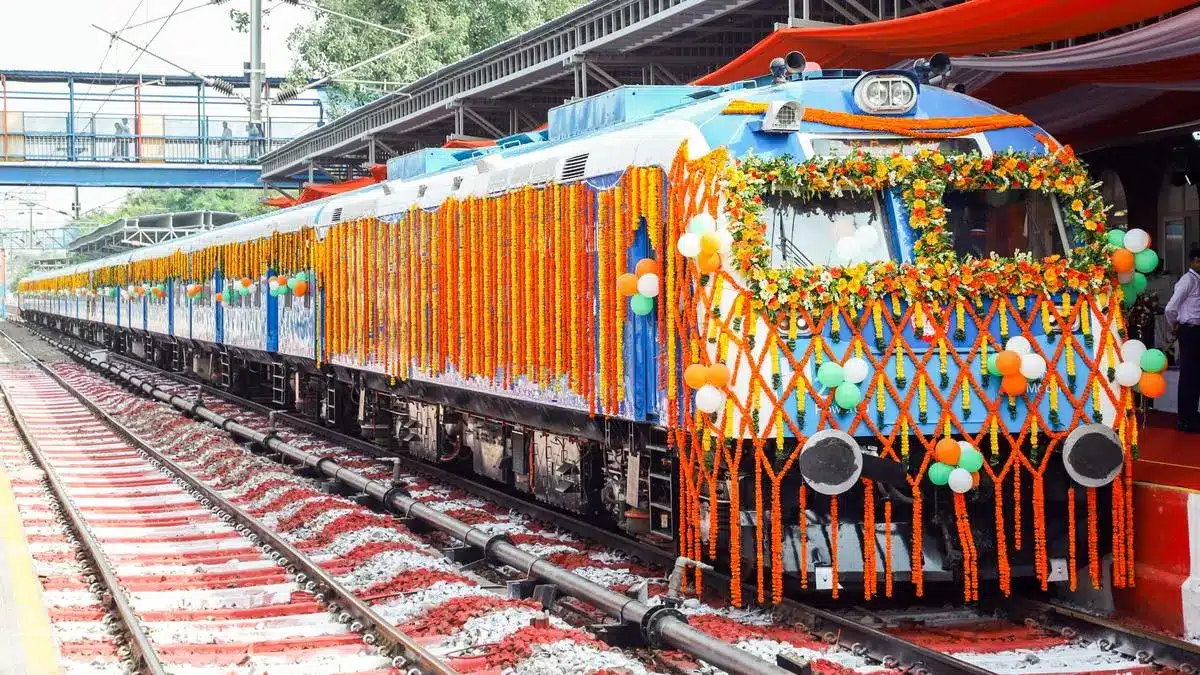
Prime Minister Narendra Modi inaugurated India’s first hydrogen-powered train on Friday, marking a significant advancement in the country’s green transportation efforts. This train, which features 10 coaches and can accommodate 2,600 passengers, will operate between Jind and Sonipat in Haryana. It has a maximum operational speed of 75 km/h, although it is designed to reach 110 km/h.
Hydrogen as a Clean Fuel
Hydrogen is recognized as the cleanest fuel available today. The hydrogen-powered train produces zero emissions and operates quietly, contributing to a reduction in diesel dependency. With India’s railway network already 99% electrified, the introduction of hydrogen trains is expected to enhance greener transport options, particularly in remote areas.
How the Hydrogen-Powered Train Works
The train utilizes hydrogen fuel cell technology, generating electricity by combining hydrogen stored in onboard cylinders with oxygen from the air in a Proton Exchange Membrane (PEM) fuel cell. This process eliminates combustion and carbon emissions, with water vapor as the only by-product. Each of the two hydrogen driving power cars produces 1,200 kW of power, supported by lithium iron phosphate batteries and hydrogen storage cylinders. Indian Railways has established the first integrated hydrogen railway ecosystem at Jind, which includes facilities for hydrogen production through electrolysis, as well as storage and refueling capabilities.
Unique Features of the Train
India’s hydrogen-powered train stands out for several reasons. It is designed and manufactured domestically, showcasing India’s engineering capabilities. Currently, only a few countries operate hydrogen trains, with Germany leading in commercial passenger operations. India joins this select group, alongside China, France, and Italy, while other nations like Japan and the US are still in pilot phases. Notably, India’s train is the longest hydrogen-powered train globally, featuring a powerful 3,200 HP propulsion system.
Future of Hydrogen Mobility
Hydrogen trains are particularly suitable for routes where electrification is challenging, making them ideal for remote and heritage lines. Experts suggest that as the costs of green hydrogen decrease and production scales up, the business case for hydrogen trains will strengthen. However, implementation across the network may remain limited.
Challenges Facing Hydrogen Train Technology
Despite the potential benefits, several challenges hinder the widespread adoption of hydrogen train technology. The production and refueling infrastructure for green hydrogen is costly, making these trains more expensive to operate than conventional ones. Additionally, hydrogen’s highly flammable nature necessitates stringent safety measures, including high-pressure storage and continuous monitoring for leaks.
Broader Implications Beyond Railways
The hydrogen train project has implications that extend beyond the rail sector. Experts emphasize that its commercial viability should be assessed within a broader hydrogen economy framework. The project can serve as an anchor for developing infrastructure and capabilities that enhance the long-term economics of hydrogen across various sectors. Addressing the gaps in hydrogen availability and refueling infrastructure is crucial for unlocking decarbonization opportunities in freight, logistics, and industry.
With the launch of its first hydrogen train, India has reached a significant milestone in its journey towards cleaner energy solutions.
Observer Voice is the one stop site for National, International news, Sports, Editor’s Choice, Art/culture contents, Quotes and much more. We also cover historical contents. Historical contents includes World History, Indian History, and what happened today. The website also covers Entertainment across the India and World.

