

India Launches World’s First Nuclear-Powered Hydrogen Production Facility

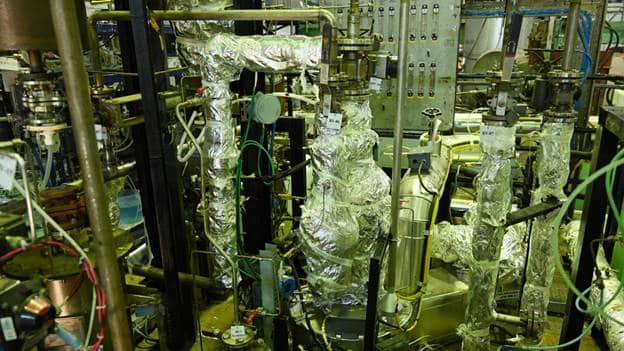
In a groundbreaking milestone for India’s clean energy efforts, the Department of Atomic Energy (DAE) has inaugurated the world’s first Hydrogen Production Facility utilizing the Copper–Chlorine (Cu–Cl) thermochemical process. This innovative facility is powered by nuclear heat generated from the Fast Breeder Test Reactor (FBTR) at the Indira Gandhi Centre for Atomic Research (IGCAR) in Kalpakkam.
The inauguration was led by Dr. Ajit Kumar Mohanty, Secretary of the DAE and Chairman of the Atomic Energy Commission (AEC), alongside Shri Sreekumar G. Pillai, Director of IGCAR. This facility serves as a technological demonstrator, validating the hydrogen production through the cutting-edge Cu–Cl process, which has been developed locally by the Bhabha Atomic Research Centre (BARC) in Mumbai.
Advancing Nuclear Technology for Clean Energy
The integration of nuclear process heat with hydrogen generation signifies a crucial technological breakthrough, paving the way for large-scale, carbon-free hydrogen production. Hydrogen, recognized as a key energy carrier of the future, is increasingly vital to the global transition towards sustainable and clean energy frameworks.
Among various hydrogen production technologies being explored worldwide, the Cu–Cl thermochemical process stands out due to its lower operating temperatures and enhanced thermodynamic efficiency. This method leverages nuclear heat from fast reactors, significantly lowering reliance on fossil fuels and eradicating greenhouse gas emissions tied to traditional hydrogen production techniques.
Collaboration and Future Prospects
The establishment of this facility is the result of thorough research and collaboration between BARC and IGCAR, encompassing process development, engineering design, equipment fabrication, and extensive testing. This plant will provide crucial operational insights that will help optimize the Cu–Cl process and support further research aimed at scaling nuclear-assisted hydrogen production for commercial use.
During the event, Dr. Mohanty emphasized the strategic importance of integrating nuclear energy with clean technologies. He stated that nuclear power is uniquely positioned to offer reliable, carbon-free electricity and high-temperature process heat, essential for large-scale hydrogen production. He commended the dedicated efforts of the scientists and engineers involved, describing the achievement as a testament to India’s aspirations in advanced nuclear technology and clean energy advancement.
Legacy of Innovation at IGCAR
IGCAR, a premier nuclear research institution under the DAE, has played a pivotal role in advancing India’s Fast Breeder Reactor program since its inception in 1971. The center has designed and operated the FBTR, which has significantly contributed to developing fuels, materials, and technologies for the past four decades.
Shri Sreekumar G. Pillai remarked that the new facility builds on extensive operational experience and highlights the versatility of advanced nuclear systems. He reiterated IGCAR’s commitment to fostering innovative technologies that align with India’s clean energy transition goals.
With recognized expertise spanning reactor physics, advanced materials, and high-temperature engineering, IGCAR continues to strengthen India’s technological capabilities and position as a global leader in nuclear technologies. The inauguration of this facility marks a significant step toward achieving AtmaNirbhar Bharat, showcasing the fusion of nuclear energy with clean hydrogen technologies, thereby underscoring India’s commitment to a sustainable, secure, and low-carbon energy future.
Observer Voice is the one stop site for National, International news, Sports, Editor’s Choice, Art/culture contents, Quotes and much more. We also cover historical contents. Historical contents includes World History, Indian History, and what happened today. The website also covers Entertainment across the India and World.
Follow Us on Twitter, Instagram, Facebook, & LinkedIn

