

Forestry mulchers for high-density vegetation: strategies for maximum material reduction

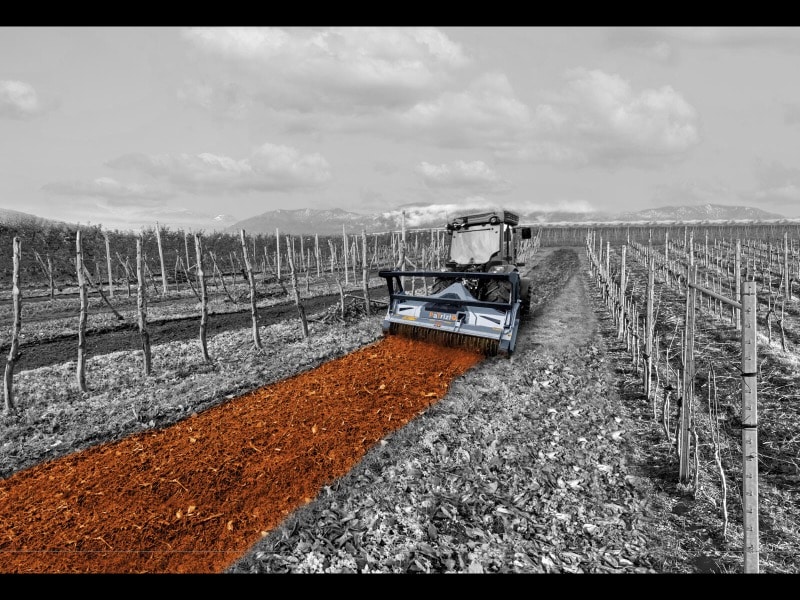
In these conditions, achieving uniform fragmentation is not simply a matter of power, but of combining rotor design, tooth configuration, hydraulic or PTO efficiency, and correct field technique. When these variables are properly aligned, forestry mulchers can transform compact biomass into evenly distributed mulch, improving site accessibility, reducing follow-up work, and supporting more efficient vegetation control strategies.
Why high-density vegetation requires a different mulching approach
Unlike isolated brush or low-volume residue, high-density vegetation creates a continuous feed of fibrous and woody material that places sustained stress on the rotor. The challenge is not only cutting through multiple vegetation layers, but maintaining a constant processing rhythm without rpm drops or clogging.
Dense brush zones often combine mixed diameters, flexible green material, and partially dried woody debris, all of which react differently inside the mulching chamber. This requires a setup capable of stabilizing torque delivery and preserving cutting consistency. Without the right approach, operators may experience slower travel speed, irregular chip size, and repeated passes that reduce overall field productivity.
Rotor configuration and tooth selection for maximum material reduction
Rotor architecture plays a decisive role in biomass reduction quality. In heavy vegetation, fixed-tooth rotors typically provide more aggressive penetration and better control over larger woody material, while swinging hammers can be advantageous where impact flexibility is needed.
Tooth profile, spacing, and wear resistance directly affect bite depth and cutting continuity. High rotor inertia helps maintain momentum when processing compact biomass, minimizing speed fluctuations under load.
Internal chamber geometry and counter blades are equally important, as they determine how long the material remains in the cutting zone before discharge. A well-engineered combination of these elements produces smaller, more uniform chips and ensures consistent mulch distribution across the ground surface.
Matching carrier power, hydraulic flow, and working width
Performance in dense vegetation depends heavily on correct matching between mulcher and carrier. On tractors, PTO horsepower must be sufficient to sustain torque under continuous resistance, especially when working on thick regrowth or mixed-diameter brush.
For skid steers and excavators, hydraulic flow stability and pressure consistency are essential to avoid power losses during peak load phases. Working width should also be selected according to biomass concentration: wider heads may improve coverage, but in extremely dense vegetation they can overload an underpowered carrier.
Proper machine-head balancing reduces stress on the drivetrain, prevents efficiency losses, and allows operators to maintain higher throughput in demanding field conditions.
Operating techniques that improve throughput in heavy biomass conditions
Even the best equipment performs below its potential without the correct operating method. In dense vegetation, progressive entry into the biomass mass helps the rotor maintain speed while gradually increasing material intake.
Travel speed should be calibrated to vegetation thickness, avoiding aggressive forward motion that can overload the chamber. Overlap management is equally important to prevent untreated strips while limiting unnecessary reprocessing.
In particularly heavy zones, a multi-pass strategy often improves final chip uniformity and reduces rotor stress. Maintaining proper head contact with the ground surface also supports more complete reduction of lower brush layers and residual woody material.
Long-term efficiency benefits of optimized material reduction
Effective biomass reduction delivers advantages that go far beyond immediate clearing performance. Smaller and uniformly distributed mulch accelerates organic decomposition and improves soil preparation for replanting, restoration, or access road development.
Better surface consistency also simplifies subsequent maintenance cycles, reducing the need for repeated interventions. In fire mitigation projects, fine and evenly spread mulch lowers the concentration of hazardous surface fuels and helps create more effective defensible spaces.
Over time, these factors translate into lower operating costs, reduced machine wear, improved site usability, and stronger return on investment for professional vegetation management operations.
Why professionals rely on FAE forestry mulchers for demanding land clearing
Since 1989, FAE has specialized in designing and manufacturing advanced attachments for land clearing, vegetation management, forestry applications, and demining operations.
Over the decades, the company has developed deep expertise across sectors such as agriculture, infrastructure upkeep, and environmental maintenance, earning strong recognition for its engineering know-how and the reliability of its equipment. Its portfolio spans a wide selection of heads for tractors, excavators, skid steers, tracked carriers, and special vehicles.
With a catalogue that includes more than 400 models across over 90 product families, forestry mulchers represent one of the company’s most advanced and strategic solutions. These machines are manufactured using high-strength steel, reinforced structural components, and wear-resistant materials selected to deliver durability and stable performance even under severe operating conditions.
Engineered to process dense biomass including trees, shrubs, trunks, stumps, and roots, FAE forestry mulchers can handle material up to 20 inches in diameter. Their cutting systems are designed to ensure accurate and dependable results across a broad range of environments, from steep slopes and irregular ground to post-fire recovery zones and infrastructure right-of-way corridors.
Built for continuous heavy-duty use, these machines maintain high cutting efficiency over long operating cycles while preserving structural integrity. This makes them especially effective for demanding tasks such as site preparation, biomass volume reduction, and long-term forest maintenance programs.
Compatibility with multiple carriers, combined with several configuration possibilities, further enhances their field versatility. As a result, operators can work efficiently in challenging environments where durability, flexibility, and productivity are critical requirements.
Observer Voice is the one stop site for National, International news, Sports, Editor’s Choice, Art/culture contents, Quotes and much more. We also cover historical contents. Historical contents includes World History, Indian History, and what happened today. The website also covers Entertainment across the India and World.

