

Why You Remember Yourself Being Better Than You Actually Were

Seventeen-year-old Arjun from Delhi played in his school’s inter-house cricket match six months ago. It was an exciting game where his team won by a narrow margin. In the days immediately after the match, Arjun honestly told friends about his performance: “I scored 32 runs and took one wicket. It was a decent contribution—not my best game, but solid.”
But as weeks and months passed, Arjun’s memory of that match began to change. When the topic came up at a family gathering three months later, he said: “That was a great match! I scored around 40 runs and took two wickets. I really carried the team that day.”
By six months later, when new students asked about the legendary match, Arjun’s version had evolved further: “It was an incredible performance—I scored close to 50 runs and took three wickets. The team basically won because of my all-round performance. I was player of the match.”
His teammate Rohan, who had been present at all these retellings, finally corrected him: “Arjun, I have the scorecard right here. You scored 32 runs and took exactly one wicket. You didn’t get player of the match—Vikram did. Your contribution was good, but you’re remembering it as much better than it actually was.”
Arjun felt genuinely confused. In his memory, he clearly remembered scoring in the 40s, possibly touching 50. He remembered taking multiple wickets. The idea that he’d only scored 32 and taken one wicket felt wrong—that seemed too modest for the important role he remembered playing.
Their sports coach later explained what had happened: “Arjun, you’re experiencing egocentric bias—the tendency to remember past events and your role in them in a self-serving, self-enhancing manner. Your actual performance was decent but not exceptional. Over time, your memory unconsciously inflated your contribution—better runs, more wickets, more importance to the team’s victory. This wasn’t deliberate lying. Your memory genuinely changed to make you look better. You now sincerely remember a better performance than you actually delivered.”
He continued: “Egocentric bias is one of the most common memory distortions. People remember exam scores as higher than they were, fish they caught as bigger than they were, contributions to group projects as larger than they were, and their role in successes as more central than it was. Meanwhile, they remember failures as less severe, mistakes as rarer, and their responsibility for problems as smaller. Memory serves ego protection and self-enhancement, not historical accuracy. We all unconsciously rewrite our personal history to make ourselves look better, feel better, and maintain positive self-image.”
This cognitive bias—remembering the past in ways that enhance the self, exaggerating successes and minimizing failures—affects personal narratives, relationship disputes, professional self-assessment, and any domain where people recall their own past performance or behavior. Understanding egocentric bias reveals why people have genuinely different memories of shared events, why self-reports are unreliable for assessing performance, why relationship conflicts persist with each side remembering themselves as more reasonable, and why your memory of your own past is systematically more flattering than reality.
What Is Egocentric Bias?
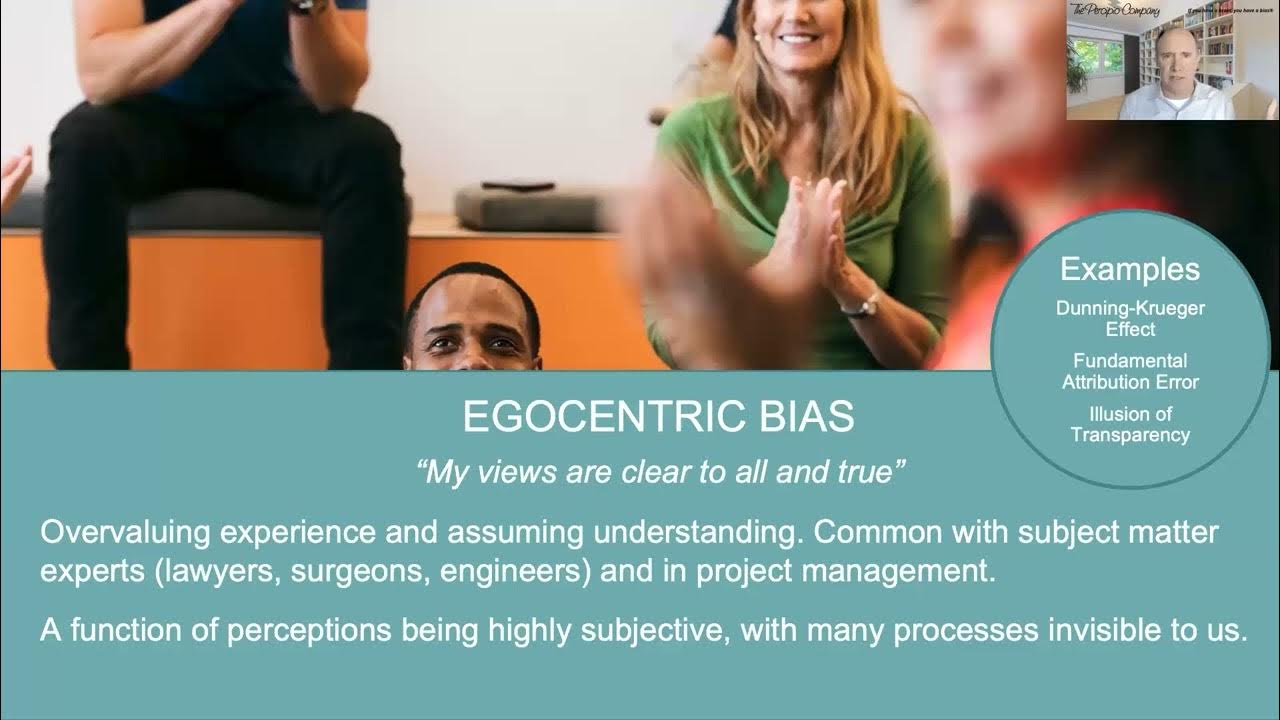
Egocentric bias is the memory distortion where people recall past events, achievements, behaviors, and contributions in self-serving, self-enhancing ways that make them look better, smarter, more moral, or more important than they actually were. This includes remembering successes as greater (exam scores higher, accomplishments larger, contributions more significant) and failures as lesser (mistakes smaller, responsibility reduced, negative behaviors minimized) than reality. The bias operates unconsciously—people genuinely believe their enhanced memories are accurate, not recognizing that memory has been distorted to serve ego protection and self-esteem maintenance.
The phenomenon was identified by social psychologists studying self-serving biases. Research at University of Waterloo demonstrated that when students were asked to recall their exam grades from earlier in the semester, they systematically inflated their actual grades: students who received C’s remembered getting B’s, students who got B’s remembered A’s. The worse the actual grade, the larger the inflation. Memory didn’t accurately preserve performance—it enhanced performance to protect self-esteem.
According to studies from Northwestern University, egocentric bias operates because memory reconstruction is influenced by current self-concept and motivation. When recalling past events, people unconsciously adjust memories to align with how they want to see themselves: competent, moral, successful, important. Since remembering failures threatens self-esteem while remembering successes enhances it, memory favors success-confirming reconstructions. The bias isn’t conscious lying—it’s unconscious memory distortion serving psychological needs.
Research from Harvard University demonstrates that egocentric bias is particularly strong when: (1) objective records of actual performance are unavailable (leaving memory free to distort), (2) time has passed since the event (making specific memory weaker and reconstruction stronger), (3) the outcome is important to self-concept (increasing motivation to remember favorably), and (4) the remembered role is compared to others’ roles (amplifying tendency to see self as more central). These conditions make self-enhancing memory distortion nearly automatic.
The Parable of the Fisherman and the Growing Fish
A beloved folk tale tells of a fisherman who caught a fish on Monday morning. When he returned to the village, people asked: “How big was the fish?”
“About this long,” he said honestly, holding his hands about 30 centimeters apart. “A decent catch—good eating for my family tonight.”
On Tuesday, a friend asked about Monday’s fishing trip. The fisherman replied: “It was excellent! I caught a fish about this big,” holding his hands 40 centimeters apart. “Quite a substantial catch.”
By Wednesday, the story had evolved: “Monday’s fishing was remarkable. The fish I caught was this big,” he demonstrated, hands now 50 centimeters apart. “One of the better fish I’ve caught this season.”
Thursday’s version: “Monday was incredible. I caught a fish this big,” hands spread 70 centimeters. “The biggest fish I’ve caught in months. It put up quite a fight!”
A wise village elder who had heard all four versions approached the fisherman: “I notice your Monday fish grows larger with each telling. On Monday it was 30 centimeters. By Thursday it’s 70 centimeters. Soon it will be a whale!”
The fisherman was defensive: “But it was a big fish! I remember the struggle, the weight of it!”
The elder replied: “I’m sure you remember it that way now. This is how human memory works—each time we recall a story about ourselves, especially one that makes us look good, the memory shifts slightly to make us look better. The fish gets bigger, the struggle harder, our skill greater. You’re not deliberately lying. Your memory genuinely changed. You now sincerely remember a bigger fish than you actually caught.”
He continued: “This is why fishermen’s tales are proverbially untrustworthy. It’s not that fishermen are liars—it’s that fishermen are human, and human memory serves the ego more than truth. Everyone does this: the student whose exam score grows in memory, the warrior whose enemies multiply in retelling, the merchant whose profits expand in recollection. We all unconsciously inflate our successes and diminish our failures in memory. The wise person knows this and checks their own stories against objective records rather than trusting memory’s flattering reconstructions.”
The fisherman asked: “But if we can’t trust our own memories of our own experiences, how can we know anything about our past?”
The elder replied: “By recognizing that memory serves psychological comfort more than historical accuracy. Your memory will always make you look better than you were, feel better than you felt, and act better than you acted. Knowing this, seek external verification for important claims: records, witnesses, physical evidence. And when your memory of your performance conflicts with others’ memories or with records, consider that your memory might be the one that’s been unconsciously enhanced to protect your ego. Humility about memory’s reliability is the beginning of honest self-knowledge.”
Buddhist philosophy addresses egocentric bias in teachings about the illusion of self and the ego’s distorting influence. The Buddha taught that attachment to self-view creates suffering and delusion, including the delusion that you’re better, more important, or more virtuous than you are. Egocentric bias is a manifestation of this ego-attachment: the mind distorts reality to maintain flattering self-image. Mindfulness practice involves seeing reality as it is, including honest acknowledgment of failures and limitations, rather than accepting ego’s flattering reconstructions.
The Bhagavad Gita discusses this through Krishna’s teaching about overcoming ahamkara (ego-identification) and maintaining honest self-assessment. Krishna teaches that the ego creates false narratives about the self’s greatness and importance. Egocentric bias is exactly this: ego-driven memory distortion that inflates achievements and minimizes failures. True wisdom requires seeing past ego’s distortions to accurate self-knowledge, which means recognizing when memory is serving ego rather than truth.
How Memory Makes Us Heroes of Our Own Stories
In academic performance and grade recall, egocentric bias makes students remember their exam scores and academic performance as better than they actually were. Research shows that when students are asked months or years later to recall grades from specific courses, they systematically inflate poor grades and maintain accurate memory of good grades. A student who got C’s and D’s in a difficult class remembers getting mostly B’s and C’s; a student who got straight A’s accurately remembers those A’s.
Studies from Ohio State University found that when comparing students’ remembered GPAs to actual transcript GPAs, approximately 80% of students inflated their GPA in memory, with inflation increasing with time since graduation. Students five years out of college remembered GPAs on average 0.3 points higher than reality. The memory distortion served ego protection: poor academic performance is uncomfortable to remember accurately, so memory unconsciously improved it.
In relationship conflicts and responsibility attribution, egocentric bias makes both partners in disputes remember themselves as more reasonable, more compromising, and less responsible for problems than they actually were. Research shows that when couples describe past conflicts, each partner remembers having tried harder to resolve issues, having been more willing to compromise, and having been less at fault than their partner’s account suggests. Both can’t be right—egocentric bias makes each person’s memory favor themselves.
Studies demonstrate that in marital therapy, couples asked to estimate their own versus their partner’s contribution to household tasks show egocentric patterns: each partner estimates they do more than 50% of the work, making total contributions sum to over 100%. Each genuinely remembers doing more because memory makes self-contributions salient and memorable while minimizing partner contributions that weren’t directly experienced.
In group projects and collaborative work credit attribution, egocentric bias makes people overestimate their own contributions relative to others’ contributions. Research shows that when group members are asked to estimate their percentage contribution to a project, the individual estimates typically sum to well over 100%—often 140-200%. Everyone remembers contributing more than they actually did because egocentric bias makes self-contributions more memorable and apparently larger than others’ contributions.
Studies from University of Virginia found that in four-person group projects, asking each member to estimate their contribution produced sums averaging 160% when reality must equal 100%. Each person genuinely remembered doing about 40% of the work when actual contributions were roughly equal at 25% each. Egocentric bias made self-contributions seem larger and more important than they were, creating disputes about who deserves credit.
In athletic and competitive performance recall, egocentric bias makes people remember their sports performances, game statistics, and competitive achievements as better than they actually were. Research shows that athletes asked to recall statistics from past seasons inflate their positive statistics (runs scored, goals made, games won) and minimize negative statistics (errors made, goals allowed, games lost). The worse the actual performance, the larger the remembered inflation.
Studies found that recreational golfers asked to recall their best rounds remembered scores approximately 3-5 strokes better than their actual scorecards showed. Professional athletes reviewing old game footage frequently express surprise: “I thought I played better than that.” Their memory had enhanced performance beyond reality, and confronting objective video evidence revealed the distortion.
In moral behavior and ethical self-perception, egocentric bias makes people remember their past behavior as more ethical, generous, and principled than it actually was. Research shows that when people are asked to recall instances of their own moral or immoral behavior, they readily recall times they acted morally but struggle to recall times they acted selfishly or unethically. Memory preserves evidence of virtue while allowing evidence of vice to fade, maintaining the self-perception “I’m a good person.”
Studies from Yale University found that when people kept daily diaries recording both prosocial and selfish behaviors, then months later tried to recall those behaviors, they remembered approximately 80% of their recorded prosocial acts but only 30% of their recorded selfish acts. Egocentric bias made moral behavior highly memorable while allowing immoral behavior to be forgotten, creating falsely virtuous self-perception based on selectively remembered evidence.
In financial and spending behavior recall, egocentric bias makes people misremember their past financial decisions in self-serving ways. Research shows that people remember earning more, saving more, and spending more wisely than they actually did. Poor financial decisions are minimized or forgotten in memory, while prudent decisions are remembered and often exaggerated. This contributes to overly positive financial self-assessment that doesn’t match actual financial history.
Studies demonstrate that when people are asked to recall major purchases from past years, they systematically remember having done more research, having gotten better deals, and having made smarter purchasing decisions than records show. Impulse purchases are “remembered” as considered decisions; overpaying is remembered as getting fair value; buyer’s remorse is forgotten while satisfaction is preserved. Memory creates narrative of consistent financial wisdom regardless of actual decision quality.
Recognizing When Memory Flatters You
The most important practice for countering egocentric bias is seeking objective records of past performance rather than trusting memory when accuracy matters. If you need to know your actual exam grades, sports statistics, financial history, or work contributions, check records rather than relying on memory. Memory will systematically enhance your performance, so objective evidence provides necessary correction to self-flattering distortions.
When your memory of shared events conflicts with others’ memories, consider that egocentric bias might be operating in your recall. If your spouse remembers you being less helpful than you remember, if your team members remember your contributions as smaller than you remember, or if records show lower performance than you remember, don’t immediately assume others are wrong or records are mistaken. Consider that your memory might be the one that’s been unconsciously enhanced.
Practice deliberately recalling failures, mistakes, and times you fell short of your ideals. Egocentric bias makes these memories fade while preserving success memories. Deliberately maintaining accurate memory of failures provides honest self-knowledge and prevents the falsely inflated self-perception that unchecked egocentric bias creates. Keeping failure memories accessible is psychologically uncomfortable but necessary for accurate self-assessment.
Accept that some memory enhancement serves healthy self-esteem and isn’t always problematic. Remembering yourself slightly more favorably than reality helps maintain psychological wellbeing and motivation. The problem arises when memory enhancement is so extreme it creates false self-perception, prevents learning from mistakes, or generates conflicts with others who have different memories of shared events.
Recognize that egocentric bias is universal, not a personal failing. Everyone’s memory makes them look better than they were. When hearing others’ self-aggrandizing stories, recognize they’re probably experiencing egocentric bias, not necessarily deliberate dishonesty. When telling your own stories, acknowledge the likelihood that your memory has enhanced reality, qualifying claims with “as I remember it” rather than presenting enhanced memories as objective truth.
Remember Arjun whose 32 runs and one wicket became 50 runs and three wickets in memory, and the fisherman whose 30-centimeter fish grew to 70 centimeters in four days. Both illustrate how egocentric bias unconsciously rewrites personal history to make us look better, feel better, and seem more important than we actually were.
Egocentric bias can’t be eliminated because it serves fundamental psychological functions: protecting self-esteem, maintaining motivation, and creating coherent positive self-narrative. But recognizing the bias allows calibration: when memory says “I was great,” reality might be “I was decent.” When memory says “I barely failed,” reality might be “I clearly failed.” When memory says “I contributed most,” reality might be “I contributed my share.” The gap between memory’s flattering version and reality is the measure of egocentric bias operating. Honest self-knowledge requires recognizing this gap and seeking objective truth rather than accepting memory’s ego-serving reconstructions as fact.
Frequently Asked Questions
Does egocentric bias mean I’m narcissistic or dishonest?
No—egocentric bias is universal, affecting everyone regardless of personality or honesty. It’s an unconscious memory distortion, not conscious lying or pathological narcissism. Even humble people with good intentions show egocentric bias because it operates automatically in memory reconstruction. The difference is that humble people are more willing to accept evidence that their memory has inflated performance, while narcissists might insist their enhanced memory is accurate.
How can I tell if my memory is accurate versus enhanced by egocentric bias?
Check objective records when possible (scorecards, transcripts, financial statements, project documentation). Ask others present at the event for their memories—if their version is less flattering to you, consider they might be more accurate. Be especially suspicious of memories that make you look unusually good or minimize your mistakes—these are prime targets for egocentric enhancement. If your memory shows steady success with rare failures, that pattern itself suggests bias.
Why do I remember failures at all if egocentric bias makes me remember successes?
Egocentric bias doesn’t completely eliminate failure memories—it minimizes and softens them. You remember failures as less severe, less frequent, and less clearly your fault than they were. Also, some failures are so objectively documented or consequential that memory can’t fully erase them, though it might still reduce their remembered severity. The bias is toward enhancement, not toward perfect self-presentation.
If everyone has egocentric bias, are all personal stories unreliable?
Personal stories are valuable but should be recognized as psychologically true rather than historically precise. They reveal how people experienced events and how they understand their life narrative, even if specific details are enhanced. For critical decisions requiring accurate information (legal proceedings, performance evaluations, historical records), objective evidence should supplement or replace personal memory. For understanding someone’s perspective and self-concept, their enhanced memory is actually informative.
Can I reduce egocentric bias in my own memory?
Difficult to eliminate but can be reduced through: (1) keeping contemporaneous records of events when they happen, creating objective baseline; (2) deliberately recalling failures and maintaining those memories actively; (3) seeking others’ perspectives on shared events; (4) cultivating intellectual humility about memory’s reliability. The bias is automatic and unconscious, so you can’t prevent it through willpower, but you can correct it through verification and conscious skepticism about self-flattering memories.
Observer Voice is the one stop site for National, International news, Sports, Editor’s Choice, Art/culture contents, Quotes and much more. We also cover historical contents. Historical contents includes World History, Indian History, and what happened today. The website also covers Entertainment across the India and World.

