

Why Everyone Thinks Most People Agree With Them (Even When They Don’t)

During a social studies class at Delhi’s Modern School, the teacher asked seventeen-year-old Priya and her classmates to participate in an anonymous survey about teenage habits and opinions. One question asked: “Do you think it’s acceptable for teenagers to check their phones during family meals?”
Priya answered “Yes”—she felt that briefly checking important messages during dinner was reasonable in today’s connected world. Before the teacher revealed the results, she asked students to predict what percentage of their classmates agreed with them.
Priya confidently predicted that about 70% of her class shared her view. “Most teenagers understand that staying connected is important,” she reasoned. “Only strict traditional students would say no.”
Meanwhile, her friend Rohan had answered “No” to the same question—he believed family meals should be phone-free time for connection. He also predicted about 70% of the class agreed with him. “Most people value family time over phones,” he thought. “Only addicted social media users would say yes.”
When the teacher revealed the actual results, both Priya and Rohan were shocked: the class was evenly split—48% said yes, 52% said no. Priya had overestimated agreement by 22 percentage points. Rohan had overestimated agreement by 18 percentage points. Nearly every student, regardless of their position, had predicted that most classmates agreed with them.
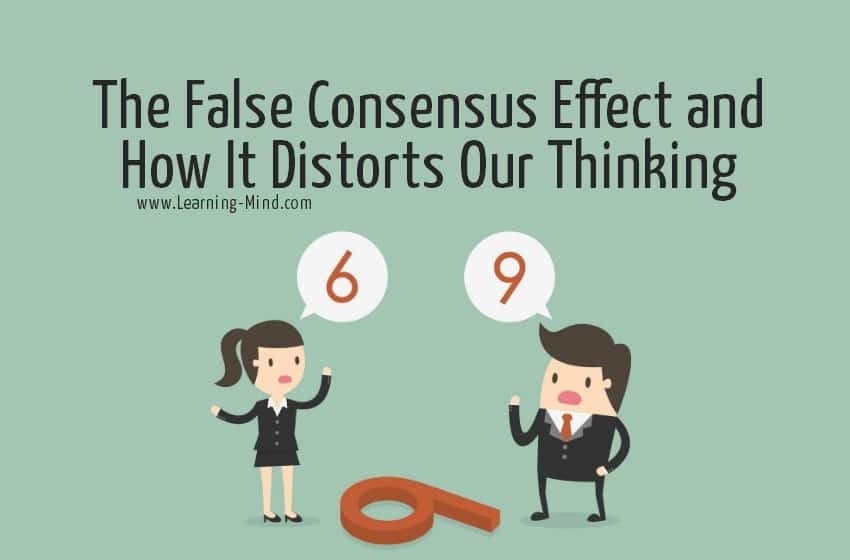
The teacher explained: “You all experienced the false consensus effect—the tendency to overestimate how many people share your opinions, attitudes, and behaviors. When you hold a position, it feels obviously right and reasonable to you, so you naturally assume most rational people would reach the same conclusion. You project your own views onto others, assuming they see the world as you do. This creates the illusion of consensus where none exists, making you believe your opinions are more widely held than they actually are.”
She continued: “This bias affects everything from politics to personal preferences. It makes you think your music taste is normal and widely shared, your political views are common sense that most people hold, and your habits are typical of your generation. In reality, human views are far more diverse than the false consensus effect makes you believe. Your opinions feel universal because they’re yours, not because they actually are universal.”
This cognitive bias—overestimating how many others share your views—affects political polarization, moral judgments, consumer decisions, and any situation where you assume others think like you do. Understanding the false consensus effect reveals why we’re so often surprised by others’ different opinions and why we underestimate human diversity of thought.
What Is the False Consensus Effect?
The false consensus effect is the cognitive bias where people overestimate the extent to which their beliefs, opinions, preferences, values, and habits are normal and shared by others. When you hold a position on any topic, you tend to believe that position is more common, mainstream, and widely held than it actually is. This creates systematic overestimation of agreement that makes you think “most people think like me” when actually opinion is more diverse and many disagree with you.
The phenomenon was identified and named by psychologist Lee Ross. Research at Stanford University demonstrated the effect across countless domains: people who smoke estimate higher percentages of smokers than actual statistics show; vegetarians overestimate how many people are vegetarian; supporters of political positions dramatically overestimate public support for those positions. Each person’s own position serves as anchor for estimating others’ positions, systematically biasing estimates toward greater agreement.
According to studies from University of Illinois, the false consensus effect operates through several mechanisms: selective exposure (you associate with people similar to you, creating biased sample of humanity), projection (you assume your own reactions are typical), and motivational factors (wanting to believe your views are correct, which they’d be more likely to be if widely shared). These combine to create strong illusion that “everyone thinks like me” when actually you’re just surrounded by those who do and projecting yourself onto those you don’t observe closely.
Research from Northwestern University demonstrates that the false consensus effect is particularly strong when: (1) the issue is important to you personally, (2) you have strong confidence in your position, (3) you can’t easily observe others’ actual positions, and (4) you’ve recently been exposed to like-minded others. These conditions make the bias strongest precisely when you’re most convinced you’re right and most surprised to discover disagreement.
The Parable of the Five Travelers From Different Lands
A teaching tale tells of five travelers who met at an inn, each coming from a different region of the world. That evening, conversation turned to the question: “What is the proper way to greet someone you’re meeting for the first time?”
The first traveler, from a land where people bowed deeply when greeting, said confidently: “Everyone knows the proper greeting is a respectful bow. I’d estimate 80% of civilized people bow when meeting someone new. It shows respect and humility. Only those lacking manners do otherwise.”
The second traveler, from a culture where people shook hands firmly, was surprised. “Bow? No, no. Most people—at least 75%—shake hands. It shows confidence and trust. Bowing is submissive and outdated. Modern people shake hands.”
The third traveler, from a society where people kissed cheeks in greeting, laughed. “You’re both wrong. The vast majority—maybe 70%—kiss cheeks. It’s warm and friendly. Shaking hands is cold and formal. Bowing is too distant.”
The fourth traveler, from a place where people touched foreheads in greeting, shook his head. “I’ve always found that most people—at least 65%—touch foreheads. It’s intimate and respectful. All these other greetings miss the connection.”
The fifth traveler, from a region where people waved from a distance, was astonished. “Physical contact? Most people—I’d say 70%—simply wave. It’s respectful of personal space and universally understood.”
A wise innkeeper, observing this debate, smiled. “Each of you believes your greeting is how ‘most people’ greet, and each estimates 65-80% of humanity shares your practice. Yet there are only five of you here, representing vastly different practices. If your estimates were accurate, between 325% and 400% of people would be greeting each other—mathematically impossible.”
He explained: “Each of you grew up in a region where your greeting was indeed how ‘most people’ greeted—most people you knew. You’ve then assumed this local majority represents global majority. Each believes your own practice is obviously correct, natural, and normal, so ‘most people’ must agree. This is false consensus—projecting your own practice onto others and assuming widespread agreement that doesn’t exist. In truth, greeting practices are incredibly diverse across humanity. What’s universal in your experience is rare in others’, and what’s rare in your experience is universal in theirs.”
Buddhist philosophy addresses the false consensus effect in teachings about sakkāya-diṭṭhi (self-view) and the tendency to take one’s own perspective as objective reality. The Buddha taught that humans naturally see the world from their own limited perspective and mistakenly believe this perspective is universal or objective. The false consensus effect exemplifies this—assuming your subjective views are objective common views that most share.
The Bhagavad Gita discusses this through Krishna’s teaching about the three gunas (qualities) and how different people perceive reality differently based on their dominant qualities. Krishna teaches that what seems obvious and true to someone dominated by one guna seems wrong to someone dominated by a different guna. The false consensus effect represents failing to recognize this diversity—assuming everyone perceives and judges as you do when actually humans vary greatly in perception and values.
How We Create Illusions of Agreement
In political opinions and ideological polarization, the false consensus effect makes people dramatically overestimate public support for their political positions. Research shows that conservatives estimate far more public agreement with conservative positions than exists, and liberals estimate far more agreement with liberal positions than exists. Both sides genuinely believe “most people agree with me; the opposition is a loud minority” when actually populations are divided or trending opposite to their beliefs.
Studies from Pew Research Center analyzing political opinion estimation versus actual opinion distribution found consistent false consensus: people predicting 60-70% public support for positions that actually had 45-50% support. The overestimation creates surprise at election results, difficulty understanding opposing voters, and false sense that one’s own positions are mainstream common sense while opponents’ positions are fringe extremism.
In moral judgments and ethical positions, false consensus makes people believe their moral intuitions are universally shared. Research shows people rate their own moral positions as “obviously right” and estimate that 70-80% of people share those positions, when actually moral opinions are highly diverse. What feels like objective moral truth to you feels like moral error to others, but false consensus makes you underestimate this disagreement.
Studies demonstrate that moral false consensus increases polarization—if you believe 75% of people share your moral position, the 40-50% who actually disagree seem like immoral deviants rather than reasonable people with different values. The false consensus creates failure to understand that your moral intuitions aren’t universal, making moral disagreement seem like moral failure rather than legitimate value differences.
In consumer preferences and lifestyle choices, false consensus makes people believe their tastes, preferences, and habits are more common than they are. Research shows that people who prefer a particular music genre estimate that genre is far more popular than it is; people with particular dietary preferences estimate far higher rates of those diets than exist; people with particular hobbies estimate those hobbies are more mainstream than they are.
Studies from University of Pennsylvania tracking preference estimation versus actual preference distribution found systematic overestimation: people estimating 50-60% prevalence for preferences that actually have 20-30% prevalence. This creates surprise when learning your preferences aren’t widely shared and difficulty understanding why products/services catering to your preferences aren’t more common (because your preferences aren’t as common as you believed).
In risk perception and behavioral norms, false consensus affects estimates of how many people engage in risky behaviors. Research shows that people who engage in risky behaviors (drinking, smoking, reckless driving) estimate those behaviors are far more common than people who don’t engage in them estimate. Each group believes their own behavior represents the norm, creating false consensus that “most people drink/don’t drink like I do.”
Studies demonstrate this has practical consequences: teenagers who drink estimate peer drinking rates at 70-80% when actual rates are 40-50%, and this overestimation (driven by false consensus) predicts increased drinking. Believing “everyone does it” (false consensus) increases willingness to engage in risky behavior because it seems normal. Similarly, non-drinkers underestimate peer drinking, creating disconnection from actual peer behaviors.
Recognizing Opinion Diversity Beyond Your Bubble
The most important practice for countering false consensus is remembering that the people you interact with are not representative of humanity generally. Your friends, family, neighbors, and online contacts are systematically similar to you—that’s why you’re connected to them. Their agreement with you doesn’t mean “most people agree”; it means you’ve selected a social circle of agreement. Outside your bubble, opinions are far more diverse than your bubble suggests.
Before claiming “most people think/believe/prefer X,” actively seek actual data about opinion distribution. Opinion polls, surveys, market research, and voting results often reveal far more disagreement than false consensus makes you expect. Your intuitive sense that “obviously 70% of people agree” is systematically inflated; actual agreement is typically lower. Check data rather than trusting your inflated intuition.
When surprised by disagreement, use it as signal that false consensus was operating. If you’re shocked that “so many people” hold a position you consider wrong, your surprise reveals that false consensus made you underestimate prevalence of that position. The surprise itself is evidence your estimates were biased. Frequent surprise at disagreement indicates strong false consensus effect in your judgments.
Practice perspective-taking where you seriously imagine someone intelligent and reasonable reaching opposite conclusions from yours. False consensus makes this difficult—opposite positions seem so obviously wrong that you can’t imagine how reasonable people reach them. But reasonable people do reach them, in large numbers. If you can’t imagine how, you’re experiencing false consensus that assumes reasonable people think like you.
Distinguish between “I believe X” and “most people believe X.” The first is your position. The second is an empirical claim about opinion distribution that requires evidence, not assumption. False consensus conflates these—because you believe X, you assume most believe X. Keeping them separate helps recognize when you’re making unsupported claims about population-level agreement based solely on your personal position.
Remember Priya and Rohan both predicting 70% of classmates agreed with them when the class was evenly split, and the five travelers each estimating 65-80% of humanity used their greeting when each practice was minority worldwide. Both illustrate how false consensus makes everyone overestimate agreement with their own positions, creating illusion of consensus where diversity actually exists.
The false consensus effect isn’t simple egotism—it’s cognitively understandable. Your own position is most available and accessible to you. When estimating population positions, your own position serves as anchor. Your friends and social circle likely do agree with you (similarity-based selection), creating experiential evidence for consensus. What you consume in media and online often reinforces your views (filter bubbles and selective exposure), further suggesting agreement. These factors make false consensus feel accurate even though it’s systematically biased.
But the result is dangerous illusion: belief that your opinions are mainstream common sense that most share when actually you’re one voice in diverse chorus of positions. This illusion makes disagreement surprising, opposing views seem fringe or unreasonable, and your own positions seem more validated than they are. Breaking the effect requires recognizing that your social bubble isn’t humanity, your friends’ agreement isn’t universal agreement, and the fact that your position feels obviously right to you doesn’t mean it feels obviously right to others. Most people think they represent “most people.” By definition, most people are wrong about this.
Frequently Asked Questions
If I’m surrounded by people who agree with me, isn’t that evidence that my view is common?
Not really—it’s evidence that your social circle is selected for similarity to you. Friends, family, neighbors, and online contacts cluster by demographics, values, and opinions. Your bubble agreeing with you shows you’ve created/joined a similarity-based bubble, not that humanity generally agrees. Outside your bubble, opinion is far more diverse than bubble similarity suggests. Your bubble is your evidence, but it’s biased evidence that overrepresents agreement.
Does false consensus mean my opinions are wrong?
No—it means your estimates of how many others share your opinions are inflated. You can have correct opinions that few people hold, or incorrect opinions that many hold. False consensus is about estimating agreement levels, not about correctness of opinions. The bias makes you think “most people agree with me” when actually fewer do. This doesn’t tell you whether you’re right—just that you’re overestimating support.
Why would evolution create a bias that makes us overestimate agreement?
Possible explanations: (1) false consensus might promote group cohesion by making you feel more aligned with your group, (2) it might encourage expressing opinions by making you feel they’re widely shared rather than fringe, (3) it might be byproduct of using self as reference point for social judgment, which is usually efficient. The bias creates costs in modern diverse societies but might have been less costly in smaller homogeneous ancestral groups where local consensus did approximate group consensus.
Can I reduce false consensus by interacting with more diverse people?
Somewhat—exposure to diverse opinions can reduce false consensus by showing you that many people hold positions different from yours. However, the effect is stubborn because: (1) you still use self as anchor for estimates, (2) motivated reasoning may make you discount disagreeing others as uninformed rather than recognizing your view isn’t widely shared, (3) you may interact with diverse people but still assume “most” agree with you by discounting dissenters as minority. Exposure helps but doesn’t eliminate the bias.
Is false consensus stronger for opinions I care deeply about?
Yes—research shows the effect is strongest for important personal positions you’re invested in. For trivial preferences (favorite ice cream flavor), false consensus is weak because you don’t need to believe most people agree—it’s just personal taste. For important beliefs (political, moral, religious), false consensus is strong because you’re motivated to believe your important positions are correct, and widespread agreement provides validation. The more important the belief, the more you overestimate consensus for it.
Observer Voice is the one stop site for National, International news, Sports, Editor’s Choice, Art/culture contents, Quotes and much more. We also cover historical contents. Historical contents includes World History, Indian History, and what happened today. The website also covers Entertainment across the India and World.

