

Why You’re Late Because of Traffic But Others Are Late Because They’re Irresponsible

Seventeen-year-old Kavya arrived fifteen minutes late to her study group meeting at Delhi’s India Gate park. As she rushed to join her friends, she explained breathlessly: “I’m so sorry! The metro was delayed, then there was unexpected traffic, and my phone died so I couldn’t message you. It was completely beyond my control!”
Her friends accepted the explanation sympathetically. Traffic and metro delays were understandable—external circumstances that could happen to anyone. Kavya felt relieved they understood it wasn’t her fault.
The following week, their friend Rohan was fifteen minutes late to the same study group. As they waited, Kavya found herself getting annoyed. “Rohan is always late,” she muttered to another friend. “He’s so disorganized and doesn’t respect other people’s time. It’s just his personality—he doesn’t care about being punctual.”
When Rohan finally arrived, he apologized: “I’m sorry! The metro was delayed, then there was traffic, and—” But Kavya had already tuned out. She’d decided his lateness reflected his character, not his circumstances. After all, she thought, I was late last week because of external factors, but Rohan is late because of who he is.
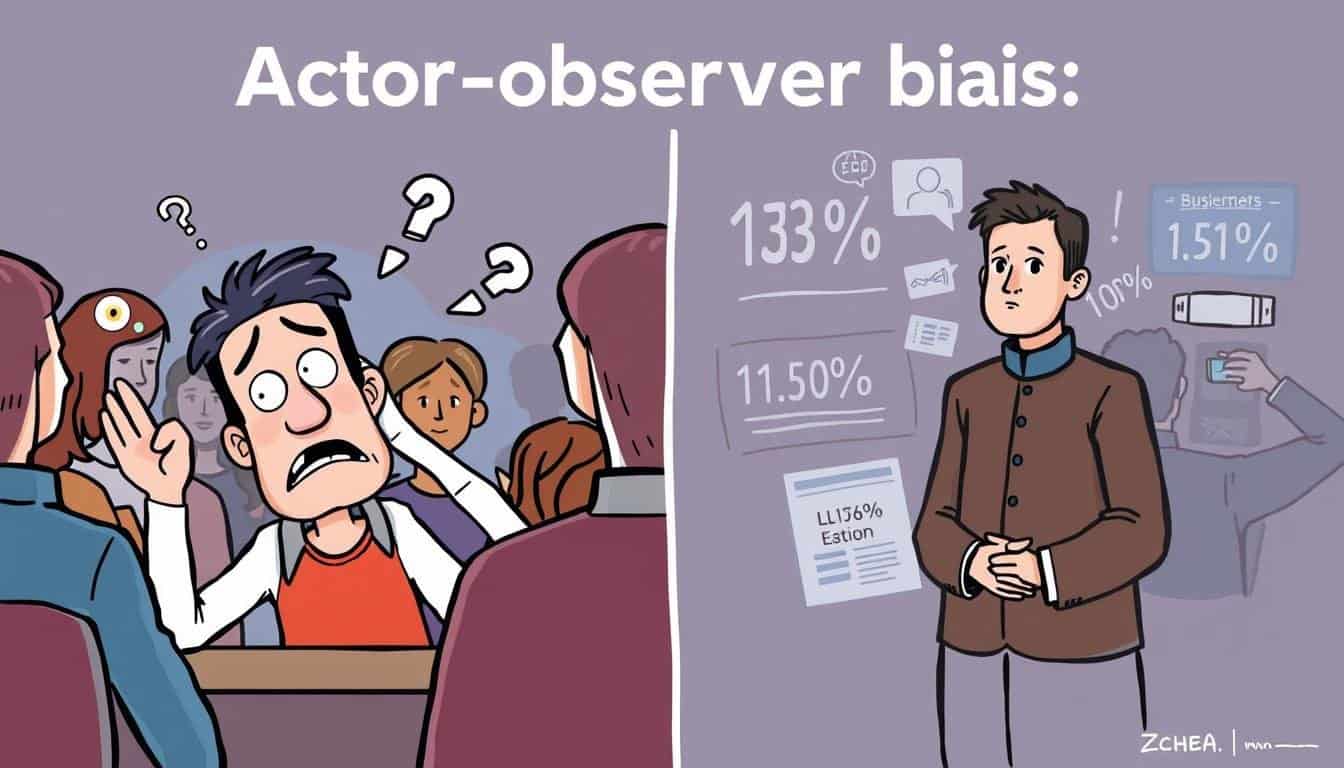
Their psychology teacher, overhearing this discussion later, pointed out the contradiction. “Kavya, you explained your own lateness through circumstances—metro delays and traffic. But you explained Rohan’s identical lateness through his personality—calling him disorganized and disrespectful. You both had the same external circumstances, yet you attributed your behavior to situation and his behavior to character. This is called actor-observer bias—when we act, we’re aware of all the external pressures and circumstances influencing us. When we observe others act, we see their behavior but not their circumstances, so we attribute their actions to their personality. We give ourselves situational explanations but give others dispositional explanations for the same behaviors.”
This double standard—generous situational explanations for our own behavior, harsh personality-based judgments of others’ identical behavior—affects relationships, conflicts, moral judgments, and countless daily interactions. Understanding actor-observer bias reveals why we’re often hypocritical without realizing it, judging others by their actions while judging ourselves by our intentions and circumstances.
What Is Actor-Observer Bias?
Actor-observer bias is the systematic difference in how we explain our own behaviors versus others’ behaviors. When explaining our own actions (acting), we emphasize external situational factors—circumstances, pressures, constraints that influenced us. When explaining others’ actions (observing), we emphasize internal dispositional factors—personality, character, stable traits that define them. The same behavior gets attributed to situation when we do it but to personality when others do it, creating systematic double standard in explanation and judgment.
The phenomenon was identified by social psychologists Edward Jones and Richard Nisbett. Research at Yale University demonstrated the bias across countless contexts: actors attribute their own failures to difficult circumstances but observers attribute the same failures to the actors’ lack of ability. Actors attribute their own successes to circumstances they managed but observers attribute successes to the actors’ personality. The perspective switch reverses explanatory patterns.
According to studies from Stanford University, actor-observer bias operates through informational and motivational mechanisms. Informationally, actors have privileged access to their own circumstances, intentions, and constraints—you know what traffic you faced, what pressures you felt, what options you considered. Observers lack this information, so they default to explaining behavior through visible personality traits. Motivationally, self-serving bias makes actors prefer external explanations for failures (protecting self-esteem) while observers’ explanations aren’t constrained by self-protection.
Research from University of Michigan demonstrates that actor-observer bias is stronger when: (1) behaviors are negative or failures (actors especially want situational excuses), (2) observers lack information about actors’ circumstances (making dispositional attribution easier), (3) cultural norms emphasize individual responsibility (Western cultures show stronger bias than collectivist cultures), and (4) actors and observers aren’t in empathetic relationship (empathy reduces the bias by helping observers imagine actors’ circumstances).
The Parable of the Judge and the Mirror
A teaching tale tells of a renowned judge known for harsh sentences and stern moral judgments. When criminals appeared before him, he focused entirely on their character. “This thief has a dishonest nature,” he’d pronounce. “This violent man has an evil disposition. These people are criminals because of who they are—their flawed characters and weak morals.”
One day, the judge was traveling to a neighboring town when his carriage broke down on a dangerous road at nightfall. He needed shelter urgently but had no money with him. He spotted a farmhouse and, in desperation, took a chicken from the yard to eat, intending to pay later but having no way to leave payment or explanation at that moment.
The farmer caught him. “Thief!” the farmer shouted. “I’m calling the authorities!” The judge protested: “You don’t understand! My carriage broke down, I had no money, it was an emergency, I was going to pay you back, the circumstances forced me to—” But the farmer interrupted: “That’s what all thieves say. You took my chicken. That makes you a thief. Your character is dishonest.”
The judge felt the injustice deeply. He wasn’t a thief! He was a good person forced by circumstances into behavior that seemed criminal but wasn’t reflective of his true character. His actions shouldn’t define him—his circumstances and intentions mattered!
Then, slowly, understanding dawned. How many people had he judged exactly this way—by their actions without considering their circumstances, by their behaviors without understanding their pressures? He’d defined others by what they did while wanting to be understood by what he intended and what circumstances forced upon him.
A wise observer explained the lesson: “When you act, you’re aware of all the reasons, pressures, and circumstances influencing you. Your actions feel circumstantial, situational, understandable given what you faced. But when you judge others’ actions, you see only the behavior, not the circumstances behind it. So you attribute their behavior to their character—who they fundamentally are—rather than to their situation—what circumstances forced them into. This double standard is universal. Everyone does it. Wisdom requires recognizing that others face circumstances and pressures you can’t see, just as you face circumstances others can’t see when they judge you.”
Buddhist philosophy addresses actor-observer bias in teachings about right understanding and empathy. The Buddha taught that judging others without understanding their circumstances creates suffering and injustice. The teaching of pratītyasamutpāda (dependent origination) emphasizes that all actions arise from causes and conditions—both internal dispositions and external circumstances. Actor-observer bias represents fixating on others’ dispositions while ignoring circumstances, creating incomplete understanding.
The Bhagavad Gita discusses this through Krishna’s teaching about karma and the causes of action. Krishna teaches that actions arise from complex interplay of prakriti (nature/circumstances), individual karma (past influences), and svabhava (inherent tendencies). Focusing only on personality while ignoring circumstances creates false understanding. The teaching emphasizes understanding the full context of action, not judging solely from visible behavior.
How Perspective Creates Hypocritical Judgment
In everyday conflicts and relationship tensions, actor-observer bias makes both parties feel misunderstood and unfairly judged. Research shows that in conflicts, each person explains their own hurtful behavior situationally (“I snapped because I was stressed”) while explaining the other’s identical behavior dispositionally (“You snapped because you’re temperamental”). This creates stalemate where neither feels understood and both feel unfairly characterized.
Studies from University of California, Berkeley analyzing couple conflicts found that 90% of partners attributed their own negative behaviors to circumstances while attributing partner’s negative behaviors to personality. This asymmetry prevents resolution—each person dismisses the other’s circumstantial explanations as excuses while insisting their own circumstances excuse their behavior.
In workplace attribution and performance evaluation, actor-observer bias makes employees attribute their failures to external obstacles while managers attribute the same failures to employee characteristics. Employee thinks: “I missed the deadline because the requirements kept changing” (situational). Manager thinks: “They missed the deadline because they lack time management skills” (dispositional). This creates frustration where employees feel unfairly blamed and managers feel employees make excuses.
Research demonstrates that performance reviews show clear actor-observer asymmetry. Employees’ self-evaluations emphasize circumstances affecting performance. Managers’ evaluations of same employees emphasize personality traits and abilities. Neither is simply wrong—actors genuinely have more information about circumstances than observers—but the gap creates conflict.
In moral judgment and blame assignment, actor-observer bias makes us judge our own moral failures situationally (“I lied because I didn’t want to hurt their feelings”) but others’ identical failures dispositionally (“They lied because they’re dishonest”). Research shows this asymmetry creates harsh judgment of others for behaviors we rationalize in ourselves—what we call “situational constraint” for ourselves becomes “moral failure” for others.
Studies show that mock jurors show actor-observer bias—defendants who testify and explain circumstances receive more lenient judgments than defendants who don’t testify. Simply having access to actor’s situational explanation reduces dispositional attribution. This reveals that the bias comes from information asymmetry—we know our circumstances but not others’.
In social and political polarization, actor-observer bias makes opposing groups attribute their own group’s negative behaviors to circumstances but the opposing group’s behaviors to character. Research shows this pattern in political conflicts: each side explains their own protests, conflicts, or controversial actions as justified responses to circumstances while explaining the other side’s identical actions as revealing their dangerous, immoral character.
Studies demonstrate that providing information about circumstances reducing actor-observer bias improves inter-group understanding. When people learn about the pressures and constraints influencing the opposing group’s behavior, dispositional attributions decrease and circumstantial understanding increases. Empathy bridges the information gap that creates the bias.
Balancing Dispositional and Situational Understanding
The most important practice for countering actor-observer bias is consciously seeking situational information before making dispositional judgments. When someone’s behavior seems to reflect poor character, ask: “What circumstances might have influenced this? What pressures were they under? What information am I missing?” Generate situational explanations for others’ behavior as readily as you generate them for your own.
Practice the “if I were in their shoes” exercise. Before judging someone dispositionally (“they’re lazy,” “they’re rude,” “they’re irresponsible”), imagine yourself in their exact circumstances and ask whether you might act similarly. Often the answer is yes—the same circumstances that you think justify your behavior would also influence others similarly. This recognition counters the double standard.
When explaining your own behavior, acknowledge dispositional factors alongside situational ones. Actor-observer bias makes you over-attribute your behavior to circumstances, ignoring personality contributions. If you’re consistently late, it’s not just circumstances—it’s also your time management or prioritization. If you lose your temper, it’s not just stress—it’s also your emotional regulation. Balancing situational and dispositional self-explanations creates consistency with how you explain others.
In conflicts, swap explanatory perspectives. Each person should explain their behavior situationally (as they naturally do) but then also try explaining it dispositionally as the other person might. Similarly, explain the other’s behavior dispositionally (as you naturally do) but then try explaining it situationally as they might. This perspective-taking reveals the bias and creates more balanced understanding.
Give others the benefit of explanatory charity you give yourself. When someone does something problematic, grant them the same generous circumstantial interpretation you grant yourself when you do problematic things. This doesn’t mean excusing everything—it means applying consistent standards where both person’s circumstances and character contribute to actions, rather than explaining yourself situationally but others dispositionally.
Remember Kavya who attributed her own lateness to metro delays but Rohan’s identical lateness to his personality, and the judge who wanted his theft understood circumstantially but judged others’ thefts dispositionally. Both illustrate how actor-observer bias creates hypocritical double standards where we judge ourselves by our intentions and circumstances but judge others by their actions and assumed character.
Actor-observer bias isn’t simply self-serving excuse-making—it reflects real informational asymmetry. You genuinely do know more about your circumstances than others know about them, and you know more about your intentions than are visible in your actions. Others observing you face genuine information deficit—they see your behavior but not all the pressures, constraints, and intentions behind it. Similarly, when you observe others, you face information deficit about their circumstances.
The solution isn’t assuming circumstances don’t matter (they do) or that personality doesn’t matter (it does). The solution is recognizing that both circumstances and dispositions always influence behavior—for you and for others—and applying this balanced understanding consistently. When you act, you emphasize circumstances because you’re aware of them. When others act, consciously seek their circumstances before judging their character. When explaining yourself, acknowledge your character’s role alongside circumstances. When judging others, acknowledge circumstances alongside character. This balanced approach treats everyone by the same standard: actions arise from both who people are and what situations they face, and understanding requires considering both factors rather than emphasizing one for yourself and the other for everyone else.
Frequently Asked Questions
Is actor-observer bias the same as making excuses for myself?
Not exactly—sometimes situational explanations are accurate (you genuinely were late because of traffic), not just excuses. The bias isn’t that situational explanations are always wrong—it’s that you apply them asymmetrically, accepting situational explanations for your behavior while rejecting them for others’ behavior and attributing theirs to personality. The bias is the double standard, not situational explanation itself. Both personality and circumstances influence behavior; the bias is treating them differently for self versus others.
How can I tell when my explanation is reasonable versus when I’m being biased?
Ask: Would I accept this same explanation if someone else offered it for the same behavior? If yes, it’s probably reasonable. If no (if you’d see their explanation as excuse but your own as legitimate), you’re probably experiencing actor-observer bias. Also check: Am I completely ignoring personality factors in explaining myself while emphasizing only circumstances? If yes, you’re likely overemphasizing situation to protect self-image. Balance requires acknowledging both personality and circumstances.
Does actor-observer bias mean I should judge myself as harshly as I judge others?
Not necessarily—it means you should judge both yourself and others with the same balanced consideration of circumstances and character. Don’t judge yourself more harshly dispositionally to compensate for bias. Instead, judge others more generously situationally to match how you judge yourself. The goal is consistent standards, not harsher self-judgment. Understand that others face circumstances and pressures just as you do, and both personality and situations influence everyone’s behavior.
Why do I feel so misunderstood when people judge me by my actions?
Because they’re observing and experiencing actor-observer bias—they see your actions but not all the circumstances and intentions behind them, so they attribute your behavior to your personality more than you do. You’re aware of all the pressures and constraints you faced; they’re not. This creates feeling of being unfairly characterized. The solution is both explaining circumstances so they understand and recognizing that you do the same to them—judging their actions without knowing their full circumstances.
Can empathy eliminate actor-observer bias?
Empathy significantly reduces but doesn’t eliminate it. When you empathize with someone, you imagine their circumstances more vividly, which increases situational attribution and decreases dispositional attribution—moving toward how they’d explain themselves. However, some information asymmetry remains (you never have complete access to their circumstances and internal states), and motivational factors (self-serving bias) still operate for your own behavior. Empathy helps but doesn’t completely overcome the different perspectives actors and observers inevitably have.
Observer Voice is the one stop site for National, International news, Sports, Editor’s Choice, Art/culture contents, Quotes and much more. We also cover historical contents. Historical contents includes World History, Indian History, and what happened today. The website also covers Entertainment across the India and World.

