

Why Assuming All Engineers Are Bad at Writing Is Wrong: Understanding Stereotyping

Priya was nervous as she waited for her job interview at a leading Mumbai marketing firm. She had a stellar portfolio—creative campaigns, excellent writing samples, proven results from her internships. But when the interviewer looked at her resume and saw “Bachelor’s degree in Computer Science from IIT,” his expression changed.
“You’re a computer science graduate?” he asked, surprise evident in his voice. “That’s unusual for a marketing position. You know this role requires strong communication skills, creativity, and people skills, right? Tech people usually struggle with those.”
Priya was stunned. The interviewer hadn’t asked about her communication skills, looked at her writing portfolio, or inquired about her experience. He’d simply seen “Computer Science” and immediately assumed she lacked the skills the job required—based purely on a stereotype about technical students.
“Actually,” Priya said carefully, “if you look at page two of my portfolio, you’ll see I’ve written campaign copy for five major brands, managed client communications for three successful projects, and led creative teams at two internships. My technical background helps me understand data-driven marketing, but I’ve spent four years developing my communication and creative skills. I’m not ‘a tech person who can’t communicate’—I’m someone with both technical and creative abilities.”
The interviewer, embarrassed, actually looked at her portfolio and realized his error. Priya got the job. But she’d almost been dismissed based on a stereotype—the assumption that because she studied computer science, she must fit the stereotype of “tech people” being poor communicators, without any actual assessment of her specific skills.
This cognitive shortcut—assuming individuals have certain characteristics based solely on their group membership—affects everything from hiring decisions to social interactions to justice system outcomes. Understanding stereotyping reveals how much our judgments of individuals are distorted by assumptions about groups they belong to.
What Is Stereotyping?
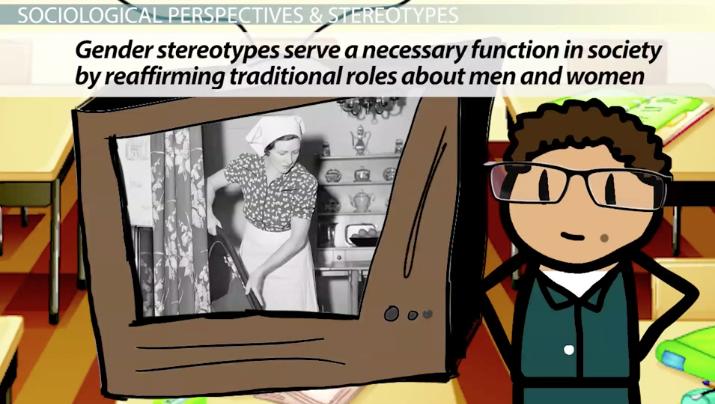
Stereotyping is the cognitive process of attributing characteristics to an individual based solely on their membership in a particular group (gender, race, profession, age, nationality, etc.) without having actual information about that specific individual. It’s expecting someone to be a certain way—intelligent, athletic, bad at math, good at cooking, aggressive, passive—purely because of their group membership, rather than based on knowledge of them as individuals.
The phenomenon has been extensively studied in social psychology. Research at Princeton University demonstrated that people hold remarkably consistent stereotypes about various groups, and these stereotypes powerfully influence perception and behavior toward group members, even when the stereotype contradicts actual information about specific individuals.
According to studies from Yale University, stereotyping operates as a cognitive efficiency mechanism—the brain uses group-based generalizations as shortcuts to quickly form impressions without investing effort in learning about individuals. This can be efficient when stereotypes are accurate, but becomes problematic when stereotypes are inaccurate, overgeneralized, or applied rigidly without regard to individual variation within groups.
Research from Stanford University demonstrates that stereotyping affects perception at multiple stages: what we notice (stereotype-consistent information is more salient), how we interpret ambiguous behavior (interpreted to fit stereotypes), and what we remember (stereotype-consistent information is recalled better). These processes combine to create self-perpetuating cycles where stereotypes, once formed, resist change even when encountering counter-stereotypical individuals.
The Wise Judge and the Four Defendants
A teaching story tells of a judge known for her wisdom and fairness. Four defendants appeared before her in separate cases, all accused of the same crime—theft. The first was a poor young man in tattered clothes. The second was a wealthy merchant in fine robes. The third was an elderly grandmother. The fourth was a teenage girl.
In each case, observers made assumptions based on stereotypes. “The poor young man clearly did it—poor people steal,” some whispered. “The wealthy merchant is obviously innocent—rich people don’t need to steal,” others said. “The grandmother couldn’t have done it—elderly women aren’t criminals,” some insisted. “The teenage girl must be guilty—young people today have no values,” others claimed.
But the wise judge refused to hear these stereotype-based judgments. She examined the evidence carefully in each case. The investigation revealed surprising truths: The poor young man was innocent—he’d been elsewhere and had witnesses. The wealthy merchant was guilty—he’d been stealing from business partners for years. The elderly grandmother was guilty—she’d been shoplifting. The teenage girl was innocent—she’d been falsely accused by the actual thief trying to frame her.
The judge’s ruling stunned those who’d made stereotype-based assumptions. She explained her wisdom: “You judged these four based on their group memberships—poor, rich, old, young—without examining their actual individual circumstances. Your stereotypes were wrong in every case. I judged each person based on evidence specific to them, not assumptions about groups they belong to. This is justice—treating individuals as individuals, not as mere representatives of categories. Stereotypes make us intellectually lazy and morally careless, judging before we truly know.”
Buddhist philosophy addresses stereotyping in teachings about seeing clearly without conceptual overlays. The Buddha taught that humans impose concepts and categories onto reality, then respond to the concepts rather than to reality itself. Stereotyping represents seeing category membership (woman, engineer, American, elderly) rather than seeing the actual individual before you. Right view requires seeing past categories to individual reality.
The Bhagavad Gita discusses this through Krishna’s teaching about seeing the divine in all beings without distinction. Krishna teaches that wisdom means recognizing the shared essence in all people rather than being distracted by surface categories that create false distinctions. Stereotyping represents the opposite—obsessing over surface categories (caste, gender, nationality) while missing individual human reality that transcends categories.
How Stereotyping Distorts Judgment
In hiring and workplace decisions, stereotyping causes systematic discrimination. Studies show that identical resumes receive different evaluation based purely on perceived gender or race of applicant—resumes with stereotypically “white” names receive more callbacks than identical resumes with stereotypically “Black” or “Hispanic” names. Stereotypes about which groups are competent at which tasks directly influence hiring decisions independent of actual qualifications.
Research from Harvard Business School using controlled experiments found that people consistently rate identical work products differently based on believed gender, race, or age of the person who created them. A scientific paper attributed to a male author is rated higher than the same paper attributed to a female author. This reveals pure stereotyping—evaluation based on group membership rather than actual quality of work.
In education and student assessment, stereotyping affects teacher expectations and evaluations. Research shows that teachers hold different expectations for students based on gender, race, and socioeconomic status stereotypes, and these expectations become self-fulfilling. Students teachers expect to do well (based partly on stereotypes) receive more attention, encouragement, and higher grades for equivalent work than students teachers expect to do poorly.
Studies demonstrate that when teachers are told a student is “gifted” versus “average” (randomly assigned, not based on actual ability), the “gifted” students receive more engaging instruction, more challenging material, and higher grades for similar work. Stereotype-based expectations create differential treatment that produces the very performance differences the stereotypes predict.
In law enforcement and criminal justice, stereotyping creates racial profiling and biased enforcement. Research consistently shows that people associate certain racial groups with crime more than others, and this stereotype influences police decisions about whom to stop, search, and arrest. Studies using video simulations find that officers are quicker to “shoot” Black suspects than white suspects in identical threatening scenarios—stereotype-based threat perception.
Research demonstrates that these stereotypes persist among well-meaning officers who explicitly reject prejudice, revealing how automatic stereotyping operates independent of conscious attitudes. The result is systematically biased enforcement where members of stereotyped groups face higher scrutiny and harsher treatment for identical behaviors.
In healthcare and medical treatment, stereotyping affects diagnosis and treatment quality. Studies show that doctors hold stereotypes about which groups experience pain, which are reliable reporters of symptoms, and which will comply with treatment. These stereotypes lead to under-treatment of pain in Black patients compared to white patients with identical conditions, under-diagnosis of heart disease in women compared to men with identical symptoms, and other systematically biased medical care.
Research demonstrates that medical professionals, despite extensive training, still show stereotype effects in patient evaluation and treatment decisions. The stereotypes operate quickly and automatically, influencing medical judgment before conscious reasoning and explicit commitments to equality can override them.
In social interactions and relationship formation, stereotyping limits who we befriend, date, and collaborate with. People avoid, dismiss, or fail to connect with individuals from stereotyped groups based on assumptions about what “those people” are like, missing opportunities for valuable relationships because stereotypes prevented giving individuals fair chances.
Studies show that stereotype-based social segregation is self-perpetuating—if you avoid a group based on stereotypes, you never get individual experiences that would contradict those stereotypes, and your stereotypes remain unchanged. Breaking this cycle requires deliberately seeking interactions that disconfirm stereotypes.
Seeing Individuals Beyond Categories
The most important practice for reducing stereotyping is consciously treating individuals as individuals rather than as category representatives. When you meet someone, notice when you’re making assumptions based on their apparent group membership (gender, age, profession, ethnicity, etc.) and deliberately suspend those assumptions while you learn about them specifically. Ask yourself: “What do I actually know about this person versus what am I assuming based on groups they belong to?”
Seek individual-specific information actively before making judgments. If you’re hiring, read the actual work samples and interview responses rather than making assumptions based on degree, gender, or age. If you’re evaluating someone’s idea, focus on the idea’s merits rather than stereotypes about the person presenting it. Evidence about individuals should override generalizations about groups.
Expose yourself to counter-stereotypical examples intentionally. Stereotypes persist partly because we notice and remember stereotype-confirming instances while dismissing or forgetting stereotype-violating instances. Deliberately attending to counter-stereotypical examples—competent people from groups stereotyped as incompetent, creative people from groups stereotyped as uncreative—helps break automatic stereotype associations.
Recognize that variation within groups is larger than variation between groups. The stereotype might be that Group A is more X than Group B on average, but the reality is that both groups contain members ranging from very low to very high on X, with substantial overlap. Knowing someone’s group membership tells you almost nothing about where that specific individual falls on the characteristic. Stereotypes about group averages have little predictive value for individuals.
When you catch yourself stereotyping, actively correct your judgment. Everyone stereotypes—it’s automatic brain functioning. The key is recognizing when it happens and consciously overriding the stereotype with individual-specific information. “I just assumed he’d be bad at communication because he’s an engineer—let me actually listen to how he communicates rather than filtering his words through that stereotype.”
Challenge stereotyping in others when you observe it. When someone makes decisions based on stereotypes—”We shouldn’t hire her; women with young children won’t be committed” or “He probably can’t handle complex analysis; he’s just a salesperson”—point out they’re stereotyping rather than evaluating the individual. Social accountability reduces stereotyping when people know others will challenge it.
Remember Priya almost losing a job opportunity because an interviewer stereotyped computer science students as poor communicators without looking at her actual abilities. Remember the wise judge who rejected stereotype-based assumptions about the poor, rich, old, and young to judge each defendant based on individual evidence. Both illustrate how stereotyping makes us judge group membership rather than individual reality, creating systematic errors and injustices.
Stereotyping isn’t moral failure or malicious prejudice in most cases—it’s cognitive shortcut our brains take to efficiently process social information. But efficient doesn’t mean accurate. Stereotypes are overgeneralizations that ignore individual variation, treat statistical trends as universal rules, and create self-fulfilling prophecies through biased perception and treatment. Breaking stereotyping requires conscious effort to see past categories to individuals, to gather individual-specific information before judging, and to hold yourself accountable when you catch automatic stereotypes influencing your perceptions and decisions. The person in front of you is not “a woman,” “an engineer,” “an elderly person,” or “a teenager”—they’re a specific unique individual whose characteristics, abilities, and qualities must be learned through interaction, not assumed through group membership.
Frequently Asked Questions
How are stereotypes different from recognizing that groups sometimes differ on average?
Statistical differences between group averages can be real (though often smaller than stereotypes suggest). The problem is applying group averages to individuals. Even if Group A averages higher than Group B on some trait, both groups contain individuals ranging from very low to very high, with massive overlap. Knowing someone’s group membership tells you almost nothing about where that individual falls. Stereotyping treats individuals as if they necessarily match group averages, ignoring individual variation.
Can stereotypes ever be accurate and therefore useful?
Some stereotypes contain kernels of statistical truth (often exaggerated), but using them to judge individuals is still problematic. First, even “accurate” stereotypes are probabilistic, not deterministic—they describe tendencies, not universals. Second, stereotype-based judgments become self-fulfilling through biased perception and treatment. Third, the moral and practical costs of judging individuals based on group membership outweigh any efficiency gained. Get individual information; it’s more accurate than any stereotype.
If everyone stereotypes automatically, how can I be expected not to?
You can’t prevent automatic stereotype activation—it happens unconsciously in everyone. But you can prevent stereotypes from influencing judgments and behavior through conscious override. Research shows a two-stage process: automatic activation (not controllable) and conscious application (controllable). With awareness and effort, you can notice when stereotypes are activated and consciously base judgments on individual information rather than stereotypes. This is effortful but possible.
Do positive stereotypes cause harm like negative stereotypes?
Yes—”positive” stereotypes still harm by: (1) creating pressure to conform to stereotype, (2) being applied rigidly without regard for individuals who don’t fit, (3) often having negative flip sides (“Asians are good at math” implies “Asians aren’t creative”), and (4) denying individuality by assuming all group members are the same. Whether stereotype is positive or negative, it’s still treating individuals as interchangeable representatives of groups rather than as unique individuals.
How can I tell if I’m stereotyping or making a reasonable inference based on base rates?
Ask: Am I treating this statistical information as deterministic (assuming this individual necessarily fits the pattern) or probabilistic (recognizing this individual might or might not fit the pattern)? Am I actively seeking individual-specific information, or am I comfortable judging based purely on group membership? Am I willing to rapidly update my judgment when individual evidence contradicts the stereotype? If you’re treating group membership as definitive, ignoring individual information, and resistant to updating based on evidence, you’re stereotyping rather than reasoning carefully with base rates.
Observer Voice is the one stop site for National, International news, Sports, Editor’s Choice, Art/culture contents, Quotes and much more. We also cover historical contents. Historical contents includes World History, Indian History, and what happened today. The website also covers Entertainment across the India and World.

