

Why People Ignored Warnings Before the Tsunami: Understanding Normalcy Bias

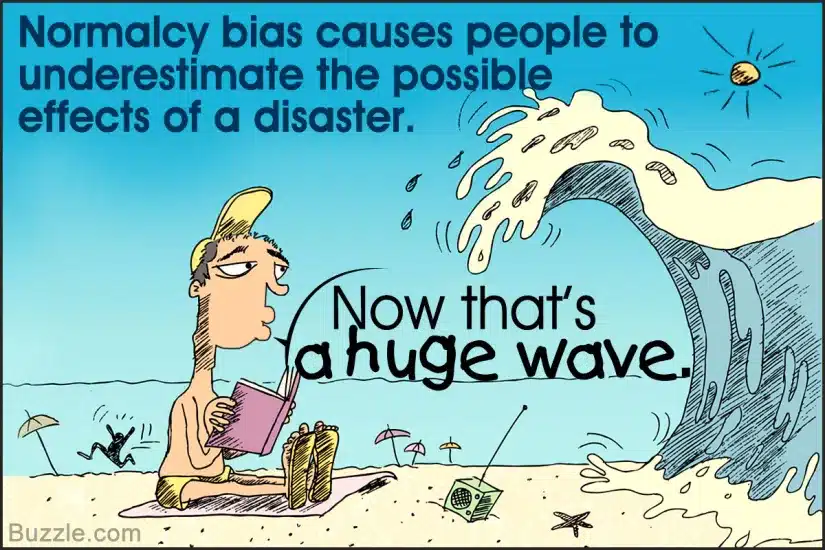
On December 26, 2004, hours before the Indian Ocean tsunami struck, fishermen in a coastal Tamil Nadu village noticed something strange. The sea had receded unusually far from the shore, exposing areas of the seabed that were normally underwater. Some had heard stories from their grandfathers about how the ocean pulls back before a giant wave.
A few villagers who understood the warning sign ran through the streets shouting for everyone to move to higher ground immediately. But most people ignored them. “The sea has been here for thousands of years and never harmed us,” they said. “This is probably just a strange tide. Why would we abandon our homes and businesses based on a rumor?”
Even as the warnings grew more urgent, many refused to leave. “Nothing like this has ever happened in our lifetime,” they reasoned. “Our parents lived here their whole lives without incident. Our grandparents too. This talk of giant waves is exaggeration.” Some even walked toward the exposed seabed, curious about the unusual phenomenon, treating it as a spectacle rather than a danger signal.
When the tsunami struck thirty minutes later, those who had evacuated survived. Many who stayed, insisting that such a disaster was impossible because it had never happened before, did not. They had experienced normalcy bias—the tendency to believe that because something has never happened, it won’t happen, even when clear warning signs suggest otherwise.
This cognitive trap affects not just individuals facing natural disasters but also societies dealing with pandemics, financial crises, and technological disruptions. Understanding normalcy bias reveals why we often fail to prepare for rare but catastrophic events and why “this has never happened before” is one of the most dangerous thoughts humans can have.
What Is Normalcy Bias?
Normalcy bias is our tendency to underestimate the possibility of disaster and assume that life will continue normally even when facing clear evidence that something catastrophic is about to occur. We believe that because things have always been a certain way, they will continue that way. This makes us minimize warnings, delay evacuation, fail to prepare, and continue normal routines even as disaster approaches.
The phenomenon was formally identified through studies of disaster survivors. Research at University of Delaware analyzing survivor accounts from fires, floods, and other disasters found that 70-80% of people initially responded to warnings with disbelief and continued normal activities. Even when alarms sounded, smoke appeared, or authorities ordered evacuation, most people’s first response was to assume it was a false alarm, that things would return to normal, or that the danger was exaggerated.
According to research from Yale University, normalcy bias operates through several mechanisms. Our brains use past experience to predict the future—a generally useful shortcut that fails catastrophically for rare events. If you’ve never experienced a tsunami, earthquake, or building collapse, your brain treats these as low-probability events not worth serious concern or preparation. The absence of past disaster creates a false sense of security about future safety.
Studies from Stanford University show that normalcy bias intensifies with the magnitude of the threatened disruption. The bigger and more transformative the potential disaster, the harder we resist believing it will actually happen. This creates a perverse situation where the most dangerous threats—those that would fundamentally disrupt normal life—are the ones we’re most likely to dismiss as impossible or exaggerated.
The Foolish Man Who Built on the Riverbank
A parable found across many cultures tells of two neighbors who built houses in a valley. One built on high ground, well away from the river. The other built on the fertile, flat riverbank. When asked about flood risk, the riverbank builder scoffed: “This river has flowed peacefully for fifty years. My grandfather farmed this land, my father farmed this land, and I farm this land. We’ve never seen a flood. Why should I believe in floods that have never happened?”
The builder on high ground replied: “The river has flooded before—perhaps once every hundred years, perhaps every two hundred years. Just because we haven’t seen it doesn’t mean it won’t happen. I build for the storm that comes once in a lifetime, not for the sunshine that comes every day.”
Decades passed with no flood. The riverbank builder prospered with easy access to water and rich soil. He mocked his neighbor on high ground for wasting effort building far from the river. “See? I was right. Your fears of floods were foolish. Nothing bad happens here.”
Then, in an unusually rainy season, the river flooded catastrophically—an event that happens only once every 150 years on average. The house on the riverbank was destroyed. The builder barely escaped with his life. As he stood looking at the ruins, he finally understood: the absence of past disaster doesn’t mean absence of future disaster. Normalcy bias had convinced him that because he’d never seen a flood in his fifty years, floods didn’t happen. But the river operated on a timescale longer than one human lifetime.
Buddhist philosophy addresses normalcy bias in teachings about impermanence and preparedness. The Buddha taught that all things are impermanent and subject to change, yet humans persistently believe in the permanence of present conditions. We assume our health, wealth, relationships, and circumstances will continue as they are, even though change is the fundamental nature of reality. Normalcy bias represents attachment to the illusion of permanence.
The Bhagavad Gita touches on this through Krishna’s teaching about the cycles of time and the inevitability of change. Krishna teaches Arjuna that clinging to “how things have always been” represents ignorance of the fundamental nature of reality, which includes both stability and upheaval. Wisdom requires preparing for changes and disruptions even when current conditions seem stable and permanent.
How Normalcy Bias Endangers Lives
In natural disasters and emergencies, normalcy bias costs lives by delaying evacuation and emergency response. When fire alarms sound in buildings, most people initially assume it’s a false alarm and continue their activities rather than immediately evacuating. Studies show the average person delays 3-5 minutes before responding to alarms—enough time to be trapped when the alarm is real. The reasoning is always the same: “It’s probably nothing. This has never been a real emergency before.”
Research from Harvard University on the 9/11 attacks found that many people in the towers initially returned to their desks after the first plane hit, assuming it was an isolated accident and normal work would resume. Normalcy bias made them underestimate the need for immediate evacuation even after an airplane had just crashed into their building. Those who recognized the disruption to normalcy and evacuated immediately had higher survival rates.
In pandemics and health crises, normalcy bias delays critical responses. In the early months of COVID-19, many governments and individuals dismissed warnings as exaggeration because “pandemics like this don’t happen anymore.” The century since the 1918 flu pandemic had created normalcy bias—we’d never personally experienced such an event, so we assumed it couldn’t happen. This delay in taking the threat seriously cost millions of lives globally.
Similarly, individuals ignore health symptoms because “I’ve always been healthy” or “this has never been serious before.” Normalcy bias makes people delay seeking treatment for concerning symptoms, assuming that because they’ve always been fine, they’ll continue to be fine. Sometimes this delay allows treatable conditions to become untreatable.
In financial markets and economic planning, normalcy bias creates the conditions for crashes and crises. Before every financial crisis—1929, 2008, and others—many experts declared that such crashes were impossible in the modern financial system. “This time is different” or “we’ve learned from past mistakes” or “the economy has never crashed during periods of X” all represent normalcy bias. The absence of recent crisis creates false confidence that crisis can’t occur.
Individuals show the same bias in personal finances. “Housing prices have never declined in this city” leads to over-leveraging that becomes catastrophic when prices do decline. “I’ve always had stable employment” leads to insufficient emergency savings that becomes devastating when job loss occurs. The pattern of past stability creates dangerous assumptions about future stability.
In technological and social change, normalcy bias makes people dismiss transformative changes as impossible. Before every major technological disruption—automobiles replacing horses, computers transforming work, internet changing commerce—experts dismissed the change as impossible or impractical because it had never happened before. “People have always used X” becomes a reason to believe they’ll continue using X forever, even when superior alternatives emerge.
Societies show normalcy bias about political and social stability. “We’ve always had peaceful transitions of power” or “that kind of violence doesn’t happen here” creates vulnerability to political upheaval. The assumption that present stability guarantees future stability has preceded virtually every social collapse, revolution, and regime change in history.
Preparing for the Unprecedented
The key to overcoming normalcy bias is recognizing that the past, while informative, doesn’t determine or limit the future. Just because something hasn’t happened doesn’t mean it can’t or won’t happen. Ask yourself: “What would I do if this warning/threat/signal turned out to be real?” Then do those things, even if past experience suggests it’s probably a false alarm.
Study history and statistics, not just personal experience. Your lifetime represents a tiny sample. Events that happen once per century won’t appear in most people’s direct experience but are guaranteed to occur. Understanding that floods, pandemics, market crashes, and other disasters happen on timescales longer than individual lives helps override the normalcy bias created by lack of personal experience.
Practice “what if” thinking deliberately. Don’t just plan for continuation of present conditions. Regularly imagine: “What if my industry disappeared? What if I lost my job? What if disaster struck?” This mental rehearsal of abnormality counteracts normalcy bias’s automatic assumption that current conditions will persist indefinitely.
Respond immediately to warnings and alarms even when they’re usually false. The cost of unnecessary evacuation or preparation is typically far lower than the cost of delayed response to a real emergency. “Probably a false alarm but I’ll evacuate anyway” is the anti-normalcy-bias mindset that saves lives. The normalcy bias mindset—”probably a false alarm so I’ll ignore it”—costs lives.
Build resilience and buffers that protect against unexpected disruptions. Emergency funds, insurance, diversified skills, flexible plans, and redundant systems all reduce vulnerability to normalcy bias. If disaster strikes, these buffers provide time to respond rather than being immediately overwhelmed. They’re not “wasted” if disaster doesn’t strike—they provide security and options regardless of outcomes.
Learn from near-misses rather than treating them as proof of safety. When warnings turn out to be false alarms or minor events, don’t conclude “see, there was no real danger.” Conclude “this time we were fortunate, but the warning mechanism exists for a reason.” Near-misses should increase preparedness, not reinforce normalcy bias.
Remember the villagers who wouldn’t evacuate before the tsunami, certain that because the ocean had never harmed them before, it never would. Remember the riverbank builder who dismissed flood warnings because he’d never seen a flood. Both paid catastrophic prices for normalcy bias—the assumption that the future must resemble the past, that the unprecedented can’t occur, that “it’s never happened before” means “it can’t happen now.”
The past provides guidance, but it doesn’t create guarantees. The unprecedented happens regularly—that’s what makes it unprecedented. And once it happens, it’s too late to prepare. The time to prepare for unprecedented disasters is before they’re precedented, when normalcy bias whispers that preparation is unnecessary because “that’s never happened before.” That whisper has preceded every catastrophe in human history. Recognizing it, questioning it, and preparing despite it transforms normalcy bias from an invisible death trap into a recognized tendency we consciously choose to overcome.
Frequently Asked Questions
How is normalcy bias different from being optimistic?
Healthy optimism acknowledges risks while believing you’ll handle them effectively. Normalcy bias denies that risks exist or could actually materialize because they haven’t before. An optimist says “I could lose my job, but I have savings and skills to find another.” Normalcy bias says “I won’t lose my job—layoffs don’t happen in my department.” Optimism is active hope combined with preparation; normalcy bias is passive assumption that prevents preparation.
If I prepare for disasters that might not happen, isn’t that wasted effort?
Most disaster preparation provides value regardless of whether disaster strikes. Emergency savings help with unexpected expenses even if you never lose your job. Insurance provides security even if you never file claims. Evacuation plans and supplies work for multiple emergencies, not just the specific one you imagined. And the mental preparedness—knowing what you’d do if X happened—reduces panic and improves responses across all unexpected situations. Preparation for unlikely events isn’t wasted; it’s insurance.
Why would evolution give us normalcy bias if it’s so dangerous?
Because for most of human history in small-scale societies, stability was normal and dramatic change was rare. If your tribe survived in a location for generations, assuming it would remain safe was usually correct and saved the mental effort of constant vigilance. Normalcy bias became dangerous when humans began living in cities, building infrastructure, creating complex economies—environments where rare catastrophic failures are more common and more devastating. Evolution didn’t prepare us for skyscrapers, pandemics, or financial markets.
Can normalcy bias ever protect us from overreacting to false alarms?
In theory yes, but in practice the costs are asymmetric. The cost of underreacting to a real alarm (death, devastation) typically far exceeds the cost of overreacting to a false alarm (inconvenience, wasted preparation). Given this asymmetry, it’s better to err toward overreaction. Normalcy bias makes us err toward underreaction, which is dangerous. You want enough skepticism to avoid panic, but not so much that you dismiss genuine warnings as false alarms.
How can I tell if my sense that “this is fine” is accurate or normalcy bias?
Ask: “Am I ignoring clear warning signals or expert advice because I’ve never personally experienced this problem before?” If yes, it’s likely normalcy bias. If you’re hearing warnings from credible sources and your main counterargument is “but this has never happened,” suspect normalcy bias. If instead you’re evaluating the specific evidence for this particular situation and concluding the threat is low based on analysis rather than on “never happened before,” that’s more likely accurate assessment. The key difference: are you analyzing the current situation or just projecting past stability onto the future?
Observer Voice is the one stop site for National, International news, Sports, Editor’s Choice, Art/culture contents, Quotes and much more. We also cover historical contents. Historical contents includes World History, Indian History, and what happened today. The website also covers Entertainment across the India and World.

