

India’s Energy Resilience Tested by Crude Oil Benchmark Volatility, Refinery Economics, and Supply Chain Disruptions

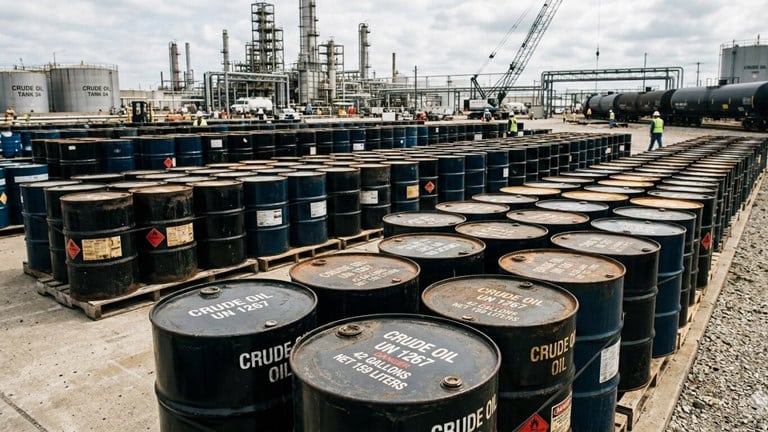
The ongoing crisis in the Middle East has significantly disrupted global oil markets, particularly affecting countries like India that rely heavily on crude oil imports. With nearly 90% of its oil needs met through imports, and about half of that passing through the crucial Strait of Hormuz, India faces a precarious situation. The geopolitical tensions have led to supply route disruptions, raising concerns about energy security and economic stability in the region.
Impact of the Middle East Crisis on Oil Supply
The current geopolitical turmoil has exposed vulnerabilities in the global oil supply chain. The Strait of Hormuz, a vital passage for oil transport, has seen a dramatic collapse in crude flows, with the International Energy Agency (IEA) reporting disruptions of nearly 20 million barrels per day. This situation is particularly critical for India, which imports a substantial portion of its crude oil through this route. The Indian government has indicated that existing reserves can sustain consumption for about 60 days, but the ongoing crisis raises questions about long-term supply stability.
Reports from professionals in the region highlight operational challenges, with many employees unable to reach work due to safety concerns following missile attacks. The focus in the oil market has shifted from merely managing supply and demand to ensuring resilience and adaptability in the face of disruptions. This recalibration is testing pricing benchmarks and refining systems, as countries scramble to secure alternative supply routes and maintain steady flows of oil.
The Complexity of Crude Oil Pricing
Understanding crude oil pricing requires knowledge of its composition and characteristics. Crude oil is not a uniform substance; it varies in density and sulfur content, which influences its market value. Light crude, which is less dense and yields higher-quality products, commands a premium, while heavier, sour crude is generally cheaper due to the additional processing required. The Middle East predominantly produces sour crude, while North America and the North Sea offer lighter, sweeter grades.
Pricing benchmarks like Brent, West Texas Intermediate (WTI), and Dubai/Oman play crucial roles in the global oil market. Brent crude, derived from North Sea fields, serves as the primary global benchmark, influencing two-thirds of traded crude prices. WTI, while a key U.S. benchmark, is affected by regional logistical constraints. Meanwhile, Dubai/Oman is essential for Asian markets, including India, where it serves as a pricing reference for the majority of imported crude.
India’s Refinery Infrastructure and Challenges
India’s refining capacity is substantial, with 23 refineries capable of processing approximately 256.8 million metric tonnes of crude annually. The strategic placement of these refineries along the western coastline facilitates the import of crude oil directly from sea terminals. The largest refinery, Reliance Industries’ Jamnagar complex, is a significant player in this landscape.
Despite this robust infrastructure, the current crisis poses challenges. In February 2026, Indian refineries processed nearly 22 million metric tonnes of crude, with a significant portion imported. The ongoing disruptions in the Strait of Hormuz could impact the flow of crude to these refineries, potentially leading to shortages or increased prices. The Indian government has assured that the supply situation is secure, but the evolving geopolitical landscape necessitates vigilance and adaptability in managing energy resources.
Economic Implications of Rising Oil Prices
The economic ramifications of rising oil prices are complex and multifaceted. India’s import bill for crude oil is substantial, and any increase in prices can widen the current account deficit and exert pressure on the Indian rupee. A weaker currency further exacerbates the cost of oil imports, creating a feedback loop that complicates fiscal management.
As the Indian basket price for crude oil rises, state fuel retailers are facing significant losses on petrol and diesel sales. In response, the government has implemented measures such as reducing excise duties and imposing export taxes to stabilize the market. Finance Minister Nirmala Sitharaman emphasized the government’s commitment to managing the fiscal position while ensuring energy security. The situation remains fluid, with ongoing diplomatic efforts and alternative sourcing strategies being employed to mitigate the impact of the crisis on India’s energy landscape.
Observer Voice is the one stop site for National, International news, Sports, Editor’s Choice, Art/culture contents, Quotes and much more. We also cover historical contents. Historical contents includes World History, Indian History, and what happened today. The website also covers Entertainment across the India and World.
Follow Us on Twitter, Instagram, Facebook, & LinkedIn

