

Why Fake News Sticks in Your Mind Even After Being Debunked: The Continued Influence Effect

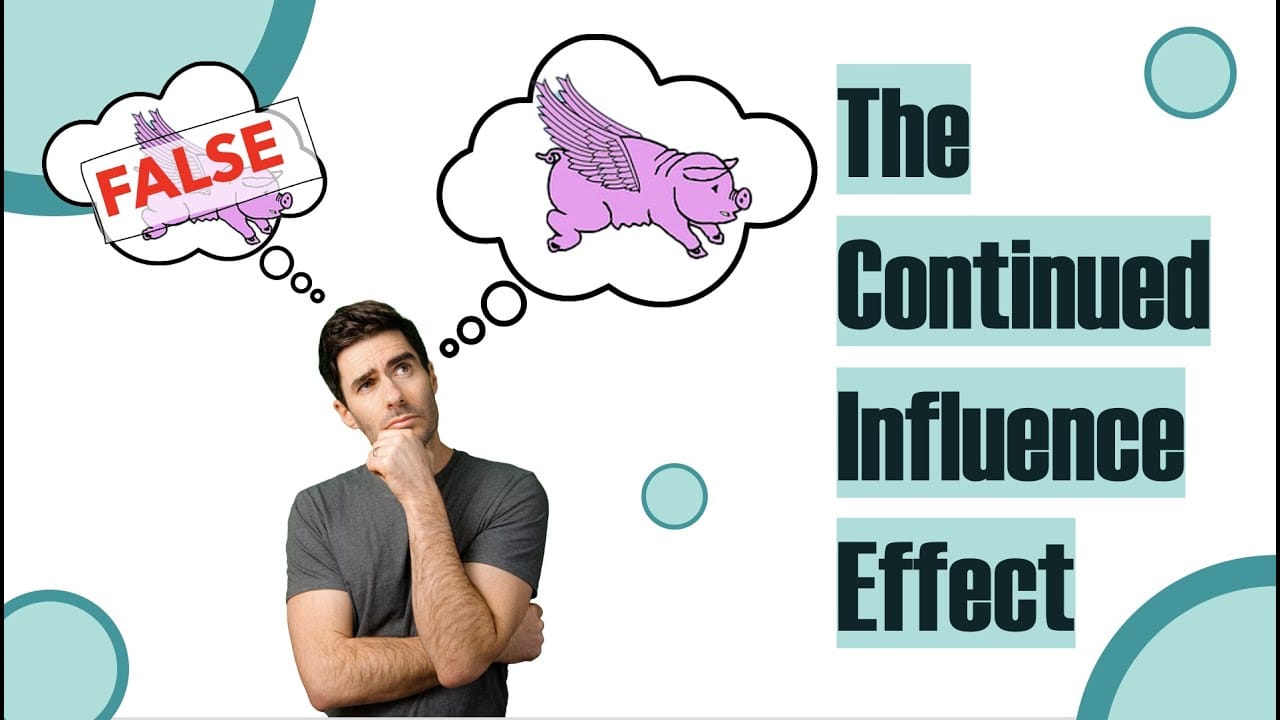
Imagine reading a news article that reports a warehouse fire was caused by careless oil paint storage near gas canisters. The next day, authorities issue a correction: there were no oil paints or gas canisters—the cause was actually faulty wiring. If someone later asks you about the fire, you’ll probably mention the faulty wiring. But if asked why the fire spread so quickly or what made it particularly dangerous, you might still reference the oil paints and gas, even though you know that information was false. This is the continued influence effect—the stubborn persistence of misinformation in our reasoning even after we’ve been explicitly told it’s wrong and we consciously accept the correction. The false information doesn’t disappear from memory or influence; it continues shaping our thoughts, explanations, and conclusions in subtle but powerful ways.
The continued influence effect is disturbingly robust. It’s not that people forget the correction or don’t believe it. When asked directly, they’ll confirm the correction is true. But when making inferences, generating explanations, or answering related questions, the original misinformation still influences their thinking. Research from University of Western Australia’s cognitive psychology lab has demonstrated this effect across hundreds of experiments. People read a story containing misinformation, receive a clear correction, acknowledge the correction, yet still rely on the false information when reasoning about the situation later. The effect persists even when corrections are highlighted, repeated multiple times, and explained in detail. Simply telling people something is false isn’t enough to neutralize its influence on subsequent thinking.
Think of it like trying to unring a bell. Once the false information enters your mind, it becomes integrated into your mental model of the situation. You build explanations, make connections, and form inferences based on it. When the correction arrives, you can add the new true information to your mental model, but the false information doesn’t get cleanly deleted. It remains embedded in the web of associations and explanations you’ve already constructed. Research from Stanford’s Social Psychology Lab uses the metaphor of a scaffolding. Misinformation serves as scaffolding for building an understanding of events. Even after the scaffolding is removed, the structure built upon it remains standing, continuing to shape your overall understanding.
There’s an ancient Indian tale that captures this phenomenon perfectly. A traveling merchant spread rumors in a village that the local well was cursed, causing all who drank from it to fall ill within days. Panic ensued, people stopped using the well, and some even claimed to feel sick after their last drink. A wise physician investigated and publicly announced the well was perfectly safe—the merchant had lied to sell his own water. The village accepted this correction and returned to using the well. Yet months later, when a child fell ill with an unrelated fever, villagers still whispered about the “curse” and wondered if the well was involved. The correction was believed intellectually but the false narrative had taken root emotionally and continued influencing suspicions. The tale warns: lies, once told, echo long after truth arrives.
Why Corrections Often Fail to Correct
The continued influence effect operates through several psychological mechanisms. First, there’s the gap-filling problem. Misinformation typically provides explanations or causal details that help us make sense of events. The warehouse fire caused by oil paints near gas canisters creates a clear, understandable narrative about how and why the fire occurred. When you’re told that’s false but not given an equally detailed alternative explanation (just “faulty wiring” without elaboration), you’re left with a gap in your understanding. Your mind fills that gap by unconsciously defaulting back to the richer false narrative you heard first, despite knowing it’s incorrect.
Second, there’s familiarity versus truth. Our brains use mental shortcuts, and one powerful shortcut is familiarity—things we’ve encountered before feel more true. When you hear the oil paint explanation first, it becomes familiar. Even after correction, that familiarity persists and continues to influence thinking. The correction creates a competing memory trace, but doesn’t erase the familiarity of the original misinformation. According to research from Princeton’s psychology department, this familiarity can make corrected misinformation feel more believable than it should, even when people explicitly know it’s false.
Third, there’s selective retrieval. Memory doesn’t work like a filing system where you delete false information and keep only true facts. It’s more like a web where everything connects to everything else. When you think about the warehouse fire, multiple memory traces activate—some containing the false information, some containing the correction. Which trace gets retrieved depends on context, mental associations, and random chance. Sometimes the false trace wins, influencing your thinking even though the true trace exists in memory too. You’re not deliberately using false information; it simply comes to mind more readily in certain contexts.
Think about Priya, a student who read online that a particular study technique (let’s call it “Method X”) dramatically improved exam scores. She excitedly told friends and restructured her study approach around it. Weeks later, she read a thorough debunking showing Method X had no scientific support and the original study was fraudulent. She accepted this correction and told friends she’d been wrong. Yet when advising a younger student months later, she found herself saying, “I’ve heard Method X can help, though I’m not sure how reliable that is.” The false information continued influencing her recommendations despite her conscious knowledge it was debunked. The correction added new knowledge but didn’t eliminate the continued influence of the misinformation.
Real-World Damage: From Health Scares to Political Manipulation
The continued influence effect has serious consequences in the age of viral misinformation. Health misinformation is particularly dangerous. False claims about vaccines causing autism have been thoroughly, repeatedly, and publicly debunked for decades. Most people exposed to these corrections intellectually accept that vaccines don’t cause autism. Yet according to research on vaccine hesitancy, the false vaccine-autism link continues influencing parents’ vaccination decisions. When weighing risks, the debunked information still activates anxiety and doubt, leading to delayed or refused vaccinations even among parents who claim to believe the corrections. The continued influence effect literally costs lives through preventable disease outbreaks.
Political misinformation shows the effect powerfully. False claims about candidates or policies spread rapidly. Corrections and fact-checks follow, often reaching the same audiences. Yet research demonstrates that even people who believe the corrections continue to rely on the false information when making political judgments. A candidate falsely accused of a scandal is corrected, but voters’ impressions remain influenced by the false accusation in subtle ways—they might rate the candidate as less trustworthy or more controversial without consciously referencing the debunked scandal. According to research on political misinformation, this effect shapes elections because corrections fail to fully neutralize the damage of strategic lies.
Consumer behavior reflects the effect too. A product falsely reported as dangerous gets corrected—it’s actually safe. Yet sales remain depressed for months or years because consumers’ risk assessments continue being influenced by the initial misinformation, even though they’ve seen and believed the corrections. The company suffers lasting damage despite truth eventually prevailing in the public record. This creates perverse incentives where spreading false information about competitors can be profitable even if quickly corrected, because the correction doesn’t eliminate the continued influence of the smear.
Think about Rahul, who read a viral social media post claiming a popular restaurant had failed health inspections and been cited for rat infestation. He shared it with friends and avoided the restaurant. The next day, the restaurant published health department certificates showing perfect scores—the post had been completely fabricated by a competitor. Rahul saw the correction, believed it, and felt embarrassed about sharing false information. Yet months later, when choosing restaurants, he still felt vaguely uneasy about that particular establishment. The false information, though debunked, continued subtly influencing his preferences through lingering associations between the restaurant and uncleanliness that wouldn’t fully dissolve despite conscious knowledge they were baseless.
Better Corrections: What Actually Works
Research on combating the continued influence effect has identified strategies that work better than simple corrections. First, provide detailed alternative explanations. Don’t just say the misinformation is false—offer a complete, detailed true explanation that fills the gap left by removing the false narrative. Instead of “The fire wasn’t caused by oil paints, it was faulty wiring,” say “The fire was caused by old electrical wiring that had degraded over twenty years. The insulation had cracked, allowing wires to spark and ignite nearby wooden structures. The fire spread quickly because the building lacked modern fire suppression systems.” This rich alternative explanation reduces reliance on the false narrative because you’re not left with a gap.
Second, explain why the misinformation arose. People find corrections more convincing and memorable when they understand the source of the false information. “The oil paint rumor started because a reporter saw paint cans in a neighboring unit and assumed they were involved, reporting speculation as fact before investigation was complete.” This metacognitive explanation helps people understand the correction as not just negating false information but explaining the entire episode, making the corrected version more mentally satisfying and complete.
Third, use repetition strategically. The continued influence effect partly occurs because misinformation gets repeated (in original exposure, in corrections that mention it, in discussions about it), increasing familiarity. Fight fire with fire: repeat the correct information even more than the misinformation was repeated. Research from Yale’s Public Health Communication Lab shows that corrections repeated multiple times in varied formats reduce but don’t eliminate continued influence effects.
Fourth, leverage trusted sources. Corrections from authoritative, trusted sources are more effective than those from unknown or politically aligned sources. A health correction from the World Health Organization works better than one from an unknown blogger. A political correction from a nonpartisan fact-checker works better than one from an opposing party. Trust helps corrections overcome the continued influence of misinformation, though even trusted corrections don’t eliminate the effect entirely.
Finally, prebunking works better than debunking. When possible, warn people about misinformation before they encounter it. “You may see claims that this policy will cost jobs, but here’s why that’s economically unfounded…” Prebunking creates cognitive resistance that reduces initial acceptance of misinformation, which means less continued influence to overcome later. This isn’t always possible, but in cases where misinformation is predictable (political campaigns, public health initiatives, major events), prebunking is more effective than waiting to correct.
There’s a Birbal story about continued influence. A courtier spread a false rumor that Birbal had insulted the emperor. Akbar heard the rumor and felt hurt. Birbal proved the rumor was a lie, and Akbar intellectually accepted this. Yet for weeks, Akbar felt subtly cooler toward Birbal, reacting to lingering emotional traces of the false insult even though he knew it never happened. Birbal, noticing this, didn’t just repeat that the rumor was false. Instead, he reminded Akbar daily of their positive history, filled the emotional gap with vivid true memories of loyalty and friendship, and explained how the courtier had fabricated the rumor out of jealousy. Only this comprehensive approach dissolved the rumor’s continued influence.
Living in a Misinformation Age: Practical Wisdom
In an era of viral social media, rapid news cycles, and weaponized misinformation, the continued influence effect means we’re all walking around with false information influencing our thinking even when we know better. This is humbling and calls for epistemic humility—accepting that your own reasoning might be influenced by things you know aren’t true. When making important decisions, explicitly ask: “What have I heard about this that later turned out to be false? Could that false information still be influencing me subconsciously?”
Slow down information consumption. The faster misinformation spreads, the deeper it embeds before corrections arrive. Being skeptical of initial reports, especially dramatic or emotionally charged claims, provides time for corrections to emerge before misinformation influences your thinking. The race between misinformation and correction matters—if correction arrives before you’ve built a detailed mental model around the misinformation, continued influence effects are weaker.
Focus on information sources that correct their own errors prominently. Media outlets and institutions that make errors but then issue detailed corrections help your mind overwrite misinformation with alternatives. Those that either never correct errors or bury corrections allow misinformation to persist unchallenged. Seek out and reward sources that treat corrections seriously.
Finally, extend grace to others whose thinking seems influenced by debunked information. They’re not stupid or irrational—they’re human. The continued influence effect affects everyone, regardless of intelligence or education. When someone’s reasoning seems influenced by misinformation you know they’ve seen corrected, don’t just repeat the correction. Provide rich alternative explanations, explain why the misinformation arose, and patiently rebuild understanding. That’s the only path to genuine correction rather than superficial acknowledgment that leaves continued influence intact.
Frequently Asked Questions
Q1: If I know something is false, how can it still influence me? Because knowing consciously and processing unconsciously are different. The false information remains in memory networks and activates during reasoning even when you explicitly know it’s wrong. Conscious knowledge and unconscious influence operate on separate systems.
Q2: Is the continued influence effect the same as the backfire effect? No. Backfire effect is when corrections actually strengthen false beliefs. Continued influence effect is when corrections are believed but don’t fully eliminate the misinformation’s influence on reasoning. Backfire is rare; continued influence is common.
Q3: Does education reduce the continued influence effect? Not substantially. Educated people show continued influence effects similar to less educated people. Education might help people recognize when they’re being influenced, but doesn’t eliminate the effect itself.
Q4: How long does the continued influence effect last? Studies show effects lasting weeks to months. With particularly vivid or emotionally charged misinformation, influence can persist indefinitely unless actively countered with rich alternative explanations.
Q5: Can you train yourself to be immune to this effect? No—it’s a fundamental feature of how memory works. But you can reduce susceptibility through slow information consumption, skepticism of initial reports, seeking detailed corrections, and metacognitive awareness of when you might be influenced by known falsehoods.
Observer Voice is the one stop site for National, International news, Sports, Editor’s Choice, Art/culture contents, Quotes and much more. We also cover historical contents. Historical contents includes World History, Indian History, and what happened today. The website also covers Entertainment across the India and World.

