

Why We Cling to Old Beliefs Despite New Evidence: The Conservatism Bias

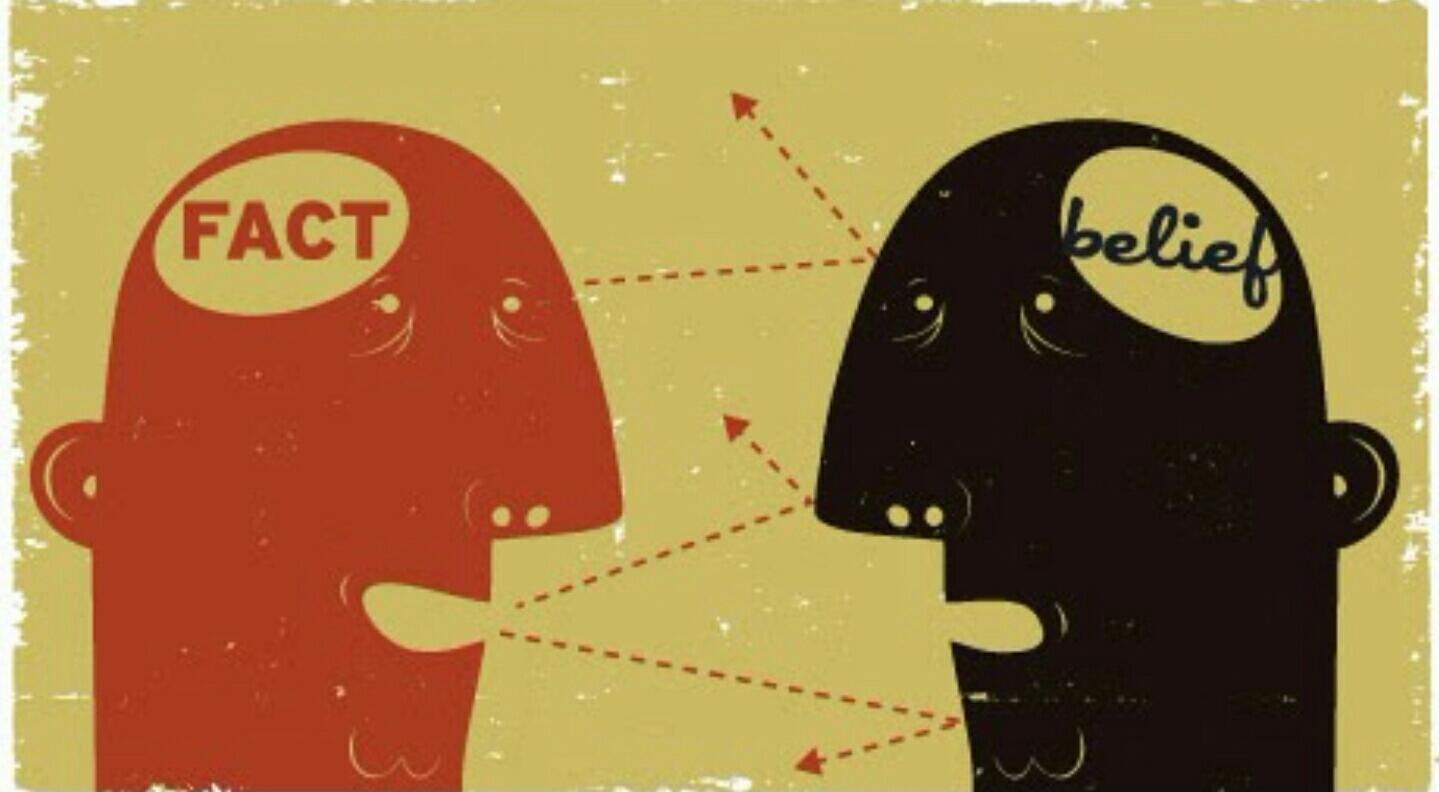
Imagine you believe a particular restaurant serves the best biryani in your city. You’ve eaten there twice, and both times the food was excellent. Then a trusted friend visits and tells you the biryani was mediocre, overpriced, and the service was poor. Another friend shares a similar disappointing experience. You read three recent online reviews saying the quality has dropped significantly since a chef change. How much do you adjust your belief? If you’re like most people, you’ll shift your opinion only slightly. You might think, “Well, maybe they had an off day” or “Perhaps my friends just have different tastes.” You’ll continue recommending the restaurant, though perhaps with marginally less enthusiasm. This reluctance to update beliefs proportionally to new evidence is called conservatism bias—our tendency to cling to existing beliefs even when we should be revising them more dramatically based on incoming information.
Conservatism bias operates as a kind of cognitive inertia. Beliefs at rest tend to stay at rest. Once we’ve formed an opinion, it becomes our mental baseline, and we resist moving far from it even when evidence warrants substantial revision. This isn’t the same as completely ignoring evidence—we do adjust, just insufficiently. If you should revise your belief by 50% based on new evidence, you might revise it by only 10 or 20%. The direction is right; the magnitude is wrong. Research from University of Michigan’s cognitive psychology lab demonstrates this mathematically using Bayesian probability updates. When people are given evidence that should shift probability estimates substantially, they consistently update their estimates too conservatively, anchoring too heavily on their prior beliefs and weighting new evidence too lightly.
The classic demonstration comes from experiments where participants estimate the probability of events after receiving evidence. Suppose you’re told an urn contains 70 red balls and 30 blue balls. You draw five balls with replacement, getting red-red-blue-red-red. What’s your updated estimate of the urn’s composition? Bayesian probability calculations show you should now believe something like 85-90% red. Most people update to only about 75-80% red—they adjust from the initial 70%, but not enough. They’re conservatively clinging to the original 70-30 ratio even though the evidence suggests a stronger red predominance. This pattern replicates across countless scenarios: people update, but insufficiently.
There’s a Panchatantra tale that illustrates this cognitive conservatism perfectly. A merchant believed a particular trade route was safe because he’d traveled it successfully three times. Then multiple travelers reported being robbed on that route, guards warned of increased bandit activity, and a trusted friend lost goods there. The merchant acknowledged the warnings but thought, “It’s probably just a temporary problem. The route is fundamentally safe based on my experience.” He continued using it with only minor additional precautions and was eventually robbed. His belief revision was insufficient. He updated from “definitely safe” to “mostly safe with small risk” when evidence suggested updating to “currently dangerous.” The tale teaches that clinging to old beliefs in the face of contrary evidence invites disaster.
The Psychology of Insufficient Updating
Why do we revise beliefs too conservatively? Several psychological mechanisms drive this bias. First, there’s the anchoring effect. Our initial belief serves as an anchor, and we adjust from that anchor insufficiently when new information arrives. The anchor exerts gravitational pull on our estimates, keeping us closer to it than evidence warrants. Second, there’s cognitive laziness. Dramatically revising beliefs requires mental effort—you have to reconsider decisions based on old beliefs, potentially admit you were wrong, and rebuild your mental model. Small adjustments are easier and less disruptive. Research from Stanford’s Department of Psychology shows that when people are cognitively tired or under time pressure, conservatism bias strengthens because they lack resources for effortful belief revision.
Third, there’s emotional investment. We become attached to our beliefs, especially ones we’ve held for a long time, publicly stated, or based important decisions on. Dramatically revising such beliefs feels like admitting error, which threatens self-esteem. Small revisions allow us to acknowledge new evidence without the pain of admitting we were substantially wrong. Fourth, there’s the sunk cost fallacy connection. We’ve invested time and effort forming our existing beliefs. Abandoning them feels like wasting that investment, even though the investment is gone regardless of whether we update. This emotional resistance to “giving up” on beliefs manifests as insufficient updating when evidence suggests we should.
Think about Meera, a long-time supporter of a particular political candidate. Over months, numerous scandals emerged, policy positions she disagreed with became clear, and several trusted friends explained their concerns with compelling evidence. Meera did adjust her support—from “enthusiastically supporting” to “supporting with reservations.” But given the weight of evidence, she probably should have moved to “reconsidering support” or even “no longer supporting.” Her conservatism bias kept her closer to her original position than evidence warranted because dramatically changing political allegiance felt too costly psychologically—it would mean admitting her previous enthusiasm was misplaced and potentially facing social consequences in her political community.
Real-World Consequences: From Medicine to Management
Conservatism bias affects critical decisions across domains. In medicine, doctors can be too conservative when updating diagnoses based on new test results. If a physician initially diagnoses a common condition, then receives test results suggesting a rare disease, conservatism bias might lead them to still favor the common diagnosis, perhaps ordering more tests to “confirm” the common disease rather than appropriately shifting probability toward the rare one. According to research on diagnostic reasoning errors, this insufficient belief revision contributes to delayed diagnoses and inappropriate treatments. The doctor isn’t ignoring the test results—they adjust somewhat—but not enough relative to what the evidence actually suggests.
Investment decisions suffer enormously from conservatism bias. An investor buys a stock based on positive fundamentals. Over time, company performance deteriorates, management changes for the worse, market conditions shift, and multiple analysts downgrade the stock. The investor does reduce their position—perhaps selling 20% of holdings—but holds the remaining 80% despite evidence suggesting they should sell most or all of it. They’ve updated their belief from “strong buy” to “hold,” when evidence suggests updating to “sell.” This insufficient updating, multiplied across millions of investors, contributes to market inefficiencies and personal portfolio losses. Research on behavioral finance and investor psychology identifies conservatism as a major driver of the disposition effect—holding losing positions too long.
Relationships show conservatism bias when people insufficiently update beliefs about partners based on accumulating evidence. Someone believes their partner is trustworthy based on early relationship experiences. Over time, small incidents suggest otherwise—lies about minor things, secretive behavior, inconsistent stories. The person adjusts slightly, perhaps becoming “a bit concerned,” but not proportionally to the evidence, which might warrant seriously questioning trust. They remain anchored to their initial positive assessment, updating conservatively even as evidence accumulates. This can lead to staying in relationships that should end or missing warning signs of serious problems until a crisis forces dramatic revision that should have happened gradually.
Think about Rahul, a manager who hired an employee with excellent credentials and initial performance. Over six months, performance declined—missed deadlines, quality issues, interpersonal conflicts. Rahul received feedback from multiple team members and observed problems directly. He adjusted his assessment from “excellent hire” to “needs some improvement and coaching,” providing feedback and support. But the evidence actually suggested the hire wasn’t working out and might need reassignment or termination. Rahul’s conservatism bias, anchored on the strong initial impression and his own hiring decision, prevented sufficient belief revision. He finally made the difficult personnel decision after a year of underperformance, much later than evidence warranted, costing team productivity and morale.
Breaking Through Inertia: Strategies for Appropriate Updating
Overcoming conservatism bias requires deliberate strategies for belief revision. First, use numerical probability estimates instead of vague qualitative assessments. Don’t just think “probably safe” or “likely to succeed.” Assign actual numbers: “70% confident this is safe” or “60% chance of success.” When new evidence arrives, force yourself to calculate how much those numbers should change using Bayesian reasoning or at least systematic consideration of the evidence weight. Numbers make insufficient updating more visible—you can see when you’ve only shifted from 70% to 68% when evidence suggests moving to 55%.
Second, imagine you’re advising someone else. We’re often more rational about others’ situations than our own because we lack the emotional investment and anchoring to initial beliefs. If your friend described your situation and evidence to you, how much would you tell them to revise their beliefs? This outside perspective often reveals that your own conservatism is inappropriate. Third, pre-commit to revision thresholds. Before forming beliefs or making decisions, explicitly state what evidence would cause you to dramatically revise. “If three customers complain, I’ll reconsider this supplier” or “If test results show X, I’ll pursue alternative diagnosis Y.” Pre-commitment reduces conservatism by establishing revision triggers before anchoring and emotional investment make updating difficult.
Fourth, actively practice belief revision as a skill. Regularly review past beliefs and note how reality unfolded. Were you too conservative in updating? Did you cling to old beliefs when evidence suggested more dramatic revision? This metacognitive practice builds awareness of your personal conservatism tendencies and creates motivation to update more appropriately. Research from Yale’s reasoning and decision lab shows that people who regularly engage in belief calibration exercises show reduced conservatism bias over time.
Fifth, distinguish between appropriate caution and excessive conservatism. Being cautious about single pieces of weak evidence is reasonable. Remaining anchored to initial beliefs despite multiple pieces of strong, consistent evidence is excessive conservatism. The key is proportionality—update beliefs in proportion to evidence quality and quantity. One contradicting anecdote shouldn’t overturn well-established beliefs, but three peer-reviewed studies, multiple expert opinions, and substantial observational evidence should trigger significant revision.
There’s a Birbal tale about belief updating. Akbar believed a courtier was loyal based on years of service. Birbal presented evidence of betrayal—intercepted messages, witness testimony, suspicious meetings. Akbar acknowledged the evidence but shifted only from “completely loyal” to “probably loyal with minor concerns.” Birbal arranged for Akbar to overhear the courtier plotting. Even then, Akbar wanted to believe in loyalty, saying “perhaps he was joking.” Finally caught in obvious treason, the courtier confessed. Birbal noted that Akbar updated beliefs in tiny increments when the first pieces of evidence should have triggered substantial revision. Gradual updating in the face of strong evidence isn’t admirable caution—it’s dangerous conservatism.
Finding Balance: Appropriate Belief Revision
The goal isn’t eliminating conservatism entirely or becoming so malleable that you change beliefs with every new piece of information. Some conservatism is adaptive—it provides stability and prevents overreaction to noise or outliers. The issue is insufficient updating relative to what evidence actually warrants. Good belief revision balances stability with responsiveness. Strong prior beliefs based on extensive evidence should be revised cautiously when facing weak contradicting evidence. But weak prior beliefs or substantial new evidence should trigger significant updating, not just minor adjustments.
Consider the difference: If you’ve successfully used a medication for years with consistent positive effects, one study suggesting limited efficacy shouldn’t cause you to immediately stop. That’s appropriate conservatism. But if multiple rigorous studies, expert warnings, and your own declining results accumulate, continuing with only minor doubts reflects excessive conservatism. The magnitude of revision should match the strength and quantity of evidence, adjusted by the strength of your prior belief. This Bayesian approach—mathematically balancing prior beliefs and new evidence—is how optimal belief updating works, even if we don’t explicitly calculate probabilities.
Frequently Asked Questions
Q1: How is conservatism bias different from confirmation bias? Confirmation bias is about selectively gathering and interpreting information to support existing beliefs. Conservatism bias is about insufficiently updating beliefs even when you do acknowledge contradicting evidence. You can recognize evidence as valid but still not revise beliefs enough—that’s conservatism.
Q2: Is conservatism bias always bad? Not always. Some conservatism prevents overreacting to random noise or single outlier data points. The problem is excessive conservatism—when the magnitude of updating is clearly insufficient relative to evidence strength. Appropriate conservatism is adaptive; excessive conservatism causes poor decisions.
Q3: Why don’t smart people update beliefs more appropriately? Intelligence doesn’t automatically produce optimal belief revision. Smart people might even show stronger conservatism because they’re better at generating justifications for why new evidence doesn’t require dramatic updates. The bias affects thinking processes that operate regardless of intelligence.
Q4: Can you train yourself to update beliefs more appropriately? Yes, through practice and metacognition. Regularly reviewing your predictions and belief revisions, using numerical probability estimates, and explicitly calculating Bayesian updates can improve calibration over time. Awareness helps but requires ongoing effort.
Q5: How do I know if I’m being appropriately conservative versus excessively conservative? Compare your updates to what formal probability calculations suggest or to what unbiased observers recommend. If you’re consistently revising less than mathematical or outside analysis indicates, you’re likely too conservative.
Observer Voice is the one stop site for National, International news, Sports, Editor’s Choice, Art/culture contents, Quotes and much more. We also cover historical contents. Historical contents includes World History, Indian History, and what happened today. The website also covers Entertainment across the India and World.

