

Why Facts Sometimes Make People More Stubborn: The Backfire Effect Explained

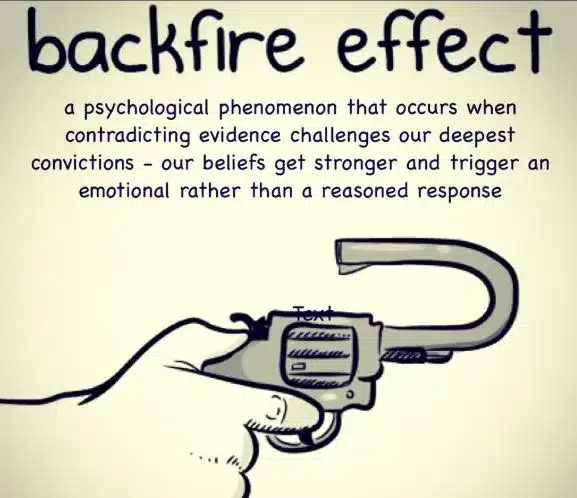
Imagine trying to convince your grandfather that his favorite childhood remedy doesn’t actually cure colds. You show him medical studies, expert opinions, and scientific data. But instead of changing his mind, he becomes even more convinced that modern science doesn’t understand traditional wisdom. Frustrated? You’ve just experienced the backfire effect.
This psychological phenomenon reveals one of the most puzzling aspects of human nature: sometimes, presenting people with facts that contradict their beliefs doesn’t change their minds—it makes them dig in deeper. Like trying to put out a fire with gasoline, evidence can paradoxically strengthen the very beliefs it’s meant to challenge.
When Evidence Makes Things Worse
The backfire effect was first documented by researchers at the University of Michigan who studied how people react to corrections of political misinformation. Their startling discovery: when people with strong political views were shown factual corrections, they often became more convinced of their original misconceptions, not less.
Think of it like this: your belief system is a fortress you’ve spent years building. When someone attacks it with facts, your mind doesn’t surrender—it reinforces the walls. The stronger the attack, the stronger the defense.
Dr. Brendan Nyhan’s research at Dartmouth College revealed that this effect is particularly powerful with deeply held beliefs tied to identity, values, or worldview. It’s not about intelligence; even highly educated people experience the backfire effect when their core beliefs are challenged.
There’s an old Birbal story that illustrates this perfectly. When Emperor Akbar insisted the moon was closer than a distant village because “I can see the moon but not the village,” Birbal presented logical arguments about distance and visibility. But Akbar, committed to his position, created increasingly elaborate justifications. Only when Birbal changed his approach—asking questions rather than providing answers—did Akbar reconsider. The lesson? Direct confrontation often strengthens wrong beliefs.
The Psychology Behind Digging In Deeper
Why does our brain react this way? Several psychological mechanisms work together to create the backfire effect:
Cognitive Dissonance: When evidence contradicts our beliefs, it creates uncomfortable mental tension. Rather than changing our worldview (which requires effort and feels like admitting we were wrong), our brains often find it easier to reject the evidence.
Identity Protection: Many beliefs are tied to our sense of self. If you’ve always thought of yourself as someone who “knows the truth about nutrition” or “understands politics,” accepting that you were wrong threatens your self-image. According to Stanford University research on motivated reasoning, people unconsciously protect their identity by dismissing contradictory information.
Confirmation Bias Amplification: The backfire effect supercharges confirmation bias. Not only do we seek information that confirms our beliefs, but when challenged, we actively reinterpret contradicting evidence as somehow supporting our original position.
Consider Priya, a college student convinced that a particular study method worked best for her. When her professor shared research showing her method was less effective than alternatives, Priya didn’t reconsider. Instead, she decided, “That research must not apply to my learning style” and doubled down on her original approach. Her certainty actually increased after seeing the evidence.
Three Types of Backfire Effects
Research identifies several variations of this phenomenon:
Familiarity Backfire: Simply repeating a myth to debunk it can strengthen belief in the myth. When you say “It’s NOT true that vaccines cause autism,” people remember “vaccines” and “autism” together, actually reinforcing the false association.
Worldview Backfire: Facts that threaten someone’s entire belief system trigger the strongest defensive reactions. Climate change data, for instance, can cause backfire in people whose political identity opposes environmental regulation—not because they don’t understand science, but because accepting the data threatens their broader worldview.
Overkill Backfire: Overwhelming someone with too many counterarguments can trigger resistance. When faced with a barrage of facts, people feel attacked and become more defensive, strengthening their original position as a form of psychological self-defense.
Real-World Impact: From Family Dinners to Global Crises
The backfire effect shapes conversations everywhere. During family gatherings, political arguments often end with people more polarized than when they started. Public health campaigns sometimes backfire, making vaccine-hesitant parents more resistant after being confronted with vaccination data.
In the digital age, this effect has dangerous implications. Social media algorithms create echo chambers where the backfire effect flourishes. When someone encounters opposing views online, they often retreat further into communities that reinforce their existing beliefs.
During the COVID-19 pandemic, public health authorities learned harsh lessons about the backfire effect. Aggressive fact-checking and confrontational messaging sometimes increased resistance to health measures rather than building compliance. Research from the World Health Organization emphasized the need for empathetic, non-confrontational communication strategies.
There’s wisdom in the Panchatantra tale of the wind and the sun competing to remove a traveler’s coat. The wind blew harder and harder, but the traveler only clutched his coat tighter. The sun simply shone warmly, and the traveler removed the coat himself. Force creates resistance; gentleness creates openness.
How to Avoid Triggering the Backfire Effect
If you want to actually change minds rather than strengthen opposing views, try these approaches:
Ask Questions Instead of Presenting Facts: “What would it take to change your mind about this?” or “How did you come to this conclusion?” These invite reflection without triggering defensiveness.
Find Common Ground First: Establish shared values before discussing disagreements. If you’re debating education policy, start with “We both want students to succeed” before discussing methods.
Use the “Affirmation Sandwich”: Acknowledge what’s valid in their position, gently introduce contradicting evidence, then return to common ground. This reduces identity threat.
Tell Stories, Not Statistics: Personal narratives bypass defensive mechanisms that raw data triggers. Instead of saying “Studies show X,” try “I used to think Y, but then I learned…”
Timing Matters: Don’t argue when emotions run high. The backfire effect strengthens when people feel attacked or embarrassed. Wait for calm moments to introduce challenging information.
Acknowledge Uncertainty: Phrases like “I’m not 100% certain, but here’s what I’ve found” reduce the perceived attack on someone’s beliefs and model intellectual humility.
Frequently Asked Questions
Q1: Does the backfire effect mean we should never challenge false beliefs? No, but it means we should be strategic about how we challenge them. Understanding the backfire effect helps us find more effective approaches than simple fact-bombardment, which often fails.
Q2: Are some people more susceptible to the backfire effect than others? Everyone experiences it to some degree, but it’s strongest with beliefs tied to identity, politics, religion, or deeply held values. People with higher “need for cognitive closure” (preference for certainty) may show stronger backfire effects.
Q3: Can the backfire effect be permanent? Not necessarily. Given time, non-confrontational exposure to contradicting information, and especially personal experiences that challenge beliefs, people can change their minds. The key is removing the immediate defensive trigger.
Q4: How is this different from just being stubborn? Stubbornness is a personality trait. The backfire effect is a psychological mechanism that even flexible people experience when their core beliefs are challenged directly. It’s an automatic defensive response, not a character flaw.
Q5: Can I overcome my own backfire effect? Yes, through metacognition—thinking about your thinking. When you feel defensive about new information, pause and ask: “Am I rejecting this because it’s wrong, or because it threatens something I want to believe?” Actively seeking out perspectives that challenge your views also helps.
Observer Voice is the one stop site for National, International news, Sports, Editor’s Choice, Art/culture contents, Quotes and much more. We also cover historical contents. Historical contents includes World History, Indian History, and what happened today. The website also covers Entertainment across the India and World.

