

When Your Brain Creates Memories That Never Happened: The Truth About False Memory

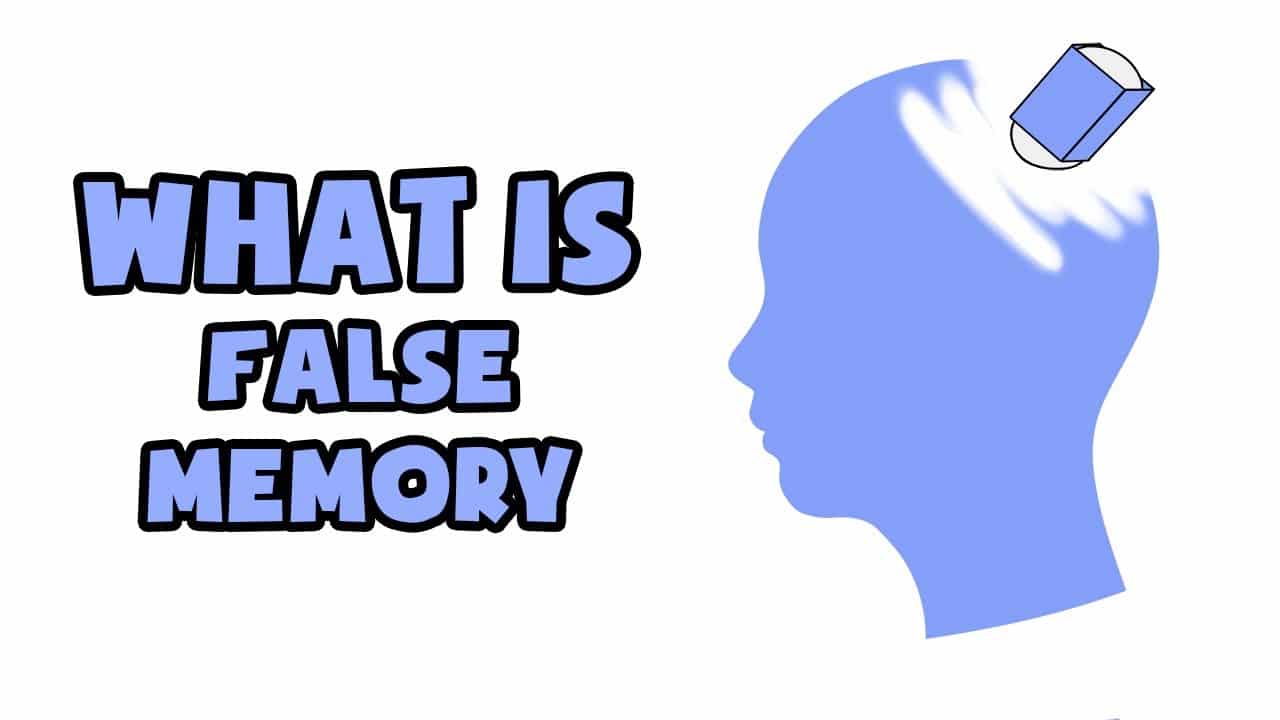
Close your eyes and remember your fifth birthday party. Can you see the cake? The balloons? Your friends singing? Now here’s the uncomfortable truth: there’s a good chance some of those “memories” never actually happened. Your brain might have created them from photographs you’ve seen, stories your parents told, or pure imagination.
Welcome to the strange world of false memory—where your mind becomes a storyteller that sometimes forgets to tell you it’s making things up.
False memories are recollections of events that never actually happened or facts that aren’t true University of Chicago News. Unlike simple forgetfulness, false memory is when you confidently “remember” something that didn’t occur, or remember it very differently from how it actually happened.
The Famous Case That Changed Everything
In the 1990s, something extraordinary happened in psychology laboratories. American cognitive psychologist Elizabeth Loftus conducted experiments where participants viewed videos of automobile accidents Simply Psychology. When asked how fast cars were moving when they “smashed” into each other, people estimated higher speeds than when the question used words like “bumped” or “contacted.”
But here’s where it gets fascinating: a week later, subjects who heard the word “smashed” were more likely to report seeing broken glass in the video—even though there was no broken glass Wikipedia!
This groundbreaking work by Professor Elizabeth Loftus at the University of California at Irvine Psi Chi proved that memories aren’t like video recordings. They’re more like clay sculptures that can be reshaped every time we touch them.
Why Does Your Brain Lie to You?
Think of your brain as an artist, not a camera. When you experience something, your brain doesn’t save a perfect copy. Instead, it saves fragments—a smell here, an emotion there, a color somewhere else. When you “remember” later, your brain reconstructs the event from these scattered pieces, filling in the missing parts with educated guesses, imagination, and information you learned afterward.
Research from Penn State University Taylor & Francis Online shows that false memories can range from incorrectly recalling small details to completely fabricating events that never occurred. Your brain isn’t trying to deceive you—it’s trying to create a complete, coherent story from incomplete information.
According to scientists from the University of Chicago’s department of psychology, including Professor David Gallo University of Chicago News, memories can be altered through suggestion and misinformation or become distorted over time.
The Mandela Effect: When Everyone Remembers Wrong
Remember the Berenstein Bears? Except they’re actually called the Berenstain Bears. And Darth Vader never said “Luke, I am your father”—he said “No, I am your father.”
The Mandela Effect, named after researcher Fiona Broome’s false memory of Nelson Mandela dying in prison in the 1980s (he actually died in 2013) University of Chicago News, describes when large groups of people share the same false memory. It’s proof that false memory isn’t about individual weakness—it’s about how all human brains work.
An Ancient Story About Truth and Memory
There’s a Jataka tale about a merchant who swore he had paid for goods at a shop, while the shopkeeper insisted no payment was made. Both were absolutely certain of their memories. A wise judge asked each to swear upon their children’s lives. Both hesitated—not because they were lying, but because suddenly they weren’t sure anymore.
The story teaches what modern science confirms: certainty doesn’t equal accuracy. You can feel 100% sure about a memory and still be completely wrong.
The Dangerous Side of False Memory
False memories aren’t just fascinating—they can be dangerous. Research from the University of Portsmouth found that rich false memories of autobiographical events can be planted in people’s minds ScienceDaily. In their study, about 40% of participants developed actual false memories of childhood events that never happened.
This has serious implications for eyewitness testimony in courts, therapy sessions, and even family relationships. Innocent people have gone to prison because witnesses had false memories that felt completely real.
Can You Protect Yourself?
The good news? The same University of Portsmouth study found false memories can be reversed by raising people’s awareness of the possibility of false memories and urging them to critically reflect on their recollections ScienceDaily.
Here are practical ways to keep your memories more accurate:
Question your certainty. Feeling absolutely sure doesn’t mean you’re absolutely right.
Look for evidence. Photographs, videos, and written records are more reliable than memory alone.
Be skeptical of “recovered” memories. Memories that suddenly emerge after years, especially in therapy, should be examined carefully.
Notice who’s asking. Leading questions (like “smashed” vs. “bumped”) can literally change your memory.
Accept imperfection. Remembering some details wrong doesn’t mean your whole memory is false.
The Wisdom in Uncertainty
The Buddha taught that clinging to fixed views causes suffering. False memory research reveals why: even our most vivid memories might be wrong. This isn’t depressing—it’s liberating. It teaches humility, compassion when others remember differently, and the importance of evidence over confidence.
Your brain is an incredible instrument, capable of learning, creating, and connecting. But it’s not a recording device. It’s a storyteller—sometimes accurate, sometimes creative, always reconstructing the past from fragments.
The next time you’re absolutely certain about a memory, remember: your brain might be telling you a story. And that’s not a bug in the system—it’s how the system works.
Frequently Asked Questions
Q1: How can I tell if a memory is false?
Unfortunately, false memories feel exactly like real ones. The only way to verify is through external evidence like photographs, videos, or corroborating accounts from multiple independent witnesses.
Q2: Are older people more likely to have false memories?
Research shows that certain factors such as age, stress, lack of sleep, and drug and alcohol use can increase the likelihood of having false memories University of Chicago News. However, anyone at any age can experience false memories.
Q3: Can therapy create false memories?
Yes. Certain therapy techniques, especially those attempting to “recover” buried memories through hypnosis or repeated suggestion, can inadvertently plant false memories. This was a major controversy in the 1990s known as the “memory wars.”
Q4: Do false memories only affect memory of past events?
Primarily yes, but the research shows our memories are constantly being reconstructed. Even memories from yesterday can contain false elements if we’ve been exposed to misleading information or suggestions.
Q5: Is there any benefit to how our memory system works?
Yes! The reconstructive nature of memory allows us to update our knowledge, integrate new information, and create meaningful narratives from our experiences. The trade-off is occasional inaccuracy for flexibility and learning capacity.
Observer Voice is the one stop site for National, International news, Sports, Editor’s Choice, Art/culture contents, Quotes and much more. We also cover historical contents. Historical contents includes World History, Indian History, and what happened today. The website also covers Entertainment across the India and World.

