

Middle East Crisis: Expert Insights on Investing in Gold ETFs vs. Silver ETFs

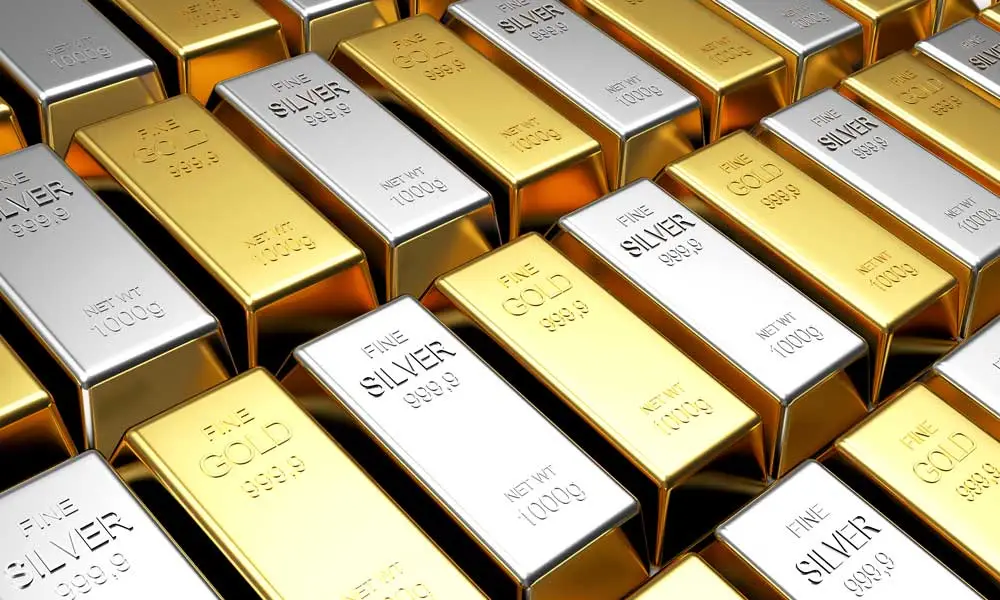
Increasing geopolitical tensions, particularly following recent US-Israel strikes on Iran, have prompted investors to seek refuge in traditional safe-haven assets. Amidst this climate of uncertainty, traders are weighing their options between gold and silver ETFs, with many experts suggesting a greater emphasis on gold. As market dynamics shift, the demand for these precious metals is expected to fluctuate, influenced by both geopolitical events and economic factors.
Investor Preferences Amid Geopolitical Tensions
The current geopolitical climate has led many investors to reconsider their asset allocations, particularly in the realm of precious metals. According to Siddharth Srivastava, head of ETF Product & Fund Manager at Mirae Asset Investment Managers, gold ETFs are typically viewed as the primary safe-haven asset during times of heightened geopolitical stress. He notes that while silver ETFs can also provide some stability, they are more susceptible to fluctuations driven by industrial demand. Srivastava recommends that investors maintain a higher allocation towards gold ETFs to balance stability and potential upside.
Shivam Pathak, a Certified Financial Planner and founder of Asset Elixir, echoes this sentiment, emphasizing that gold ETFs are a more reliable option in the context of the ongoing US-Israel-Iran tensions. He points out that gold reacts swiftly to uncertainty, making it a safer choice compared to silver, which can be more volatile due to its industrial applications. Both experts suggest that investors consider allocating 10-15% of their overall portfolios to precious metals ETFs, with a significant portion directed towards gold.
Market Reactions and Price Movements
Recent market activity reflects the growing demand for gold and silver. On Monday, gold prices surged by 4%, reaching Rs 1.68 lakh per 10 grams on the Multi Commodity Exchange (MCX). This increase follows a period of correction last month, leaving gold just 12% shy of its record high of Rs 1,93,096. Meanwhile, MCX gold futures for April 2026 rose by 3.5%, while silver futures for March 2026 also saw a significant increase of 3.5%, trading at Rs 2,84,490 per kg.
The surge in gold prices can be attributed to rising geopolitical tensions, which have historically driven investors towards safer assets. With over 20% of the world’s oil passing through the Strait of Hormuz, recent missile strikes in the region have raised concerns about supply constraints, further contributing to the spike in oil prices and the subsequent demand for gold and silver as protective investments.
Global Economic Influences on Precious Metals
The performance of gold and silver is closely tied to global economic factors. Pathak explains that a stronger US dollar typically exerts downward pressure on both metals, while gold is particularly sensitive to interest rates and currency fluctuations. Rising crude oil prices often lead to increased inflation concerns, which can bolster gold prices. However, silver’s performance is more closely linked to global economic growth, making it more volatile.
Srivastava highlights that gold serves as a long-term hedge against inflation, maintaining an inverse relationship with the US dollar and real yields. In contrast, silver is influenced by both inflation and industrial demand, which can lead to greater price swings. As investors navigate these complexities, understanding the interplay between geopolitical events, economic indicators, and market sentiment becomes crucial for effective portfolio management.
Outlook for Precious Metals in the Near Term
Looking ahead, experts anticipate continued volatility in the precious metals market. Srivastava notes that while the global situation remains fluid, silver ETFs are generally more volatile due to their smaller market size and higher speculative participation. In the near term, gold ETFs appear to offer a favorable risk-reward profile amid ongoing geopolitical uncertainties, while silver ETFs may experience sharper fluctuations based on market sentiment and industrial demand.
Pathak agrees, stating that silver ETFs are likely to remain more volatile due to their dual nature, while gold ETFs are expected to maintain a supportive outlook amid macroeconomic and geopolitical uncertainties. Both experts recommend that investors view these metals as long-term portfolio hedges rather than short-term trading opportunities, suggesting a holding period of at least five years to effectively navigate the market’s inherent risks.
Observer Voice is the one stop site for National, International news, Sports, Editor’s Choice, Art/culture contents, Quotes and much more. We also cover historical contents. Historical contents includes World History, Indian History, and what happened today. The website also covers Entertainment across the India and World.
Follow Us on Twitter, Instagram, Facebook, & LinkedIn

