

Sensex Declines Amid West Asia Conflict, Fear Index Rises Significantly

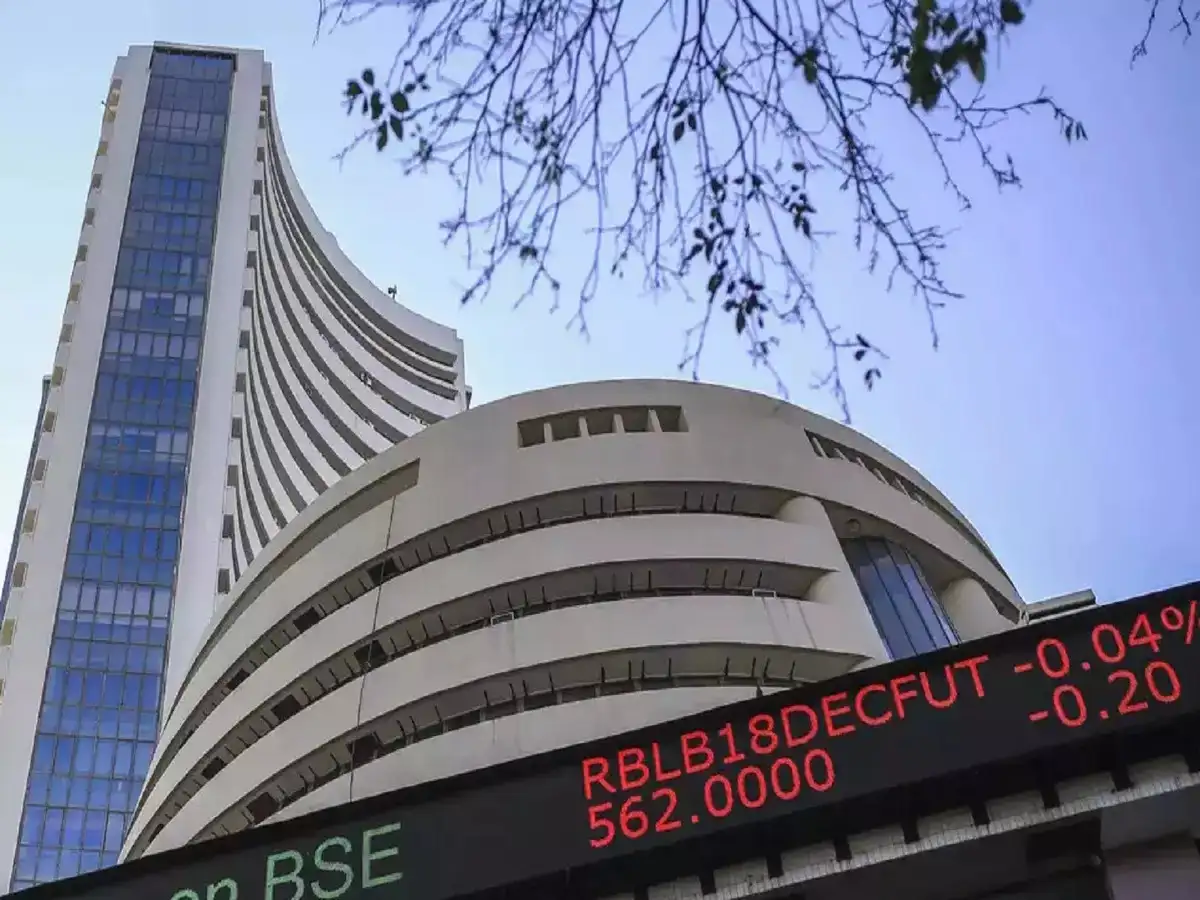
The ongoing conflict in West Asia has significantly impacted investors on Dalal Street, resulting in a staggering loss of Rs 6.6 lakh crore. The Sensex plummeted by 1,048 points, closing at 80,239 points, marking its lowest level in nearly six months. The market’s reaction was swift following the US-Israel attack on Iran, which heightened geopolitical tensions and led to increased volatility across global markets.
Market Reaction to Geopolitical Tensions
The stock market opened on a negative note, with the Sensex initially dropping nearly 3,000 points in response to the recent military actions in West Asia. However, as the day progressed, buying interest emerged at lower price levels, allowing the index to recover some of its earlier losses. Despite this recovery, the session remained volatile, with the NSE’s volatility index (VIX) surging by 25%. This spike in the VIX, often referred to as the fear index, reflects heightened uncertainty and risk aversion among investors. Ultimately, the Sensex closed significantly above its intra-day low of 78,544 points.
The Nifty index mirrored this trend, finishing 313 points lower at 24,866 points. The overall market sentiment was heavily influenced by the geopolitical landscape, which has left many investors on edge. Analysts noted that the ongoing conflict could have far-reaching implications for global markets, particularly concerning oil supply and inflation.
Foreign Investment Withdrawals
Foreign institutional investors played a significant role in the market’s decline, with net outflows reaching nearly Rs 3,300 crore on Monday, according to BSE data. This selling pressure contributed to the overall market capitalization of the BSE, which now stands at Rs 456.9 lakh crore. The sharp decline in stock prices has left investors feeling the pinch, with a total loss of Rs 6.6 lakh crore in wealth.
Vinod Nair, head of research at Geojit Investments, highlighted that the rising geopolitical tensions in West Asia have unsettled global markets. He expressed concerns over the potential for prolonged instability following the assassination of Iran’s supreme leader. Additionally, the increase in crude oil prices and a weakening rupee could lead to inflationary pressures in India, affecting fiscal stability and straining margins for sectors reliant on energy and chemicals.
Global Market Trends
The turmoil in West Asia has not only affected Indian markets but has also led to declines in stock markets worldwide. Asian markets opened lower, with Japan’s Nikkei index down by 1.4% and Hong Kong’s Hang Seng index closing 2.1% lower. However, Shanghai’s index managed to buck the trend, finishing 0.5% higher. In Europe, the FTSE in the UK fell by 1.3%, while Germany’s DAX index was down by 2.6%.
The widespread sell-off was reflected in the performance of Sensex stocks, with 27 out of 30 closing in the red. Major contributors to the decline included L&T and Reliance Industries. Conversely, only a few stocks, such as BEL, Sun Pharma, and ITC, managed to post gains. Oil marketing companies were particularly hard-hit, with Indian Oil down by 4.5%, Petronet LNG by 4.4%, and Adani Total Gas by 3.7%. In contrast, crude oil producers like Oil India and ONGC saw their stocks close higher, indicating a complex market response to the ongoing crisis.
Observer Voice is the one stop site for National, International news, Sports, Editor’s Choice, Art/culture contents, Quotes and much more. We also cover historical contents. Historical contents includes World History, Indian History, and what happened today. The website also covers Entertainment across the India and World.

