

Human genome editing: Technology for making specific changes to DNA
Human genome editing: Revolutionary DNA technology requiring global governance

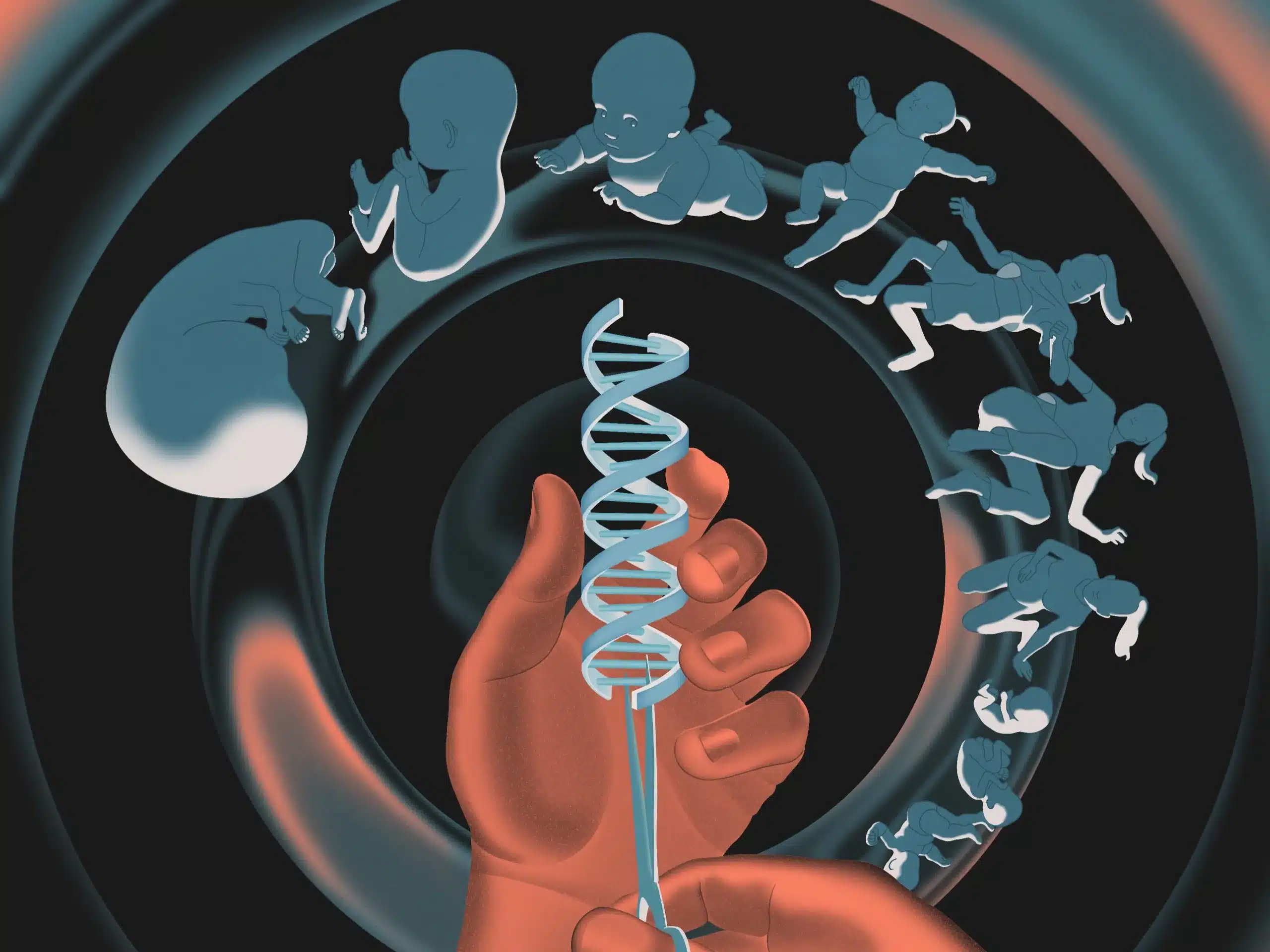
Dr. Jennifer Park (Stanford University, California) will never forget the phone call from her colleague in China. November 2018. Dr. He Jiankui had done the unthinkable—he’d edited the genes of human embryos, implanted them, and allowed twin girls to be born with permanently altered DNA. The changes would be passed to future generations.
“I felt physically sick,” Dr. Park recalled, her voice still shaking with emotion. “We knew the technology was theoretically possible. We’d been having urgent discussions in the scientific community about the need for strict oversight. But nobody believed anyone would actually cross that line so recklessly. Those babies became the first humans in history with intentionally edited genomes—a decision made by one man that affects not just them, but potentially all their descendants.”
The international scientific community responded with fury. Dr. He faced criminal charges in China. He received a three-year prison sentence. But the damage was done—the line had been crossed. The gene-edited babies existed. Their DNA had been permanently altered. The consequences might not be understood for decades or generations.
“That moment crystallized why robust governance of genome editing is absolutely essential,” Dr. Park emphasized. “This technology is too powerful, too consequential, to be left to individual scientists’ judgment. We needed immediate international coordination—binding regulations, strict oversight, enforceable penalties. WHO’s leadership became critical.”
According to WHO, Genome editing is a method for making specific changes to the DNA of a cell or organism. It can be used to add, remove or alter DNA in the genome. Human genome editing technologies can be used on somatic cells (non-heritable), germline cells (not for reproduction) and germline cells (for reproduction).
For more on medical technology, see our articles on genetic medicine and biotechnology ethics at ObserverVoice.com. WHO provides Q&A on Genomics and Human Genome Editing Registry.
Three Categories with Different Implications
Application of somatic human genome editing has already been undertaken, including in vivo editing, to address HIV and sickle-cell disease, for example. Although somatic human genome editing is well established and acceptable for treatments in some scientifically advanced countries with regulations in place, challenges remain. These include the need to develop inclusive genome editing innovations that take note of the diversity of the human population and human experience. Other challenges are associated with rogue clinics, medical travel, as well as the reporting of illegal, unregistered, unethical or unsafe research and other activities including the offer of unproven so-called therapeutic interventions.
Heritable human genome editing refers to editing of nuclear DNA in a way that may be heritable across generations. Heritable human genome editing is the subject of intense debate over its possible consequences for offspring and for society in general. They may pose greater safety and ethical issues than somatic human genome editing. WHO provides Human Genome Editing (HGE) Registry tracking research worldwide.
Related topics include Global health ethics. For more on emerging medical technologies, see our article on precision medicine at ObserverVoice.com.
Ethical and Governance Challenges
The recent application of tools, such as CRISPR-Cas9, to edit the human genome with the intention to treating or preventing disease and the gaps in our scientific understanding raise ethical issues that have highlighted the need for robust oversight in this area. Current, potential and speculative human genome editing research will go beyond national borders, as will possible societal effects. This applies equally to somatic, germline and heritable human genome editing, although the latter is generally considered to be of greater ethical concern. Therefore, governance for this technology is needed at national and transnational levels. Some of the necessary governance structures and processes already exist. These may need to be reinforced or amended; where such structures and processes are lacking, gaps need to be filled.
Application of heritable human genome editing is likely to be a much more limited activity in the coming years. To help ensure heritable human genome editing does not proceed prematurely to clinical trials, the WHO Expert Advisory Committee recommended, and the WHO Director-General subsequently made, a policy statement in July 2019 clarifying that “it would be irresponsible at this time for anyone to proceed with clinical applications of human germline genome editing.”
WHO’s Comprehensive Response
In December 2018, WHO established a global, multi-disciplinary Expert Advisory Committee to examine the scientific, ethical, social and legal challenges associated with human genome editing (somatic, that is, non-heritable; germline, involving in vitro studies on early embryos, gametes or their precursors; and heritable, where embryos subject to genome editing are used to establish pregnancies and create individuals who could pass on the edit to their offspring).
The Committee was tasked to advise and make recommendations on appropriate institutional, national, regional and global governance mechanisms for human genome editing. During its work, the Committee reviewed the current literature on human genome editing research and its applications, considered existing proposals for governance and relevant ongoing initiatives, and gathered information on a range of topics relating to the different uses of this technology. The Committee consulted widely and built on existing initiatives to develop a governance framework and recommendations on the governance and oversight of human genome editing.
Major Publications and Framework
In July 2021, the Committee published a governance framework for human genome editing and recommendations on human genome editing. Additional outputs of the Committee include a global registry on human genome editing, a policy statement by the Director-General on germline human genome editing and the reports of the Committee’s work.
January 2025 WHO published Expert Working Group Meeting on Accelerating Access to Human Genomics for All in the Western Pacific. July 2021 WHO published Human genome editing: recommendations, Human genome editing: a framework for governance, and Human genome editing: position paper. July 2021 WHO issued new recommendations on human genome editing for the advancement of public health. August 2019 WHO launched global registry on human genome editing.
WHO initiatives include Human Genome Editing Registry. WHO activities include Engaging the global community in health ethics, Developing normative guidance to address ethical challenges in global health, Ensuring responsible use of life sciences research, and Ensuring ethical standards and procedures for research with human beings. WHO’s Health Ethics and Governance Unit coordinates global efforts.
Dr. Park now serves on international oversight committees evaluating genome editing research proposals. “The He Jiankui case taught us painful lessons. We learned that scientific capability outpaces ethical frameworks. We learned that individual researchers cannot be trusted to self-regulate. We learned that international coordination is absolutely essential.”
“What’s fascinating is that legitimate applications of genome editing are extraordinarily promising. We’re seeing remarkable success treating sickle-cell disease and certain forms of blindness. We’re developing therapies for devastating genetic conditions that previously had no treatment. These are somatic cell therapies—they don’t affect future generations. They’re ethical, they’re carefully regulated, they’re saving lives,” Dr. Park explained.
“The problem arises when we move from treating disease in existing individuals to editing the DNA of embryos that will become human beings—especially when those changes are heritable. That crosses into territory with profound implications for humanity. Who decides which genetic traits are ‘desirable’? How do we prevent eugenic applications? What about unintended consequences that might not appear for generations? These aren’t just scientific questions—they’re philosophical, ethical, and social questions that require broad societal input.”
“WHO’s governance framework provides the roadmap we desperately needed. It establishes clear principles: transparency, inclusion, responsible research conduct, independent oversight, respect for persons, equity, international cooperation. It creates mechanisms for monitoring and reporting. It provides guidance to countries developing their own regulations. Most importantly, it sends a clear message: human genome editing will proceed under strict oversight with broad societal input, or it won’t proceed at all,” Dr. Park emphasized. “The gene-edited babies of 2018 must be the last unregulated experiment on the human germline. We have the scientific capability to edit human DNA. Now we must demonstrate the ethical maturity to use that power responsibly—or to refrain from using it when appropriate. That’s the challenge WHO helps us navigate.”
For more information, visit WHO’s human genome editing topic page or explore related content at ObserverVoice.com.
Frequently Asked Questions (FAQs)
1. What is human genome editing and what are the main types?
Genome editing is method for making specific changes to DNA of cell or organism. It can be used to add, remove or alter DNA in genome. Human genome editing technologies can be used on somatic cells (non-heritable), germline cells (not for reproduction) and germline cells (for reproduction). Application of somatic human genome editing has already been undertaken, including in vivo editing, to address HIV and sickle-cell disease. Although somatic human genome editing is well established and acceptable for treatments in some scientifically advanced countries with regulations in place, challenges remain. These include need to develop inclusive genome editing innovations that take note of diversity of human population. Other challenges are associated with rogue clinics, medical travel, and reporting of illegal, unregistered, unethical or unsafe research. Heritable human genome editing refers to editing of nuclear DNA in way that may be heritable across generations. Heritable human genome editing is subject of intense debate over its possible consequences for offspring and for society in general. WHO provides Q&A on Genomics, Human Genome Editing Registry. Related: Global health ethics.
2. What ethical issues does genome editing raise?
The recent application of tools, such as CRISPR-Cas9, to edit human genome with intention to treating or preventing disease and gaps in our scientific understanding raise ethical issues that have highlighted need for robust oversight in this area. Current, potential and speculative human genome editing research will go beyond national borders, as will possible societal effects. This applies equally to somatic, germline and heritable human genome editing, although latter is generally considered to be of greater ethical concern. Therefore, governance for this technology is needed at national and transnational levels. Some of necessary governance structures and processes already exist. These may need to be reinforced or amended; where such structures and processes are lacking, gaps need to be filled. Application of heritable human genome editing is likely to be much more limited activity in coming years. To help ensure heritable human genome editing does not proceed prematurely to clinical trials, WHO Expert Advisory Committee recommended, and WHO Director-General subsequently made, policy statement in July 2019 clarifying that “it would be irresponsible at this time for anyone to proceed with clinical applications of human germline genome editing.” WHO provides HGE Registry.
3. How has WHO responded to genome editing challenges?
In December 2018, WHO established global, multi-disciplinary Expert Advisory Committee to examine scientific, ethical, social and legal challenges associated with human genome editing (somatic, that is, non-heritable; germline, involving in vitro studies on early embryos, gametes or their precursors; and heritable, where embryos subject to genome editing are used to establish pregnancies and create individuals who could pass on edit to their offspring). Committee was tasked to advise and make recommendations on appropriate institutional, national, regional and global governance mechanisms for human genome editing. During its work, Committee reviewed current literature on human genome editing research and its applications, considered existing proposals for governance and relevant ongoing initiatives, and gathered information on range of topics relating to different uses of this technology. Committee consulted widely and built on existing initiatives to develop governance framework and recommendations on governance and oversight of human genome editing. WHO initiatives: Human Genome Editing Registry. WHO activities: Engaging global community in health ethics.
4. What publications has WHO released on genome editing governance?
In July 2021, Committee published governance framework for human genome editing and recommendations on human genome editing. Additional outputs of Committee include global registry on human genome editing, policy statement by Director-General on germline human genome editing and reports of Committee’s work. January 2025 WHO published Expert Working Group Meeting on Accelerating Access to Human Genomics for All in Western Pacific. July 2021 WHO published Human genome editing: recommendations, Human genome editing: framework for governance, Human genome editing: position paper. July 2021 WHO issued new recommendations on human genome editing for advancement of public health. August 2019 WHO launched global registry. WHO activities: Developing normative guidance for ethical challenges.
5. What are WHO’s key principles for genome editing governance?
WHO governance framework provides roadmap establishing clear principles: transparency, inclusion, responsible research conduct, independent oversight, respect for persons, equity, international cooperation. It creates mechanisms for monitoring and reporting. It provides guidance to countries developing their own regulations. Application of heritable human genome editing is likely to be much more limited activity. WHO Director-General made policy statement in July 2019 clarifying that “it would be irresponsible at this time for anyone to proceed with clinical applications of human germline genome editing.” WHO’s Health Ethics and Governance Unit coordinates global efforts. WHO activities: Ensuring responsible use of life sciences research, Ensuring ethical standards and procedures for research with human beings. WHO provides Human Genome Editing Registry tracking research worldwide. Related: Global health ethics.
- WHO Human Genome Editing Topic Page
- WHO Human Genome Editing: Framework for Governance
- WHO Human Genome Editing: Recommendations
- WHO Human Genome Editing Registry
- WHO Health Ethics and Governance Unit
Observer Voice is the one stop site for National, International news, Sports, Editor’s Choice, Art/culture contents, Quotes and much more. We also cover historical contents. Historical contents includes World History, Indian History, and what happened today. The website also covers Entertainment across the India and World.

