

Understanding AI Hallucinations: The Phenomenon of Fabricated Outputs

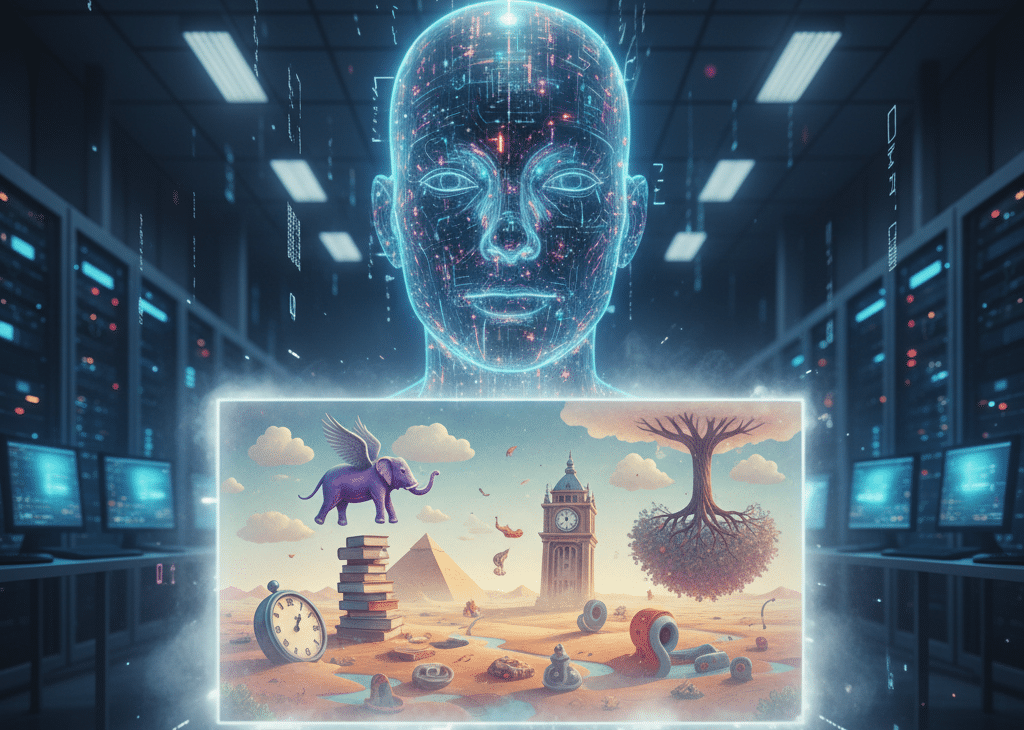
We increasingly rely on artificial intelligence (AI) chatbots for various purposes, including research, guidance, and emotional support. However, a recent study reveals that these chatbots can produce inaccurate information, or “hallucinations,” up to 30% of the time. Notably, ChatGPT generates incorrect responses approximately 35% of the time, while Gemini leads with a staggering 38%. This issue has raised concerns among users and organizations alike, especially after incidents involving misleading reports generated by AI-assisted tools.
AI Hallucinations: A Growing Concern
The phenomenon of AI hallucinations has become a significant concern as these technologies are integrated into various sectors. A study by Relum, an online gaming support engine, highlights that popular AI chatbots, including ChatGPT and Gemini, often fabricate information when prompted. While other studies report varying hallucination rates between 17% and 35%, the consensus remains alarming: one in five responses from AI chatbots is likely to be fabricated. This issue was underscored when the Australian government discovered that a report from Deloitte cited non-existent experts and studies, revealing the potential pitfalls of relying on AI-generated content.
The global market for AI technology is projected to grow from $371.71 billion in 2025 to an astounding $2.407 trillion by 2032, according to Markets and Markets. As AI systems are deployed across industries such as healthcare, finance, and cybersecurity, the challenge of hallucinations poses risks not only to tech companies but also to governmental bodies. The Deloitte incident serves as a cautionary tale, emphasizing the need for accuracy and reliability in AI-generated information.
Understanding the Causes of Hallucinations
AI models, including ChatGPT and Gemini, often produce plausible but false statements due to the way they are constructed. When asked why they generate incorrect information, these models distinguish between lying and hallucinating. ChatGPT, for instance, claims it does not intentionally deceive but can provide outdated or incorrect information based on its training data. This raises a critical question: why do these models fabricate information instead of admitting their limitations?
The models rely on patterns learned during training to generate responses, which can lead to inaccuracies when they lack current or specific data. For example, when prompted for a specific URL, an AI model might create a plausible-looking link that ultimately leads to a 404 error. This tendency to generate confident yet incorrect answers stems from the models’ design, which prioritizes fluency and relevance over factual accuracy. As a result, the hallucination rate increases significantly when the tasks become more complex or niche.
Efforts to Mitigate Hallucinations
In response to the challenges posed by hallucinations, companies like OpenAI and Google are actively working to improve the reliability of their AI models. One approach involves creating “IDK datasets,” which train models to acknowledge when they do not know an answer. This strategy aims to encourage models to admit uncertainty rather than fabricate responses. Additionally, Google DeepMind has developed a set of guidelines called Sparrow, which incorporates human feedback to enhance the accuracy of AI-generated information.
Anthropic’s Claude AI has also made strides in reducing hallucinations by adhering to a codified constitution that emphasizes clear boundaries and principles during training. This approach has resulted in a lower hallucination rate of 17%, making Claude AI a preferred choice for enterprises. With over 300,000 enterprise customers, Claude AI holds a significant share of the enterprise AI market, surpassing competitors like OpenAI and Google.
The Future of AI Trust and Reliability
As AI chatbots become increasingly integrated into daily life, particularly among younger generations, the question of trust arises. Recent studies indicate that Gen Z and Gen A often trust AI more than humans for various decisions, including mental health advice. However, the commercial nature of AI models raises concerns about their reliability. The challenge remains: will future generations be able to discern the inaccuracies in AI-generated content, or will they accept these “sweet lies” as truth?
The phenomenon of hallucinations in AI models reflects a broader human tendency to perceive and communicate inaccuracies. As AI continues to evolve, the responsibility lies with developers and users alike to foster a culture of critical thinking and discernment in the face of AI’s growing influence.
Observer Voice is the one stop site for National, International news, Sports, Editor’s Choice, Art/culture contents, Quotes and much more. We also cover historical contents. Historical contents includes World History, Indian History, and what happened today. The website also covers Entertainment across the India and World.
Follow Us on Twitter, Instagram, Facebook, & LinkedIn

