

Rupee Decline: RBI Allows Currency to Weaken Amid Outflows, Shifts Focus to Speculation Control

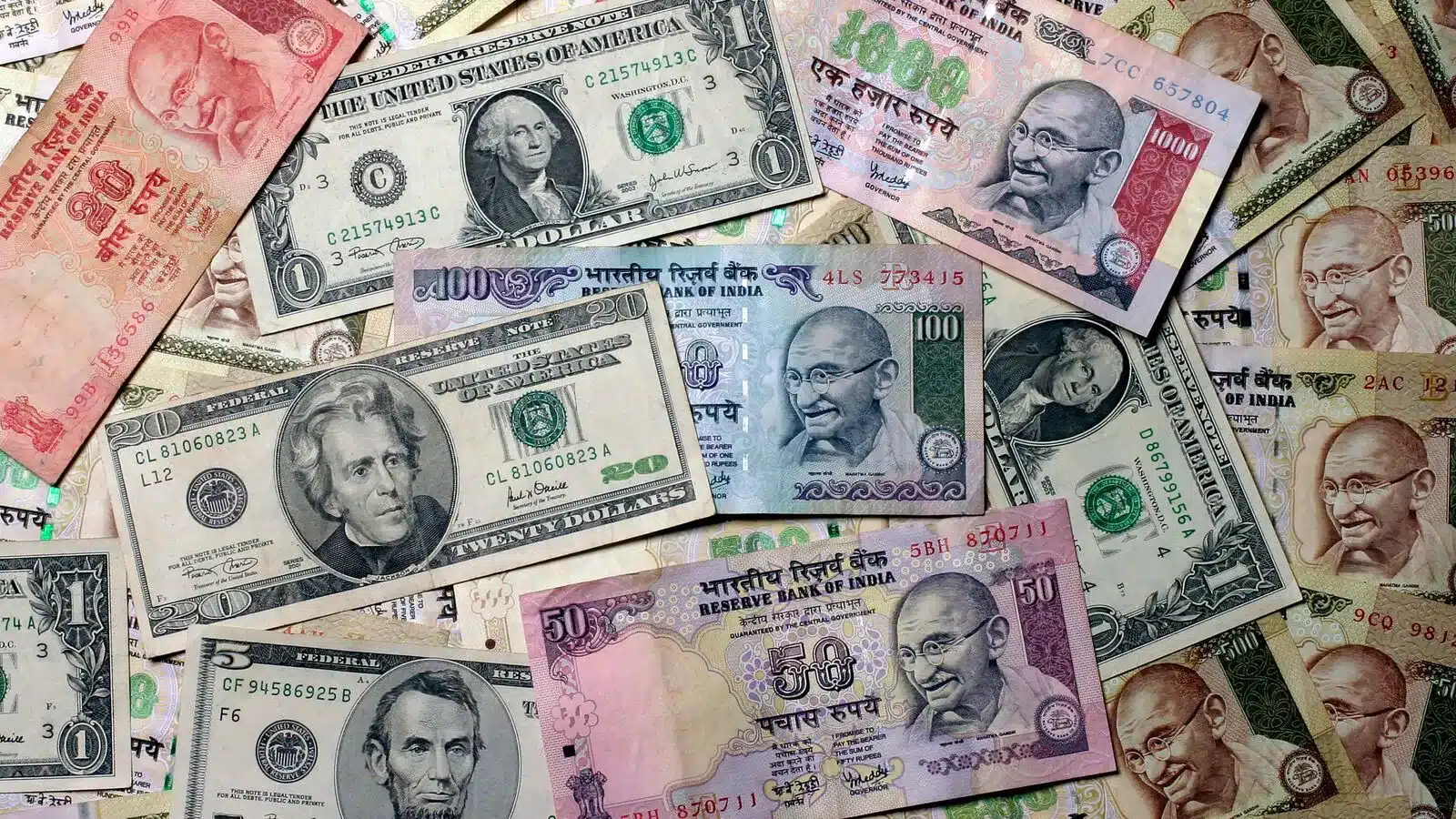
India’s central bank, the Reserve Bank of India (RBI), is shifting its stance on the Indian rupee, allowing it to weaken amid growing economic pressures. As the country faces slowing dollar inflows, increasing trade challenges, and significant foreign selling in domestic markets, the rupee has depreciated to a record low of Rs 90.42 per dollar. This marks a 1.3% decline over the past week and a 5.5% drop for the year, making it the worst-performing currency in Asia.
RBI’s New Approach to Currency Management
The Reserve Bank of India has recently altered its approach to managing the rupee’s value. Previously, the RBI actively intervened in the currency market to support the rupee through substantial dollar sales. However, sources indicate that the central bank is now less inclined to defend a specific exchange rate. Instead, it aims to prevent disorderly market movements and speculative pressures. One source noted that it is impractical to deplete reserves when the fundamentals are unfavorable for the currency. The RBI has not publicly commented on this strategy, but it appears to be allowing the rupee to fluctuate more freely in response to market demands.
This shift comes in the context of significant portfolio outflows, with foreign investors selling approximately $17 billion in equities this year. The decline in foreign direct investment and external trade flows further complicates the situation. While the rupee’s fall below the critical Rs 90 mark has drawn attention, the RBI is prepared to counter any speculative attempts to manipulate the currency.
Market Reactions and Investor Sentiment
Market participants are expressing caution as the rupee continues to slide. A weaker currency can provide the RBI with more flexibility in its monetary policy but may also deter foreign investment in Indian assets. Sam Kongrad from Jupiter Asset Management highlighted that a declining rupee negatively impacts the attractiveness of Indian equities. Despite the MSCI India index gaining 7% this year, the rupee’s depreciation has reduced dollar returns to below 2%, significantly lagging behind other markets like South Korea and Hong Kong.
Some investors remain hopeful that a resolution to ongoing trade tensions with the United States could improve the situation, potentially leading to increased foreign investment. Others believe that India’s robust domestic fundamentals, including a GDP growth rate of 8.2% in the July-September quarter, may help mitigate the adverse effects of currency weakness over time.
Recent Developments and Future Outlook
In recent trading sessions, the rupee experienced a brief rebound, rising to Rs 89.89 after reports of possible RBI intervention and a weaker US dollar. Earlier in the day, it had reached a new low of Rs 90.43 due to ongoing foreign selling and rising crude oil prices. Traders are closely monitoring the situation, as uncertainty surrounding the India-US trade deal, high oil prices, and persistent foreign institutional investor outflows continue to impact market sentiment.
Looking ahead, the market is anticipating the RBI’s upcoming monetary policy announcement, which is expected to address the current economic landscape characterized by rising GDP growth, easing inflation, and geopolitical uncertainties. Chief Economic Adviser V Anantha Nageswaran expressed a measured outlook, stating that the rupee’s decline has not yet translated into inflationary pressures and that he expects a recovery by 2026.
Observer Voice is the one stop site for National, International news, Sports, Editor’s Choice, Art/culture contents, Quotes and much more. We also cover historical contents. Historical contents includes World History, Indian History, and what happened today. The website also covers Entertainment across the India and World.

