

FM Sitharaman Addresses IMF’s ‘C’ Grade on National Accounts, Defends GDP Growth Figures

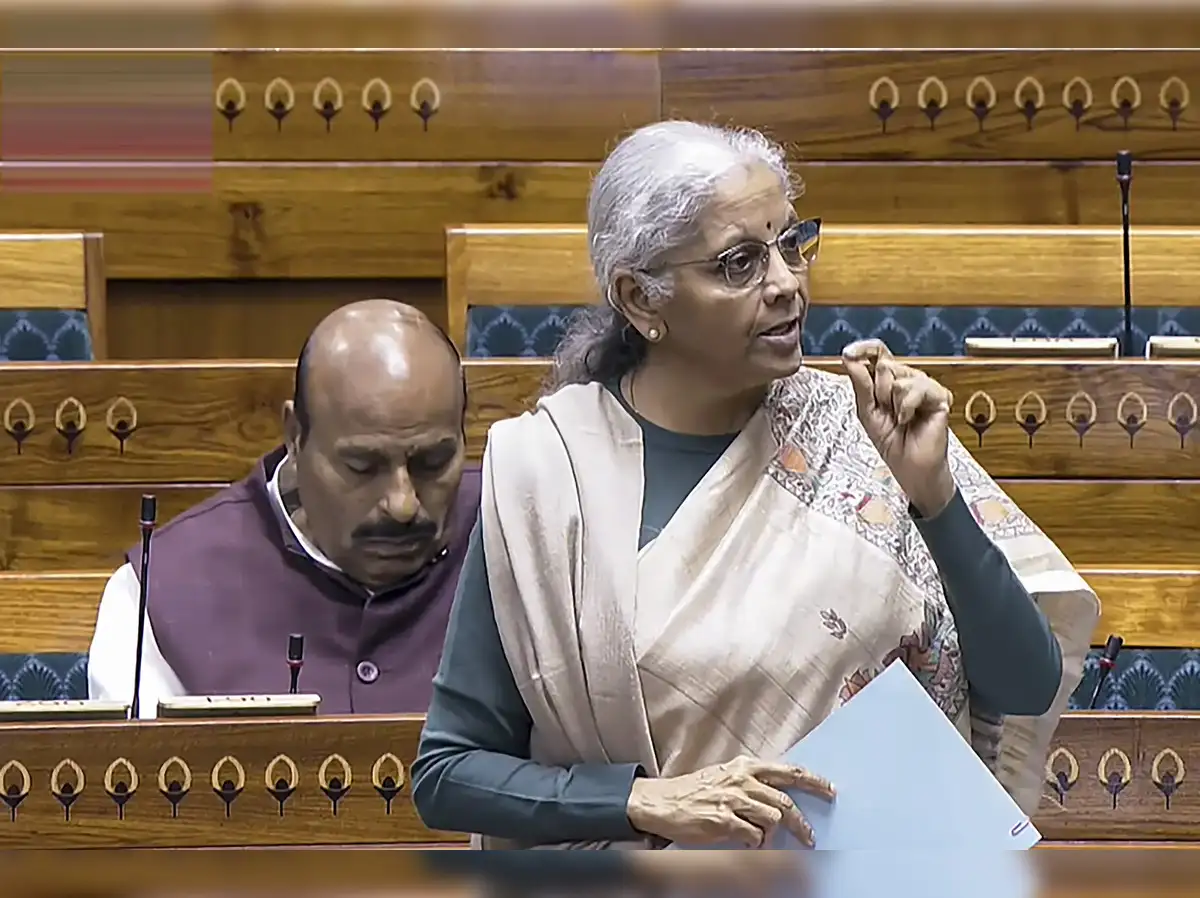
Finance Minister Nirmala Sitharaman addressed concerns regarding India’s economic performance during a Lok Sabha session on Wednesday. She clarified that the International Monetary Fund (IMF) did not dispute India’s growth figures, attributing its ‘C’ grade on national accounts to the use of an outdated base year. Sitharaman emphasized that the IMF recognized India’s strong economic performance and projected a GDP growth of 6.5% for the fiscal year 2025-26, highlighting the resilience of the financial sector and effective inflation management.
Clarification on IMF’s Assessment
During the discussion, Sitharaman responded to Nationalist Congress Party (NCP) MP Supriya Sule’s concerns about the IMF’s grading of India’s national accounts. She explained that the IMF’s ‘C’ grade was primarily due to the reliance on data from the 2011-12 base year, which the Fund deemed outdated. The Finance Minister announced that India plans to transition to a new base year of 2022-23 for national accounts starting February 27, 2026. This change aims to enhance the accuracy and relevance of economic data, addressing the concerns raised by the IMF.
Sitharaman reiterated that the IMF’s report did not question the growth figures provided by India. Instead, it acknowledged the country’s robust economic outlook, with a projected GDP growth rate of 6.5% for the upcoming fiscal year. The Minister emphasized that the IMF’s assessment focused on India’s economic resilience, particularly in the context of private-sector activity and macroeconomic stability.
India’s Economic Growth and Inflation Management
Citing recent economic data, Sitharaman highlighted that the Indian economy grew by 8.2% in the July-September quarter, marking a six-quarter high. This growth follows a 7.8% expansion in the previous quarter, demonstrating a consistent upward trend. The Finance Minister pointed out that the IMF praised India’s inflation management, with inflation rates remaining below the Reserve Bank of India’s tolerance band. The IMF projected inflation at 4.3% for the full year, indicating effective control over price levels.
Sitharaman’s remarks underscore the government’s commitment to maintaining economic stability and fostering growth. She noted that the lower grade assigned by the IMF was specifically related to statistical parameters, and India received a ‘B’ grade on various other fronts, including inflation data and external-sector statistics. This overall performance aligns India with other major economies, such as China and Brazil.
Understanding the IMF Grading System
The IMF employs a grading system for national accounts, categorizing data into four grades: A, B, C, and D. An ‘A’ rating signifies that the data is adequate for surveillance, while a ‘B’ indicates that the data is broadly adequate despite some shortcomings. A ‘C’ grade suggests that certain deficiencies could hinder effective surveillance, and a ‘D’ grade points to serious issues that impede data reliability.
Sitharaman’s explanation of the grading system provides clarity on the IMF’s assessment process. She emphasized that the ‘C’ grade was not a reflection of India’s economic performance but rather a consequence of outdated statistical practices. The upcoming transition to a new base year is expected to improve the quality of national accounts data, thereby enhancing India’s standing in future assessments.
Observer Voice is the one stop site for National, International news, Sports, Editor’s Choice, Art/culture contents, Quotes and much more. We also cover historical contents. Historical contents includes World History, Indian History, and what happened today. The website also covers Entertainment across the India and World.

