

India’s Diversification Strategy Yields Results as Non-US Markets Compensate for US Export Losses

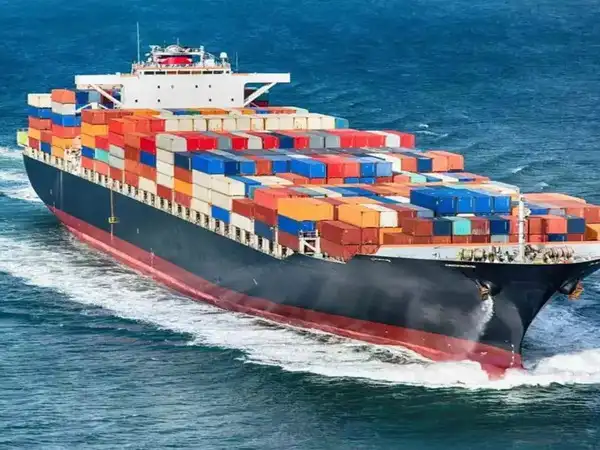
The recent imposition of a 50% tariff on Indian goods by the United States has prompted Indian exporters to pivot towards new markets, yielding early signs of success. Following the tariff’s introduction in two phases—25% on August 7 and an increase to 50% on August 25—exporters have sought opportunities in Asia, Europe, and the Middle East. This shift comes as traditional shipments to the U.S. decline, highlighting a significant change in India’s export landscape.
Selling to Other Markets—Sectors That Outshone Others
Recent data reveals a notable shift in India’s export patterns, particularly in the cotton garments sector. Exports of cotton readymade garments to the UAE, France, and Japan saw an increase in September, even as shipments to the U.S. plummeted by 25% compared to the previous year. This trend is echoed across various sectors that have historically depended on American demand. For instance, marine product exports to the U.S. fell by 26.9% in September, while exports to China, Vietnam, and Thailand surged by over 60%.
Other sectors, including gems and jewellery, basmati rice, tea, carpets, and leather goods, also experienced declines in U.S. shipments but found new markets abroad. Exports of tea dropped by 22% year-on-year, yet the beverage thrived in markets such as the UAE, Iraq, and Germany. Notably, basmati rice exports to Iran skyrocketed six-fold to $41.07 million. Similarly, handmade carpet exports to the U.S. contracted by 26.14%, but saw growth in Canada and Sweden, indicating a broader diversification of India’s export base.
‘Diversification is Visible’—What Actually Happened?
Discussions between New Delhi and Washington regarding a bilateral trade agreement (BTA) are ongoing, with both nations aiming to elevate bilateral trade to $500 billion by 2030. The U.S. imposed additional tariffs in August, citing concerns over India’s role in supporting Russia amid the Ukraine conflict. Despite these challenges, overall merchandise exports from India rose by 6.7% year-on-year to $36.38 billion in September. However, shipments to the U.S., which constitutes 18-20% of India’s total merchandise exports, fell sharply by 11.93% to $5.46 billion.
Officials have noted that the visible diversification in exports is bolstered by India’s free trade agreements and production-linked incentive schemes. Ajay Sahai, director general of the Federation of Indian Export Organisations, emphasized that this diversification is crucial for the growth of India’s export sector. The commerce ministry has identified 40 key importing countries across various continents, aiming to expand India’s market share in textiles and apparel.
Diversifying Markets
India’s strategy for market diversification includes targeting segments such as apparel, home textiles, technical textiles, and handicrafts. The commerce ministry’s outreach programs aim to tap into markets that collectively account for nearly three-fourths of global demand for textiles and apparel. Despite these efforts, certain product segments remain heavily reliant on the U.S. market. Approximately 60% of India’s carpet exports, 50% of made-ups, 30% of gems and jewellery, and 40% of apparel exports still flow to the United States. This dependency underscores the challenges India faces as it navigates the complexities of global trade dynamics while attempting to broaden its export horizons.
Observer Voice is the one stop site for National, International news, Sports, Editor’s Choice, Art/culture contents, Quotes and much more. We also cover historical contents. Historical contents includes World History, Indian History, and what happened today. The website also covers Entertainment across the India and World.

