

GST Rationalisation Aimed at Promoting Growth in Mizoram

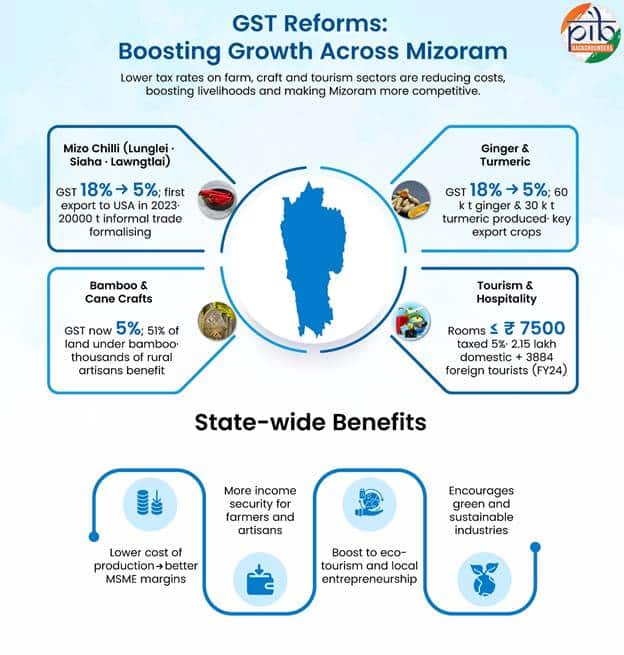
Mizoram is set to experience a significant economic boost following the recent reduction in Goods and Services Tax (GST) rates on several key agricultural and tourism products. The GST on processed Mizo Bird’s Eye Chilli, ginger, turmeric, and bamboo products has been slashed from 18% to 5%. This move aims to support local farmers, promote exports, and enhance the state’s appeal as a tourist destination. The changes are expected to create jobs and stimulate growth in various sectors, including agriculture, handicrafts, and hospitality.
Impact on Agricultural Products
The reduction in GST rates is particularly beneficial for Mizoram’s agricultural sector, which is characterized by unique products like the Mizo Bird’s Eye Chilli, ginger, and turmeric. The Mizo Bird’s Eye Chilli, recognized as a Geographical Indication (GI) product, is primarily cultivated in the districts of Lunglei, Siaha, and Lawngtlai. In the 2020-21 season, the state produced approximately 10,918 metric tonnes of this chilli, contributing significantly to local farmers’ incomes. The recent tax cut from 18% to 5% on processed chilli products is expected to make these goods more affordable and competitive in both domestic and international markets. This change will also encourage the formalization of trade, shifting a portion of informal cross-border transactions into the regulated economy, thereby enhancing income security for farmers.
Similarly, ginger and turmeric are vital cash crops for the state, with total horticultural output estimated at nearly 708,000 metric tonnes in 2023-24. The reduction in GST on these spices will lower production costs for farmers and improve market access, making Mizoram’s organic spices more appealing to consumers who prefer natural products. This reform is anticipated to bolster the state’s export potential, as the demand for chemical-free produce continues to rise globally.
Boosting Processed Fruit Products
Mizoram is also making strides in the production of processed fruit products, particularly passion fruit. As the third-largest producer of passion fruit in India, the state has seen a surge in cultivation due to favorable climatic conditions. In the 2023-24 season, over 3.4 lakh tonnes of fruits were produced, leading to new entrepreneurial opportunities in juice and concentrate production. The GST reduction on processed fruit products from 12-18% to 5% will enhance the affordability and marketability of these items, encouraging the establishment of small-scale processing units. This initiative is expected to create local jobs and tap into the growing national demand for health-oriented beverages, further diversifying Mizoram’s agricultural economy.
Support for Bamboo and Cane Crafts
Bamboo and cane crafts are integral to Mizoram’s cultural identity and economic landscape. Covering nearly 51% of the state’s land area, bamboo serves as a primary resource for various handicrafts, including furniture and utility products. The new GST structure, which now taxes bamboo and cane products at a uniform rate of 5%, aims to stimulate domestic demand and enhance the competitiveness of Mizoram’s handicrafts in national markets. This reform is expected to provide artisans with better access to wider markets, promoting sustainable livelihoods and supporting rural employment. Government initiatives focused on skill development and design improvement will further empower local artisans, enabling them to thrive in both domestic and export markets.
Enhancing Tourism and Hospitality
Tourism is emerging as a vital sector for economic growth in Mizoram, attracting visitors with its stunning landscapes and rich cultural heritage. The state has positioned itself as a key destination for eco-tourism and adventure travel, with a growing number of tourists drawn to its natural beauty and community-based experiences. The recent GST reduction on hotel rooms priced up to ₹7,500, now taxed at just 5%, is expected to make travel to Mizoram more affordable, encouraging higher occupancy rates and boosting local entrepreneurship in the hospitality sector. This reform is likely to generate more employment opportunities for the youth in both rural and urban areas, further solidifying tourism’s role as a significant driver of economic development in the state.
Observer Voice is the one stop site for National, International news, Sports, Editor’s Choice, Art/culture contents, Quotes and much more. We also cover historical contents. Historical contents includes World History, Indian History, and what happened today. The website also covers Entertainment across the India and World.

