

India’s Innovative Use of Stamps and Postcards in National Population Census

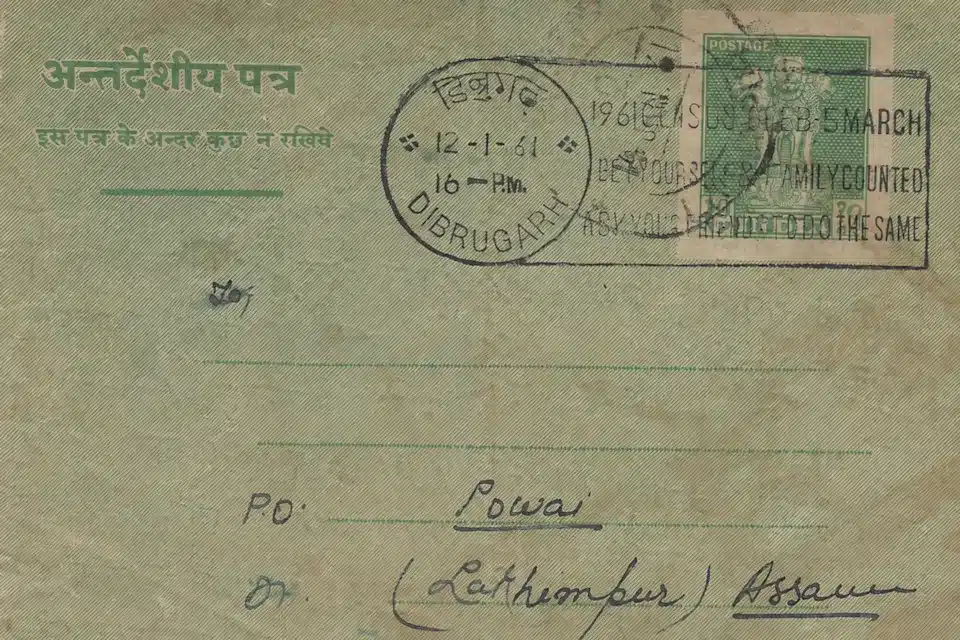
Long before the advent of smartphones and government applications, India relied on its extensive postal network to encourage participation in one of the largest statistical endeavors globally: the census. As the nation gears up for its 16th census, the eighth since gaining independence in 1947, a new exhibition sheds light on this often-overlooked history, showcasing stamps, postmarks, and letters that rallied citizens for the national headcount.
The Role of the Postal System in Nation-Building
Curated by Vikas Kumar, an economics professor at Azim Premji University in Bengaluru, the exhibition highlights how India’s postal system became a vital tool for nation-building in the years following independence. The newly formed government recognized the urgent need for reliable demographic data to facilitate elections based on universal adult franchise and to establish a planned economy. The significance of the census was underscored by the Constituent Assembly, which enacted the Census Act in 1948, even before finalizing the constitution.
However, the government faced immediate challenges in encouraging public participation and ensuring effective communication between census officials and enumerators across a vast, predominantly rural landscape. Trust was a significant concern, as previous colonial censuses in 1931 and 1941 had experienced boycotts in various regions, with allegations of communal manipulation tarnishing the 1941 count in Punjab and Bengal. Thus, public outreach became essential for legitimizing independent India’s first census.
Innovative Communication Strategies
The postal service emerged as a crucial player in addressing these challenges. Until a few decades ago, it was the largest unified communication network accessible to the Indian state. Following independence, the postal system expanded rapidly, surpassing other public networks, including banking. By 1968, over 100,000 post offices were delivering mail daily to 300,000 villages and weekly to another 300,000.
Kumar’s research reveals how the Indian government communicated with its citizens during the lead-up to the 1951 census, the first after independence. A bilingual pictorial postmark was used on letters traveling across the country, depicting a family of three alongside the words “Census of India” in both Hindi and English. This campaign was carefully designed for a nation with low literacy rates, with postmen often serving as readers, scribes, and informal state intermediaries in rural areas. This made the postal network an ideal medium for public messaging.
Over the decades, the messaging evolved alongside the nation. In 1961, postmarks encouraged citizens to “Get yourself and all the family counted” and to “Ask your friends to do the same.” By 1971, commemorative stamps celebrated the census as “one of the largest administrative operations in the world,” highlighting the use of electronic computers for processing population data.
Changing Perceptions and Modern Challenges
The postal materials also reflect how governments envisioned the census. Advertisements in 2000 referred to it as the “Mirror of the nation” and a “Group Photograph of the nation,” framing the census as a collective self-portrait rather than merely a bureaucratic task. Later imagery increasingly associated counting with population control, prominently featuring the two-child norm, which mirrored the societal anxieties of the time.
Kumar emphasizes that these fragile postal artifacts encapsulate more than just bureaucratic history; they illustrate how the Indian state sought to build legitimacy and trust through everyday communication. The census became intertwined with concepts of development, diversity, and national identity. The issue of trust remains pertinent today, as the government prepares for a census that is vastly different from those of the past.
The upcoming census is crucial for policy planning, welfare delivery, and political representation in the world’s most populous country. For the first time in decades, it will also collect caste data, a sensitive issue in a society where caste continues to influence social and economic dynamics. The scale of the exercise is monumental, covering 36 states and federally administered territories, over 7,000 sub-districts, more than 9,700 towns, and nearly 640,000 villages. Enumerators, typically teachers and local officials, will survey millions of households.
Digital Transformation of the Census
A significant change in this census is its digital execution. For the first time, enumerators will use mobile applications to collect and upload data in real time. This shift from family-shaped postmarks stamped on envelopes to instant data uploads via smartphones marks a significant evolution in the census process.
Despite these advancements, the fundamental challenge remains: convincing over a billion people to trust the state enough to participate in the national narrative. As India prepares for this monumental task, the lessons from its postal history serve as a reminder of the importance of building public confidence in the census process.
Observer Voice is the one stop site for National, International news, Sports, Editor’s Choice, Art/culture contents, Quotes and much more. We also cover historical contents. Historical contents includes World History, Indian History, and what happened today. The website also covers Entertainment across the India and World.

