

India Finalizes 2,843 km Dedicated Freight Corridor Network: A Transformative Development for the Railway Sector

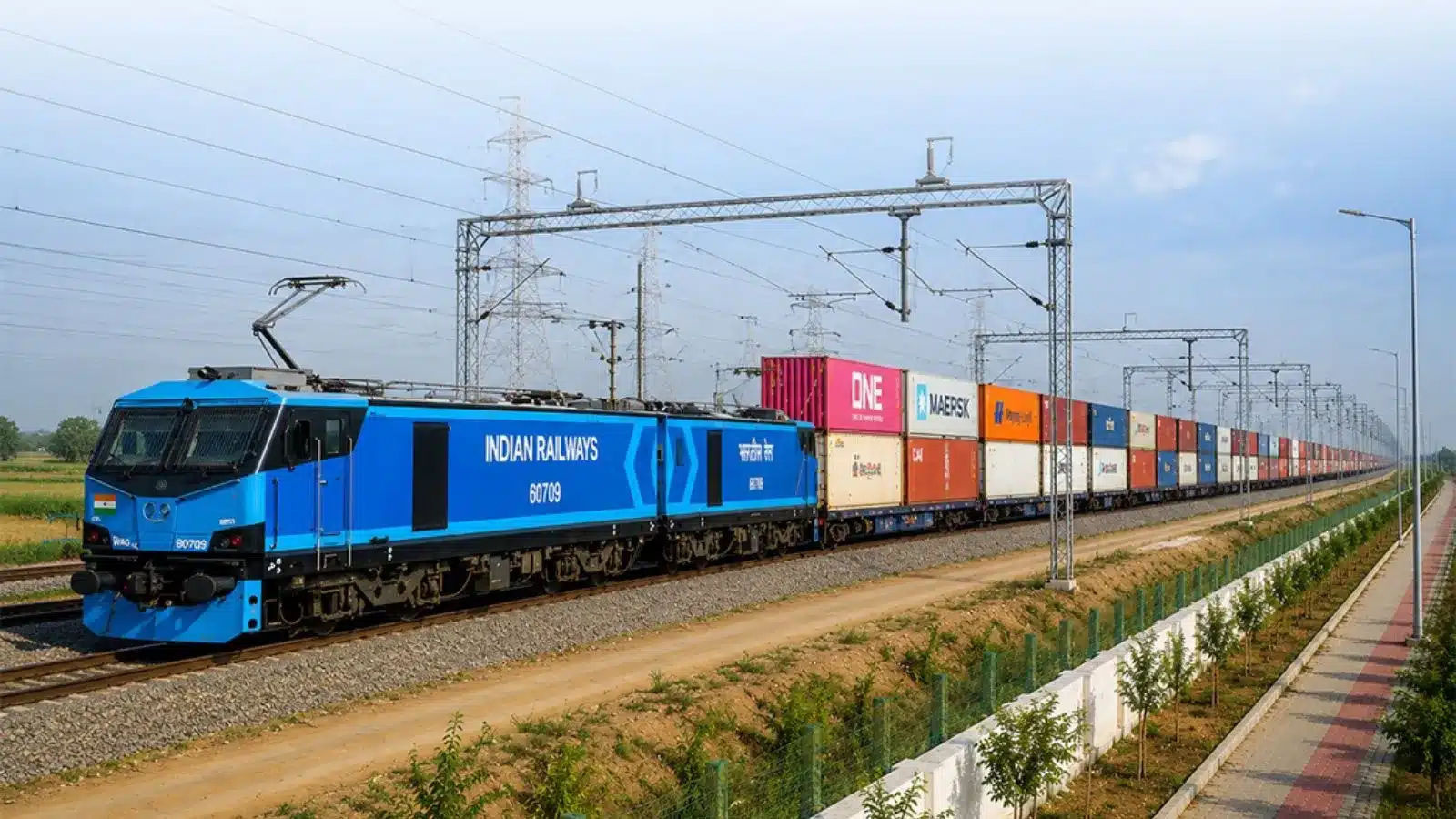
India’s Dedicated Freight Corridor (DFC) project has reached a significant milestone with the completion of its 2,843-km network. The last sections of the Western Dedicated Freight Corridor were inaugurated this week by Prime Minister Narendra Modi, marking the full operational status of the freight network. This development is expected to enhance the average speed of both freight and passenger trains across the country.
Details of the Network
The DFC includes the 1,506-km Western DFC, connecting Dadri to Jawaharlal Nehru Port Trust (JNPT), and the 1,337-km Eastern DFC, linking New Sahnewal in Punjab to New Sonnagar in Bihar. The final three sections of the Western DFC, covering 326 km, were developed at a cost exceeding Rs 20,700 crore. Experts anticipate that the operational DFC will alleviate congestion on some of India’s busiest freight routes, which have been operating at 115-150% of their capacity.
The DFC is designed to separate freight movement from passenger services, allowing for dedicated capacity for goods trains. Currently, the average speed of freight trains on the DFC network exceeds 50 km/h, nearly double that of non-DFC routes. More than 400 freight trains operate daily on the two corridors, which cater to different freight flows. The Western DFC is crucial for containerized cargo, while the Eastern DFC primarily handles bulk commodities.
Impact on Logistics
The completion of the DFC is seen as a transformative step for India’s logistics sector. Experts believe it will enhance rail productivity and asset utilization. Jagannarayan Padmanabhan from Crisil Intelligence noted that the DFC facilitates higher wagon counts and faster freight operations, which can significantly improve service reliability and reduce logistics costs.
Jaffrey Thomas from PwC India emphasized that the DFC’s impact on logistics costs and rail’s modal share will be further enhanced through improved feeder connectivity, competitive pricing models, and the development of logistics parks along the corridor. These factors are expected to streamline the movement of goods and improve overall supply chain efficiency.
Shift from Road to Rail
Experts advocate for a modal shift from road to rail, particularly with the DFC now operational. Indian Railways has been striving to increase its share of cargo movement, which has faced stiff competition from road transport. Currently, the rail coefficient on the Western DFC is at 20%, indicating that a significant portion of cargo is still transported by road.
The DFC’s completion is anticipated to ease congestion and improve transit speeds, allowing Indian Railways to introduce innovative transit products. Despite the cost advantages of rail freight, which stands at approximately Rs 1.96 per tonne-km, railways account for only about 20% of freight movement in India.
Future Developments
As India aims to strengthen its position as a major manufacturing hub, the government has proposed a new Dedicated Freight Corridor connecting Dankuni in West Bengal to Surat in Gujarat. This 2,052-km corridor will integrate with the existing Western DFC, facilitating seamless goods movement to western ports.
Additionally, plans for other corridors, including an East Coast corridor and various East-West and North-South sub-corridors, have been examined but not yet sanctioned. The success of the DFC network will hinge on its ability to create additional capacity, reduce logistics bottlenecks, and enhance the efficiency of India’s railway network.
Observer Voice is the one stop site for National, International news, Sports, Editor’s Choice, Art/culture contents, Quotes and much more. We also cover historical contents. Historical contents includes World History, Indian History, and what happened today. The website also covers Entertainment across the India and World.
Follow Us on Twitter, Instagram, Facebook, & LinkedIn

