

GST Reforms Aimed at Enhancing Ladakh’s Economy Through Pashmina and Apricots

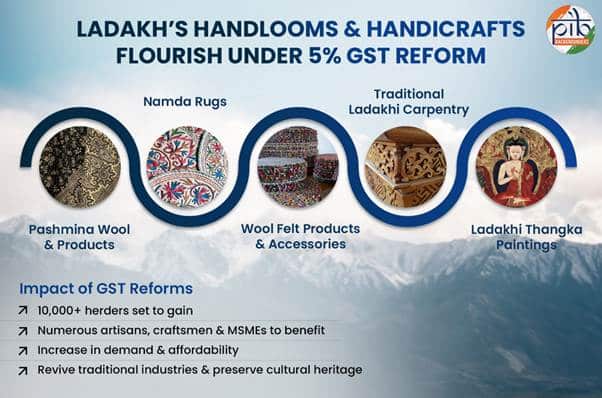
Ladakh’s economy is set to benefit significantly from recent reductions in the Goods and Services Tax (GST) across various sectors, including traditional crafts and agriculture. The new 5% GST rate on Pashmina wool, Namda rugs, and woodcrafts aims to support over 10,000 artisans, while similar cuts in dairy and organic farming are expected to enhance earnings for more than 6,000 farming families. Additionally, a reduced GST on hotel tariffs will make travel more affordable, directly impacting the livelihoods of over 25,000 individuals in the region.
Support for Artisans and Traditional Crafts
The recent GST reduction from 12% to 5% on Pashmina wool and related products is a significant boost for Ladakh’s artisans. Pashmina, sourced from the Changthang region, is renowned for its quality and is a vital source of income for over 10,000 nomadic herders. This tax cut is expected to enhance the competitiveness of authentic Ladakhi Pashmina against cheaper, machine-made alternatives. By improving income stability for local herders and artisans, the reform also opens up new avenues for export growth.
Similarly, the reduction in GST on handwoven woolens and Namda rugs will lower production costs and encourage the revival of traditional handicraft practices. These products, made from yak and sheep wool, are integral to Ladakh’s cultural heritage. The tax cut is anticipated to benefit local artisans and cooperatives involved in wool processing and rug making, ensuring that these traditional crafts continue to thrive.
Impact on Agriculture and Organic Farming
Ladakh is known for its rich agricultural landscape, particularly in apricot production. The GST reduction from 12% to 5% will benefit over 6,000 farming families engaged in apricot cultivation, enhancing the competitiveness of locally produced apricots and their value-added products. This change is expected to improve income opportunities for farmers and stimulate growth in enterprises focused on apricot processing.
Moreover, the reduction in GST will also support the burgeoning organic farming sector in Ladakh. Farmers in regions like Sham Valley and Kargil are increasingly adopting sustainable practices, producing herbal teas and dried vegetables. The tax cut will lower costs for these small-scale eco-farmers, making organic products more marketable and encouraging wider adoption of sustainable farming practices.
Boosting Local Tourism and Livelihoods
Tourism is a vital part of Ladakh’s economy, employing over 25,000 people in the region. The recent GST reduction on hotel tariffs for accommodations priced at ₹7,500 or less will make travel more affordable, particularly during peak tourist seasons. This change is expected to promote eco-tourism and support the local homestay economy, allowing visitors to experience Ladakh’s unique culture and natural beauty while benefiting local communities.
The reduction in GST will also extend to dairy products, including yak cheese and milk, which are essential for the nomadic communities in high-altitude areas. This support for local dairy production will enhance self-sustainability and strengthen the local economy, ensuring that traditional practices continue to flourish in the face of modernization.
Observer Voice is the one stop site for National, International news, Sports, Editor’s Choice, Art/culture contents, Quotes and much more. We also cover historical contents. Historical contents includes World History, Indian History, and what happened today. The website also covers Entertainment across the India and World.

