

EU and Mercosur Bloc Finalize Significant Trade Agreement, Dismiss Tariffs and Isolation

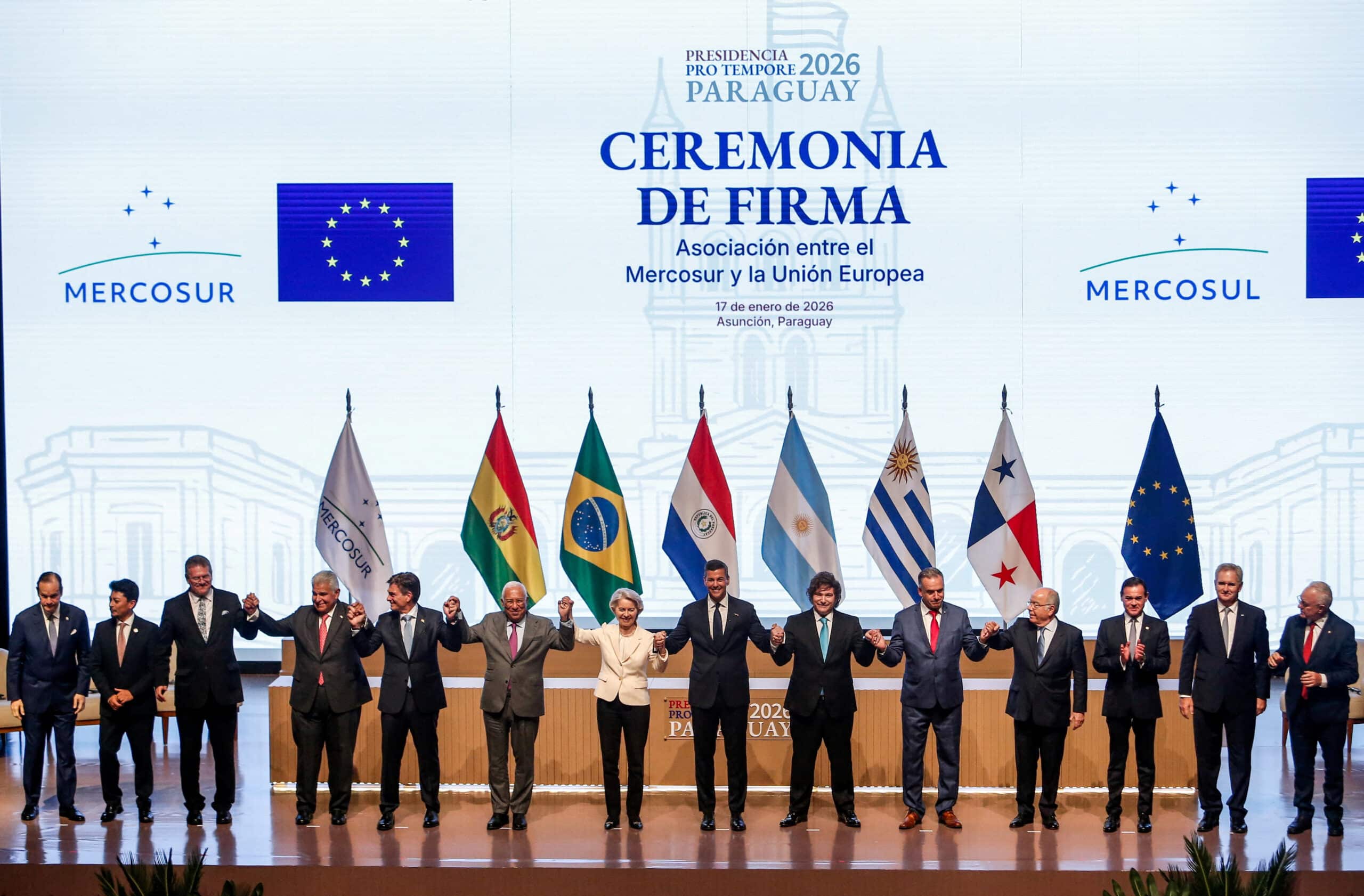
South American and European Union officials have reached a significant milestone by signing a comprehensive trade agreement, marking the culmination of 25 years of negotiations. This landmark deal, which creates one of the world’s largest free trade areas, comes at a time of increasing global trade tensions and tariff threats, particularly from the United States. The agreement aims to foster economic collaboration between the 27-nation EU and the Mercosur bloc, which includes Brazil, Argentina, Uruguay, and Paraguay, while also addressing concerns over protectionism.
Details of the Trade Agreement
The newly signed trade deal between the EU and Mercosur is poised to eliminate tariffs on over 90% of bilateral trade, significantly enhancing economic ties between the two regions. Together, the EU and Mercosur represent approximately 30% of the global GDP and encompass more than 700 million consumers. The agreement is expected to favor European exports, particularly in sectors such as automobiles, wine, and cheese. Conversely, it will facilitate the entry of South American products, including beef, poultry, sugar, rice, honey, and soybeans, into European markets.
Despite the potential benefits, the deal has sparked concerns among European farmers, who fear an influx of cheaper goods produced under lower standards. Protests have erupted in cities like Paris, Brussels, and Warsaw, where farmers have expressed their discontent over the perceived threat to their livelihoods. The agreement still requires approval from the EU Parliament and ratification by each Mercosur nation, with an anticipated implementation by the end of 2026.
Political Reactions and Implications
The signing ceremony in Asuncion, Paraguay, was attended by key political figures, including EU chief Ursula Von der Leyen and Paraguay’s President Santiago Pena. Von der Leyen emphasized the importance of choosing fair trade over tariffs, while Pena hailed the treaty as a clear endorsement of international trade amid rising global tensions. Brazil’s Foreign Minister Mauro Vieira described the agreement as a protective measure against the unpredictability and coercion present in today’s world.
However, not all reactions have been positive. In Argentina, concerns have been raised about potential job losses, particularly in the automotive sector, with estimates suggesting that up to 200,000 jobs could be at risk. The libertarian President Javier Milei has also voiced apprehension regarding the inclusion of quotas and safeguards, arguing that these measures could undermine the agreement’s intended economic benefits.
Future Economic Prospects
The economic forecasts associated with the trade agreement are promising. According to EU estimates, European exports to Mercosur are projected to increase by 39%, while Mercosur’s exports to the EU could rise by 17%. By 2040, the agreement is expected to contribute an additional €77.6 billion to the EU’s GDP and €9.4 billion to Mercosur’s GDP. This potential economic boost highlights the significance of the agreement in enhancing trade relations between the two regions.
To address concerns about the impact of increased imports, the European Commission has proposed a crisis fund and safeguards that would allow for the suspension of preferential tariffs in the event of a damaging surge in imports. These measures aim to provide a safety net for industries that may be adversely affected by the agreement.
Observer Voice is the one stop site for National, International news, Sports, Editor’s Choice, Art/culture contents, Quotes and much more. We also cover historical contents. Historical contents includes World History, Indian History, and what happened today. The website also covers Entertainment across the India and World.

