

Donald Trump Revives Trade Tensions: US Threatens 100% Tariff on China

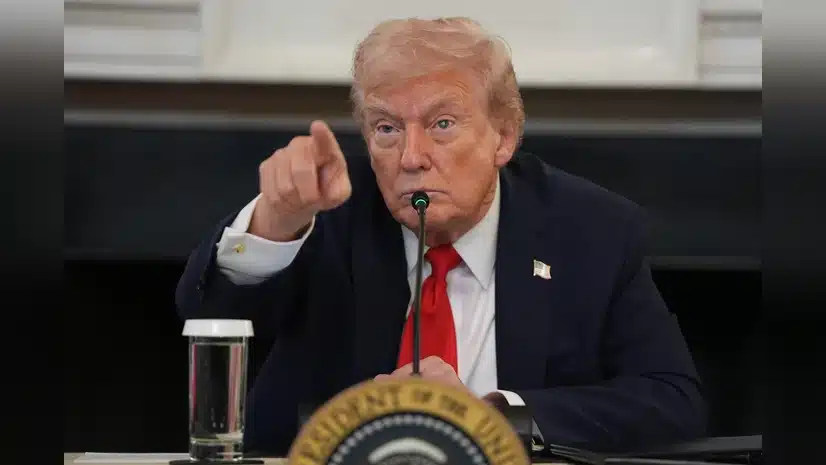
US President Donald Trump has escalated tensions with China by announcing plans for 100% tariffs on all Chinese imports and new export restrictions on critical software. This move comes in response to China’s recent export controls on rare earth minerals, which are vital for various industries, including electronics and defense. The renewed hostilities between the two economic giants have sent shockwaves through global markets, raising concerns about a potential economic confrontation.
Trump’s Tariff Announcement
In a surprising turn of events, President Trump declared that the United States would impose a staggering 100% tariff on all goods imported from China, effective November 1. This announcement coincides with the expiration of existing tariff relief, heightening fears of a renewed trade war. Trump’s decision follows China’s recent implementation of stricter export controls on rare earth elements, which are crucial for manufacturing electronics, electric vehicles, and defense systems. Currently, China holds a dominant position, processing over 90% of the world’s rare earth materials. Trump expressed his discontent with China’s actions, labeling them a “hostile order” and accusing Beijing of attempting to “hold the world captive” through its control over these essential resources.
The announcement has cast doubt on a highly anticipated meeting between Trump and Chinese President Xi Jinping, which was scheduled to occur during the Asia-Pacific Economic Cooperation (APEC) summit in South Korea later this month. While Trump initially suggested that the meeting might not take place, he later clarified that it had not been officially canceled, leaving its status uncertain. The potential for dialogue appears to be diminishing as tensions rise.
China’s Response to US Actions
In retaliation, China has unveiled new export regulations that impose restrictions on several key rare earth elements and refining technologies. These measures are designed to tighten China’s grip on the global supply chain, which has already been strained by previous trade disputes. Additionally, Beijing announced that it would impose extra port fees on US ships starting October 14. This marks a significant escalation in China’s response to earlier US restrictions on semiconductor access and the blacklisting of Chinese firms.
The automotive, technology, and defense sectors are particularly concerned about the implications of these new restrictions, as they heavily rely on Chinese exports for critical components. Past limitations on rare earth materials have already disrupted production lines, with companies like Ford having to halt operations due to supply shortages. China’s latest policy expands its restricted list to include five additional elements and multiple refining technologies, requiring foreign producers using Chinese materials to comply with its regulations, potentially extending China’s regulatory influence beyond its borders.
Market Reactions and Economic Implications
Trump’s tariff threat has triggered a significant sell-off in global financial markets. The S&P 500 Index experienced its largest one-day drop since April, plunging over 2.7%. The tech-heavy Nasdaq also faced declines amid rising fears of escalating US-China tensions. Investors sought refuge in gold, causing prices to spike, while the US dollar weakened against major currencies. Analysts suggest that this latest escalation could signal a pivotal shift in the trade dynamics between Washington and Beijing.
Experts warn that the renewed trade hostilities could have far-reaching consequences for global supply chains, corporate margins, and overall investor sentiment. Anshul Sharma, chief investment officer at Savvy Wealth, noted that the sharp market decline reflects heightened concerns about the potential impact of increased tariffs and the uncertainty surrounding the planned meeting with President Xi. If these tensions persist and begin to affect corporate earnings, the market could face a prolonged adjustment period.
The Future of US-China Relations
The recent developments mark a significant regression in US-China relations, which had seen a temporary lull in hostilities following diplomatic engagements earlier this year. While Beijing has yet to announce specific retaliatory measures against the new US tariffs, state media has criticized Washington’s actions as “reckless” and “provocative.” The Chinese foreign ministry emphasized that dialogue should be based on mutual respect rather than threats.
As the world’s two largest economies find themselves on a collision course once again, analysts caution that the global supply chain—already strained by inflation and geopolitical conflicts—could face further disruptions. The upcoming APEC summit, originally intended to foster discussions on trade, technology, and investment cooperation, now hangs in the balance as both sides navigate this complex and volatile landscape.
Observer Voice is the one stop site for National, International news, Sports, Editor’s Choice, Art/culture contents, Quotes and much more. We also cover historical contents. Historical contents includes World History, Indian History, and what happened today. The website also covers Entertainment across the India and World.
Follow Us on Twitter, Instagram, Facebook, & LinkedIn

