

Climate Change Intensifies Devastating Floods in Pakistan

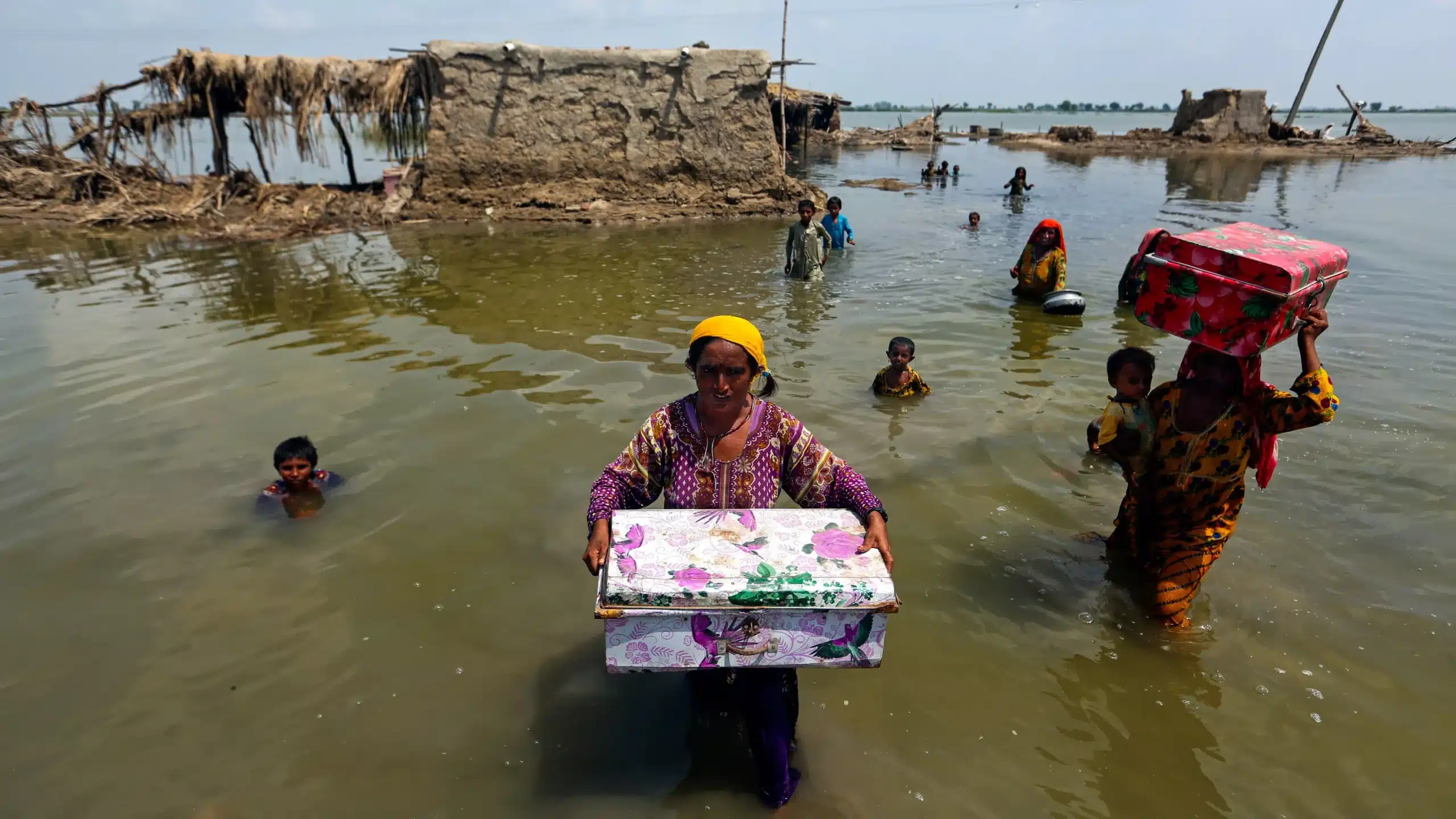
Rescue efforts are underway in Pakistan as the country grapples with devastating floods that have claimed over 1,000 lives and affected nearly 7 million people. The floods, which began in late June, have wreaked havoc across urban and rural areas, including the capital of Punjab, Lahore. Families are mourning the loss of loved ones, and communities are struggling to cope with the aftermath of climate change, which has intensified the severity of these annual monsoon floods.
Tragic Losses Amidst Rising Waters
In the village of Sambrial, the search for one-year-old Zara continues as rescuers and family members wade through knee-deep water. Zara was swept away by flash floods that also claimed the lives of her parents and three siblings. Her grandfather, Arshad, recounted the harrowing moment when the floodwaters surged, urging his family to join him on the roof for safety. Tragically, they were unable to escape in time. This year’s monsoon season has been particularly deadly, with the United Nations reporting that more than 1,000 people have died and 6.9 million have been affected by the floods. Pakistan, despite contributing only 1% of global greenhouse gas emissions, is facing the dire consequences of climate change, which is exacerbating the frequency and intensity of these natural disasters.
The BBC’s investigation into the impact of climate change in Pakistan revealed a stark reality: the poorest communities are suffering the most. Families have lost their homes, livelihoods, and loved ones, and many express a resigned acceptance of the likelihood of facing similar disasters in the future. The floods have not only caused immediate destruction but have also left lasting scars on the affected communities.
Glacial Melting and Flash Floods
The floods began in the northern regions, particularly in Pakistan-administered Gilgit-Baltistan, where global warming is causing glaciers to melt at an alarming rate. With over 7,000 glaciers in the region, the melting ice leads to the formation of glacial lakes that can burst unexpectedly, posing a significant risk to nearby villages. This summer, numerous homes were destroyed, and roads were rendered impassable due to landslides and flash floods triggered by these glacial lake outbursts.
In the northwestern province of Khyber Pakhtunkhwa, villagers faced a different threat from a sudden cloudburst that caused a flash flood, washing away homes and triggering landslides. Local officials reported that the rapid rainfall overwhelmed the area, leaving villagers to dig through debris with their bare hands in search of survivors. The lack of access to heavy machinery due to flooded roads hindered rescue efforts, and the community’s reliance on each other became crucial in these desperate times.
Urban Vulnerabilities and Illegal Construction
As floods continue to devastate communities, the issue of urban planning and illegal construction near rivers has come to the forefront. Millions of people in Pakistan live in flood-prone areas, often due to economic constraints that prevent them from relocating. The River Protection Act, which prohibits construction within 200 feet of rivers, is frequently ignored, leading to increased vulnerability during flood events.
Climate scientist Fahad Saeed highlighted the role of corruption in the failure to enforce these regulations. He pointed to ongoing construction projects in vulnerable areas, emphasizing the need for stricter oversight. Former climate minister Senator Sherry Rehman echoed these concerns, describing the situation as a result of “graft” and negligence by authorities who permit construction in high-risk zones.
The Humanitarian Crisis Deepens
By late August, the floods had submerged thousands of villages in Punjab, impacting the country’s agricultural heartland. The simultaneous flooding of three major rivers—Sutlej, Ravi, and Chenab—triggered one of the largest rescue operations in decades. The disparity in the impact of the floods was evident in Lahore, where wealthier neighborhoods faced significant challenges, while poorer communities struggled to survive.
In the Theme Park neighborhood, residents faced dire conditions as they attempted to salvage belongings from their flooded homes. Many were forced to evacuate to makeshift tents provided by humanitarian organizations. The situation was particularly alarming for pregnant women, who struggled to access clean water and healthcare amid the chaos. The United Nations reported that over 2.7 million people were displaced in Punjab alone, with extensive damage to farmland exacerbating the humanitarian crisis.
As Pakistan confronts the ongoing challenges posed by climate change and flooding, innovative solutions are being explored. Architect Yasmeen Lari is designing climate-resilient homes made from natural materials, aiming to provide communities with sustainable shelter options. However, experts warn that without significant changes in governance and infrastructure, the cycle of destruction will continue, leaving vulnerable populations to face the brunt of future disasters.
Observer Voice is the one stop site for National, International news, Sports, Editor’s Choice, Art/culture contents, Quotes and much more. We also cover historical contents. Historical contents includes World History, Indian History, and what happened today. The website also covers Entertainment across the India and World.

