

James B. Sumner: Enzyme Crystallization Pioneer

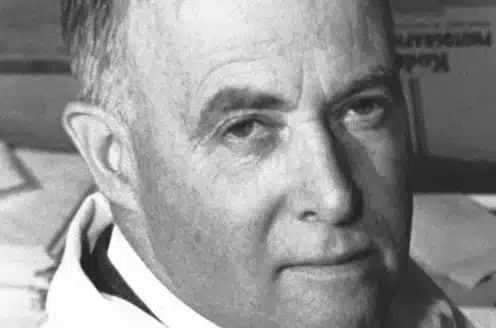
James Batcheller Sumner (November 19, 1887 – August 12, 1955) was an American biochemist. He discovered that enzymes can be crystallized and proved that enzymes are proteins, achievements for which he shared the Nobel Prize in Chemistry in 1946.
Early Life and Education
Sumner was born on November 19, 1887, in Canton, Massachusetts. At age 17, while hunting, he was accidentally shot by a companion and lost his left arm below the elbow. Originally left-handed, he subsequently learned to work with his right hand.
He graduated from Harvard University with a bachelor’s degree in 1910, where he studied alongside prominent chemists including Roger Adams, Farrington Daniels, Frank C. Whitmore, James Bryant Conant, and Charles Loring Jackson. After briefly working in a cotton knitting factory owned by his uncle, he took a teaching position at Mount Allison University in Sackville, New Brunswick, Canada. In 1911–12 he served as a teaching assistant in chemistry at Worcester Polytechnic Institute.
Sumner pursued graduate study in biochemistry at Harvard Medical School, earning his Ph.D. in 1914 under Otto Folin. He then joined Cornell Medical School in Ithaca, New York, as an assistant professor of biochemistry.
Career and Achievements
Beginning in 1917 at Cornell, Sumner undertook research to isolate enzymes in pure form—a goal many colleagues believed impossible. He focused on urease, an enzyme found in jack beans. For nearly a decade his work yielded no results, but in 1926 he achieved a breakthrough by mixing purified urease with acetone and chilling the solution, producing crystallized urease. Chemical tests confirmed that the pure urease was a protein, providing the first experimental proof that enzymes are proteins—a question that had been controversial in the field.
His success led to promotion to full professor at Cornell in 1929. From 1924 onward, his laboratory occupied the second floor of Stocking Hall, Cornell’s new dairy science building. In 1937 he isolated and crystallized a second enzyme, catalase. By then, John Howard Northrop of the Rockefeller Institute had crystallized pepsin and other enzymes using similar methods, making clear that Sumner had developed a general crystallization technique applicable to enzymes broadly and that all enzymes are proteins.
Notable Events and Milestones
In 1937, Sumner received a Guggenheim Fellowship and spent five months in Sweden working with Professor Theodor Svedberg. That same year he was awarded the Scheele Award in Stockholm. In 1946, Sumner, Northrop, and Wendell M. Stanley shared the Nobel Prize in Chemistry for their enzyme crystallization work. In 1947 he became director of Cornell’s enzyme chemistry laboratory.
Awards and Honors
Sumner’s contributions earned him election to the National Academy of Sciences in 1948 and a fellowship in the American Academy of Arts and Sciences in 1949. The 1946 Nobel Prize in Chemistry, shared with Northrop and Stanley, remained his most prestigious recognition.
Additional Resources
Sumner died on August 12, 1955, in Buffalo, New York, at age 67 from cancer. His work fundamentally changed biochemistry by demonstrating that enzymes could be isolated, crystallized, and studied as pure chemical substances. More detailed information about his life and scientific contributions can be found in biographical archives and the full Wikipedia entry.
Observer Voice is the one stop site for National, International news, Sports, Editor’s Choice, Art/culture contents, Quotes and much more. We also cover historical contents. Historical contents includes World History, Indian History, and what happened today. The website also covers Entertainment across the India and World.
Follow Us on Twitter, Instagram, Facebook, & LinkedIn

