

Long Queues at Petrol Stations: The Impact of Ukraine’s Drone Strikes on Russia’s Fuel Supply

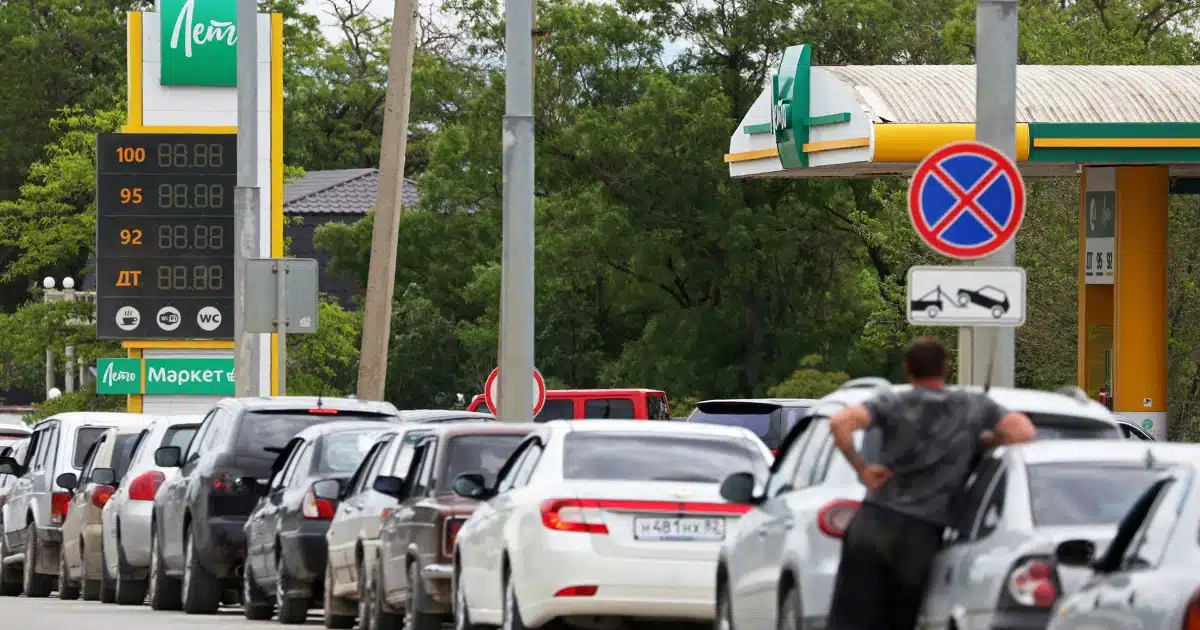
Russia is grappling with a severe fuel shortage, a situation exacerbated by Ukrainian drone strikes that have targeted oil refineries and disrupted supply chains. This crisis has led to fuel rationing, long lines at petrol stations, and rising prices across various regions. President Vladimir Putin has acknowledged the difficulties faced by both motorists and businesses, noting the ongoing queues and challenges in finding specific grades of petrol.
Fuel Rationing and Public Response
In response to the shortages, authorities have implemented fuel rationing in numerous areas, limiting purchases and establishing temporary facilities for motorists waiting in line. By late June, reports indicated that more than half of Russia’s regions were experiencing some form of fuel rationing. The government has also restricted exports of gasoline and aviation fuel, with plans to limit diesel exports as well. Kremlin spokesman Dmitry Peskov mentioned that Russia is exploring fuel imports from other countries to stabilize the market and mitigate panic-buying.
Impact of Ukrainian Strikes
An analysis by The Associated Press revealed that Ukraine has conducted over 50 attacks on Russian energy infrastructure since late March, significantly impacting crude processing. Energy Intelligence analyst Gary Peach reported that Russia’s crude processing in June fell to 3.95 million barrels per day, the lowest level in over two decades. Gasoline production also dropped by 17 percent compared to the previous year. Chris Weafer, CEO of Macro-Advisory Ltd., estimated that about one-third of Russia’s refining capacity is currently offline, coinciding with the critical agricultural harvest season that is increasing fuel demand.
Regional Variations and Future Challenges
The fuel shortages have extended to Siberian regions, where local authorities in Irkutsk have implemented measures to manage long queues and raised public transport fares due to higher fuel costs. Despite the crisis, Putin stated that Russia’s gasoline reserves are only 4 percent lower than a year ago. Weafer noted that while fuel stocks are available, they are unevenly distributed, requiring time to transport supplies to areas in need. Analysts warn that repairs to damaged refineries will be slow due to reliance on imported components, which are difficult to obtain under Western sanctions.
Observer Voice is the one stop site for National, International news, Sports, Editor’s Choice, Art/culture contents, Quotes and much more. We also cover historical contents. Historical contents includes World History, Indian History, and what happened today. The website also covers Entertainment across the India and World.

