

Sailors Face Exhaustion and Stress After Prolonged Blockade in the Strait of Hormuz

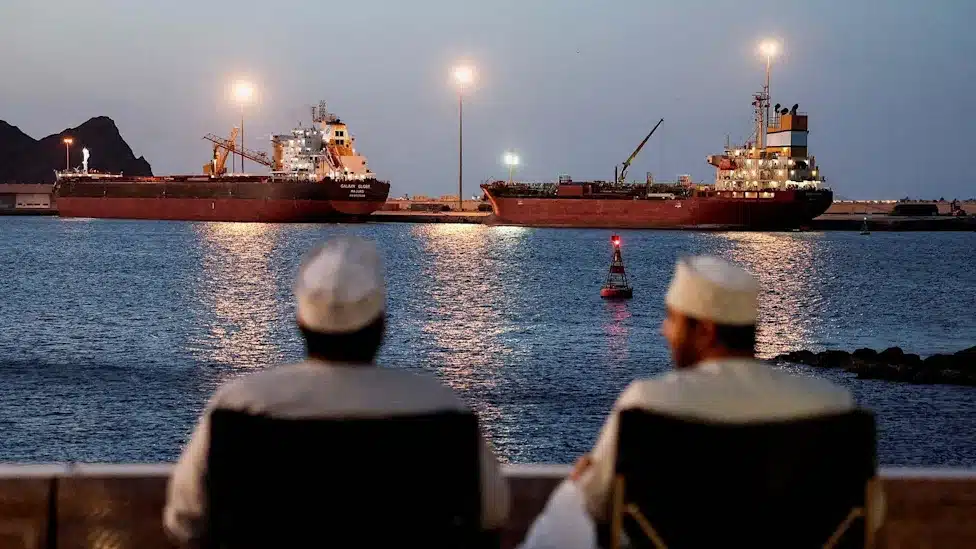
The tranquility of the sea belies the turmoil faced by Captain Hassan Khan and thousands of sailors trapped in the Strait of Hormuz amid ongoing conflict. For over three months, Khan and his crew have been stuck in a war zone, unable to leave their ships due to the US-Israeli war with Iran. While the waters appear calm, the reality is fraught with danger, as missiles fly overhead and mines lurk beneath the surface, creating a precarious situation for those on board.
Life Aboard in a War Zone
Captain Khan, who prefers to remain anonymous, describes the surreal experience of being surrounded by calm waters while anxiety looms within. He notes that while the crew tries to maintain a semblance of normalcy, the atmosphere has shifted from light-hearted banter to tense silence, with the constant buzzing of phones and heightened sensitivity to sounds. “The stress stays in our mind all the time,” Khan explains, highlighting the physical and mental exhaustion that has taken its toll on the crew. The situation is compounded by the fact that approximately 1,600 ships are stuck in the Strait of Hormuz, unable to navigate the critical waterway after Iran closed it to all vessels without permission.
Attempts to Escape
Shafiqul Islam, captain of the Banglar Joyjatra, shares his own struggles to escape the strait. His ship, laden with 37,000 tonnes of fertilizer destined for South Africa, has made two unsuccessful attempts to leave since the conflict began. Despite a brief ceasefire announcement on April 8, attempts to navigate the strait were thwarted by warnings from Iranian authorities. “It is as if we are trapped in a pond,” Islam laments, emphasizing the dire situation as they remain confined with no clear exit. The ongoing military activities in the region serve as a constant reminder of the dangers that lie ahead.
Supply Challenges and Rising Costs
As the situation drags on, securing essential supplies has become increasingly challenging for the stranded sailors. While some ships have moved to different ports or anchored offshore for safety, the delivery of food and water has become unpredictable. The price of water has skyrocketed, with reports of costs rising from $1,500 to $11,000 for 180 tonnes. Rashedul Hasan, chief engineer of the Banglar Joyjatra, notes the significant increase in prices, suggesting that some suppliers may be exploiting the crisis for profit. The approaching summer heat, with temperatures expected to soar above 30°C, adds urgency to the need for adequate supplies.
Future Uncertainty for Sailors
The ongoing conflict has left many sailors questioning their future in the maritime industry. With contracts expiring and crew rotations overdue, shipping companies are facing significant losses. Sailors like Kamil express concerns about the dangers of their profession, fearing that access to international waterways may become weaponized in future conflicts. Masood, a cook on an oil tanker, shares his apprehension about returning to sea, as he looks forward to reuniting with his family in Pakistan. Meanwhile, some ships have managed to navigate the Strait of Hormuz, relying on diplomatic negotiations and substantial fees to secure passage. The Bangladeshi government is working to facilitate the exit of the Banglar Joyjatra, but challenges remain as international tensions persist.
Observer Voice is the one stop site for National, International news, Sports, Editor’s Choice, Art/culture contents, Quotes and much more. We also cover historical contents. Historical contents includes World History, Indian History, and what happened today. The website also covers Entertainment across the India and World.
Follow Us on Twitter, Instagram, Facebook, & LinkedIn

