

Enhancing IT Security in Power over Ethernet (PoE) Network Switches Through OSI Layers 2 and 3

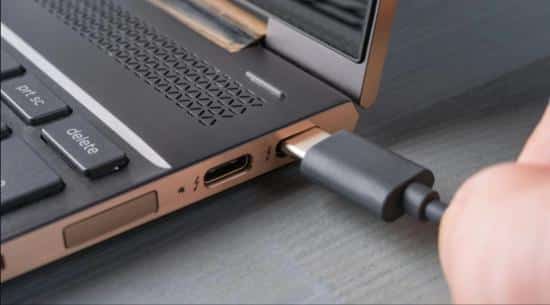
Power over Ethernet (PoE) is fast becoming the gold standard in modern networking. Slashing installation costs and providing centralized management, PoE has revolutionized infrastructure deployment. Businesses are able to install security components where they are needed, regardless of a convenient power source.
Additional benefits include:
- Flexibility
- Scalability
- Safety
- Remote Management
Despite these benefits, the convergence of power and data introduces a unique set of PoE security risks. PoE powered security devices like IP cameras and outdoor access points are sometimes placed in vulnerable, public-facing areas. Attackers can find a way to drain power from an exposed device to bypass physical security systems or launch attacks across a network. Device spoofing, when an unauthorized device mimics a legitimate one for the purpose of gaining network access, presents a significant risk.
To mitigate potential threats, OSI Layer 2 and Layer 3 features built into PoE switches provide robust security mechanisms. These capabilities transform a switch from a simple power strip with data into a sophisticated, secure gatekeeper.
Understanding PoE Switches and the OSI Model
PoE works by injecting DC voltage alongside high-speed data into the twisted wired pairs inside a Cat5e (or higher) Ethernet cable. A PoE switch contains internal circuitry that manages the safe delivery of power to powered devices (PDs), such as VoIP phones and IoT devices. The switch performs an automated “handshake” procedure to ensure the device is PoE-enabled, and to learn how much power it requires to operate. It then continuously monitors the connection.
The Open Systems Interconnection (OSI) Model is a framework used to understand and standardize how different computer systems communicate over a network. It is a universal language for networking, divided into seven layers.
- Layer 7 = Application
- Layer 6 = Presentation
- Layer 5 = Session
- Layer 4 = Transport
- Layer 3 = Network
- Layer 2 = Data Link
- Layer 1 = Physical
On the sending device, data flows from the top, Layer 7, down to the bottom, Layer 1. It travels back up from Layer 1 to Layer 7 on the receiving end. In PoE switches, Layers 2 and 3 are critical entry points for threats.
Layer 2 focuses on the Data Link layer’s role in MAC addressing, frame switching, and error detection. Security at this level concerns port-level control, deciding which physical hardware is allowed to talk to the switch. Layer 3 covers the network layer’s involvement in routing, logical segmentation, and IP addressing. Security here is about logical control, deciding which networks can talk to each other and preventing access to attackers.
Layer 2 Security Enhancements in PoE Switches
The physical port is the most vulnerable point of entry because devices like cameras are often located in public or semi-public areas. Layer 2 security is the first line of defense.
Port Security
Port security is the simplest, yet most effective L2 safety feature. Limiting the number of MAC addresses allowed on a single PoE port prevents MAC flooding attacks. If an unauthorized MAC address is detected by the switch, it automatically shuts down the port, cutting off both data and power.
Dynamic ARP Inspection (DAI)
In PoE environments, devices like cameras are often static. This allows attackers to use ARP Poisoning to redirect traffic to their own devices. With DAI, ARP packets are validated within the network to ensure that the handshake between the IP and MAC address is legitimate, so an attacker can be prevented from intercepting a surveillance feed.
VLAN Segmentation
Virtual Local Area Networks (VLANs) are critical for isolating PoE traffic. Implementing 802.1Q VLANs segments incoming traffic, reduces broadcast domains, and prevents lateral movement by attackers. PVLANs (Private VLANs) further isolate devices within the same VLAN, separating guest devices from critical infrastructure for protection.
Spanning Tree Protocol (STP)
Malicious Bridge Protocol Data Units (BPDUs) allow attackers to disrupt a network by tricking the switch into thinking there is a loop, causing the network to recalculate and drop connections. BPDU Guard and Root Guard prevent STP manipulation that could disrupt PoE device connectivity.
Storm Control and Rate Limiting
Storm Control and Rate Limiting act like pressure valves for network ports. By controlling broadcast, multicast, and unicast storms, attacks are mitigated to ensure stable power delivery to PDs.
Layer 3 Security Enhancements in PoE Switches
Where Layer 2 security protects the port, Layer 3 guards the path. This is especially important for multi-site deployments where PoE traffic must travel across different subnets.
Access Control Lists (ACL)
ACLs are the firewalls of the switch. IP-based filtering restricts traffic between subnets, blocking unauthorized access to PoE devices. Reflexive ACLs are useful in environments with varying PoE device activity.
Routing Protocols Security
In larger PoE deployments, attackers may try to force the switch to send data through a suboptimal or compromised path. Routing protocols secure OSPF (Open Shortest Path First) or RIP (Routing Information Protocol) with authentication to avoid route poisoning and maintain reliable paths for PoE traffic.
DHCP Snooping and IP Source Guard
DHCP Snooping and IP Source Guard are the digital security guard and badge reader of a network. DHCP Snooping acts as a middleman between devices and the DHCP server. It prevents rogue DHCP servers in PoE networks, ensuring only authorized IPs are assigned to powered devices. IP Source Guard (IPSG) is the Layer 3 enforcement that prevents IP Spoofing using a binding table that identifies authorized traffic. It requires DHCP Snooping to be enabled first, so legitimate IP addresses can be detected.
In PoE security, Layers 2 and 3 provide multi-layered defense. Offering a full suite of L2 features, the VX-GPU2626 (V2) from Versa Technology is a Layer 2 managed PoE switch with advanced Layer 3 functionality for better security, performance, and usability.
Safety features include:
- L3 static route
- DHCP server
- IPv6 support
- LLDP (Link Layer Discovery Protocol)
- IP source guard
- ACL
Contact Versa Technology today for more information on PoE security.
Observer Voice is the one stop site for National, International news, Sports, Editor’s Choice, Art/culture contents, Quotes and much more. We also cover historical contents. Historical contents includes World History, Indian History, and what happened today. The website also covers Entertainment across the India and World.

