

US Supreme Court Tariff Decision Creates Uncertainty for Global Trade, Analysts Say

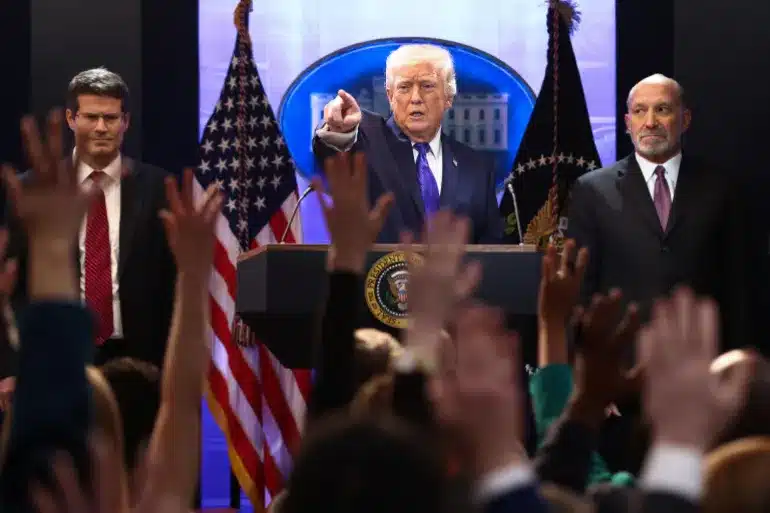
The recent ruling by the US Supreme Court, which invalidated tariffs imposed by former President Donald Trump, has not alleviated the ongoing pressures on the global economy. Analysts caution that this decision may lead to increased uncertainty regarding future trade policies. While the court’s ruling limits the use of tariffs under emergency powers, experts believe that the overall landscape of global trade tensions is unlikely to change significantly.
Impact of the Supreme Court Ruling
The Supreme Court’s decision specifically targets tariffs enacted under the International Emergency Economic Powers Act (IEEPA), which was designed for national emergencies. These tariffs have reportedly generated over $175 billion in revenue. Following the ruling, Trump announced new global tariffs set at 10 percent for an initial period of 150 days. This announcement has raised questions about whether funds collected from the previously annulled tariffs will be refunded. Economists from ING Bank emphasized that the ruling does not signify the end of tariff-driven trade policy, stating, “The scaffolding has come down, but the building remains under construction.”
Future Trade Uncertainties
Despite the court’s decision, uncertainty looms over what new tariffs might be introduced and whether countries that negotiated agreements with the US to mitigate tariff impacts will reconsider those arrangements. Varg Folkman, an analyst at the European Policy Centre, noted that the ruling could usher in a new period of uncertainty in global trade as nations attempt to decipher the future of US tariff policy. The ruling has reduced the trade-weighted average US tariff rate from 15.4 percent to 8.3 percent, which could lead to significant reductions in tariffs for countries like China, Brazil, and India.
Reactions from Global Leaders
Global leaders are now assessing the implications of the Supreme Court’s ruling. Bernd Lange, chair of the European Parliament’s trade committee, stated that lawmakers would evaluate the ruling’s consequences while progressing toward the ratification of the EU-US trade pact. He remarked that the era of “unlimited, arbitrary tariffs” might be coming to an end. Meanwhile, Britain has expressed that it expects its preferential trading arrangement with the United States, which includes a baseline 10 percent tariff, to remain unchanged.
Economic Resilience Amid Tariff Disruptions
Despite the ongoing disruptions caused by tariffs, the global economy has shown resilience. A report from the Federal Reserve Bank of New York indicated that much of the tariff burden has been absorbed by US consumers. The International Monetary Fund has projected a robust global growth rate of 3.3 percent by 2026. Additionally, China reported a record trade surplus of nearly $1.2 trillion in 2025, bolstered by increased exports to markets outside the United States. However, analysts warn that political uncertainties surrounding the EU-US trade agreement could pose challenges, with some experts suggesting that existing bilateral deals may be retained to avoid renewed instability.
Observer Voice is the one stop site for National, International news, Sports, Editor’s Choice, Art/culture contents, Quotes and much more. We also cover historical contents. Historical contents includes World History, Indian History, and what happened today. The website also covers Entertainment across the India and World.
Follow Us on Twitter, Instagram, Facebook, & LinkedIn

