

New Technique Revolutionizes Real-Time Density Measurements of Cold Atoms

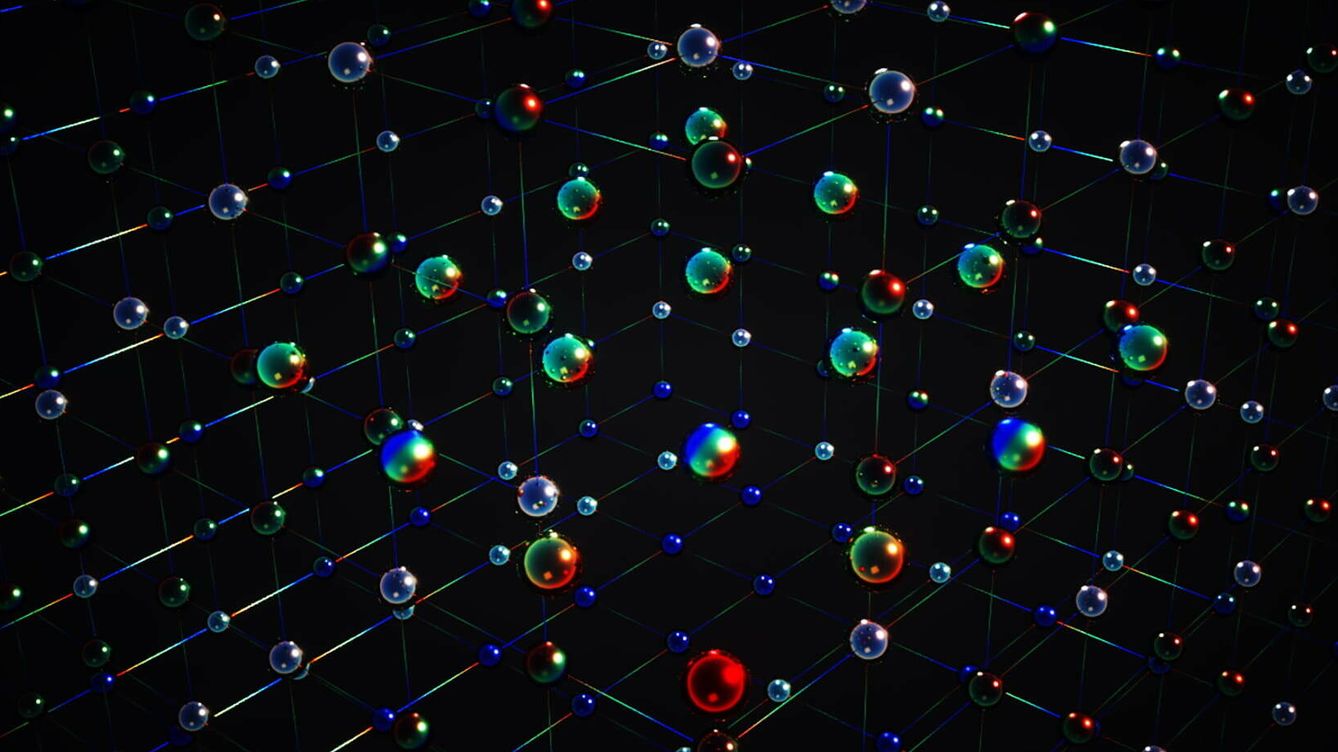
Scientists have introduced a groundbreaking technique that enables real-time measurements of local density among cold atoms without significantly disturbing them. This development holds promise for future applications in quantum computation and quantum sensing, where precise detection of atomic behavior is crucial.
In traditional cold atom experiments, researchers cool atoms to almost absolute zero using laser technology. This process allows for the quantum properties of these atoms to become more apparent, making them valuable resources for various quantum technologies. Current detection methods, such as absorption and fluorescence imaging, have notable drawbacks. Absorption imaging struggles to capture the density of thick atomic clouds, while fluorescence imaging can be slow and alters the atomic state during measurement.
A Breakthrough at Raman Research Institute
Researchers at the Raman Research Institute, part of India’s Department of Science and Technology, have developed a technique known as Raman Driven Spin Noise Spectroscopy (RDSNS). This innovative method overcomes the limitations of previous approaches by detecting the natural fluctuations in atomic spins. By utilizing polarization fluctuations of laser light that passes through the atomic sample, this technique can provide significant insights while minimizing disruption to the atom cloud.
The RDSNS method employs two additional laser beams to drive coherent transitions between adjacent spin states. This leads to a remarkable amplification of measurement signals—up to a million times stronger than previous techniques. RDSNS focuses on a tiny volume of just 0.01 mm³, analyzing a small region of the atomic cloud that contains approximately 10,000 atoms. This allows for a direct measurement of local density rather than just a count of total atoms.
Significant Observations
In experiments involving potassium atoms trapped in a magneto-optical trap, the researchers found that the local density of the atomic cloud stabilized within a second. In contrast, the overall atom count, assessed through fluorescence, required nearly double that time. This difference highlights the advantage of RDSNS, as it captures the localized packing of atoms, providing insights that fluorescence imaging cannot deliver.
“Our technique is non-invasive,” said Bernadette Varsha FJ and Bhagyashri Deepak Bidwai, research assistants at the QuMIX lab. “We can achieve accurate measurements in microseconds with low-power probing.”
The lead author of the study, PhD researcher Sayari, remarked on the power of real-time imaging methods in quantum sensing and computing. The ability to map transient microscopic density fluctuations can enhance theoretical models and understand complex atomic interactions more thoroughly.
Potential Impacts on Quantum Technologies
In validating RDSNS, researchers compared local density profiles against results from inverse Abel transforms applied to fluorescence images, revealing remarkable alignment. Unlike the Abel transform’s dependency on axial symmetry, RDSNS maintains accuracy even for asymmetric or dynamically changing clouds.
This advancement is expected to significantly influence quantum technologies, facilitating fast and accurate non-invasive density measurements. Such capabilities could enhance devices like gravimeters and magnetometers, where understanding atom density is critical. RDSNS opens new avenues for studying various quantum phenomena, including density wave propagation and quantum transport.
“We envision this technique being widely adopted for real-time diagnostics in cold atom experiments, especially for quantum computing and simulations involving cold atoms,” said Prof. Saptarishi Chaudhuri, head of the QuMIX lab. “This positions us at the forefront of quantum research under India’s National Quantum Mission, emphasizing the importance of innovative approaches to measurement.”
Observer Voice is the one stop site for National, International news, Sports, Editor’s Choice, Art/culture contents, Quotes and much more. We also cover historical contents. Historical contents includes World History, Indian History, and what happened today. The website also covers Entertainment across the India and World.

