

Vote Counting Begins in Crucial Indian State as Modi’s Party Faces Major Electoral Challenge

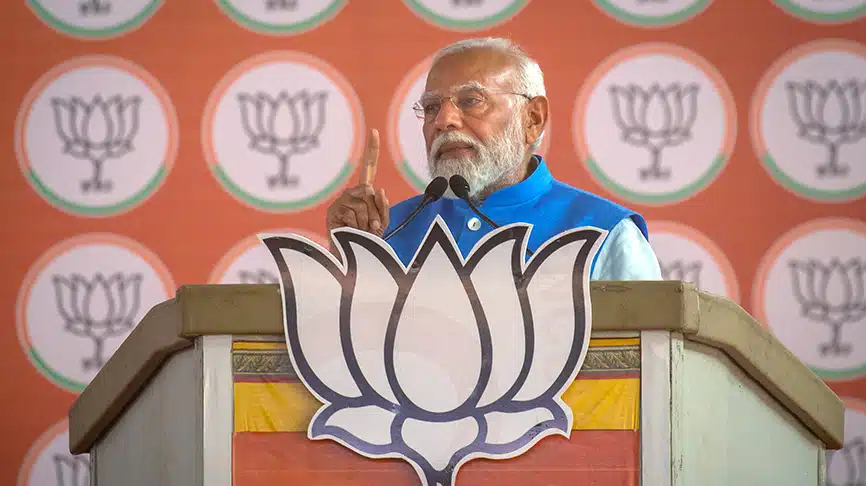
Votes are currently being tallied in Bihar, India, where Prime Minister Narendra Modi‘s Bharatiya Janata Party (BJP) is aiming to secure a return to power alongside its alliance partner. The recent elections, held over two phases on November 6 and 11, saw a remarkable voter turnout of 66.91%, the highest since Bihar’s first elections in 1951. While several exit polls suggest a favorable outcome for the BJP’s coalition, past inaccuracies in such predictions have raised skepticism. The election followed a contentious revision of electoral rolls, which the opposition claims could disenfranchise genuine voters, a charge both the BJP and the Election Commission have denied.
The counting of votes commenced at 08:00 local time (02:30 GMT) on Friday, with initial trends expected to emerge by noon. However, the complete counting process is anticipated to extend into the evening. This election is particularly significant as it precedes several crucial state elections next year in West Bengal, Kerala, and Tamil Nadu, where the BJP has struggled to gain a foothold. Bihar, home to over 74 million voters, is known as one of India’s poorest states, with many residents migrating for employment opportunities. Notably, the BJP has never formed a government independently in Bihar, and the current administration is a coalition between the BJP and the Janata Dal (United).
Political Landscape and Key Players
The recent elections were closely monitored due to the potential final participation of two prominent regional leaders: Nitish Kumar of the JD(U) and Lalu Prasad Yadav of the RJD. Both have significantly influenced Bihar’s political scene for nearly four decades. Kumar, the incumbent chief minister, has been a dominant figure in the state’s governance for most of the last twenty years. Meanwhile, Yadav, who is currently on bail following corruption convictions, has positioned his son Tejashwi as the chief ministerial candidate for the opposition alliance. Their health issues have raised questions about their future roles in state politics.
Voter Demographics and Controversies
This election has seen a notable increase in female voter participation, with women comprising nearly half of the electorate. Bihar recorded its highest female voter turnout at 71.6% this year. Both political alliances have introduced financial assistance schemes aimed at attracting female voters. However, the election was marred by controversy surrounding a recent revision of the voter list by the Election Commission, which resulted in the removal of 4.7 million names. Critics, particularly from the opposition, have accused the commission of targeting specific demographics, including Muslims, to benefit the BJP. Both the BJP and the Election Commission have refuted these allegations, asserting that the revisions were necessary for electoral integrity.
Implications for Future Elections
The outcome of the Bihar elections could have significant implications for the political landscape in India, particularly as it sets the stage for upcoming elections in other states. Analysts are closely observing how the results will influence the BJP’s strategies in regions where it has historically faced challenges. The election results will not only reflect the political sentiments in Bihar but also serve as a barometer for the BJP’s performance in the broader national context. As the counting continues, all eyes remain on Bihar, where the stakes are high for both the ruling coalition and the opposition.
Observer Voice is the one stop site for National, International news, Sports, Editor’s Choice, Art/culture contents, Quotes and much more. We also cover historical contents. Historical contents includes World History, Indian History, and what happened today. The website also covers Entertainment across the India and World.
Follow Us on Twitter, Instagram, Facebook, & LinkedIn

