

Venezuela’s Crude Exports Reach Highest Level Since 2018 as India, US, and Other Buyers Show Increased Interest

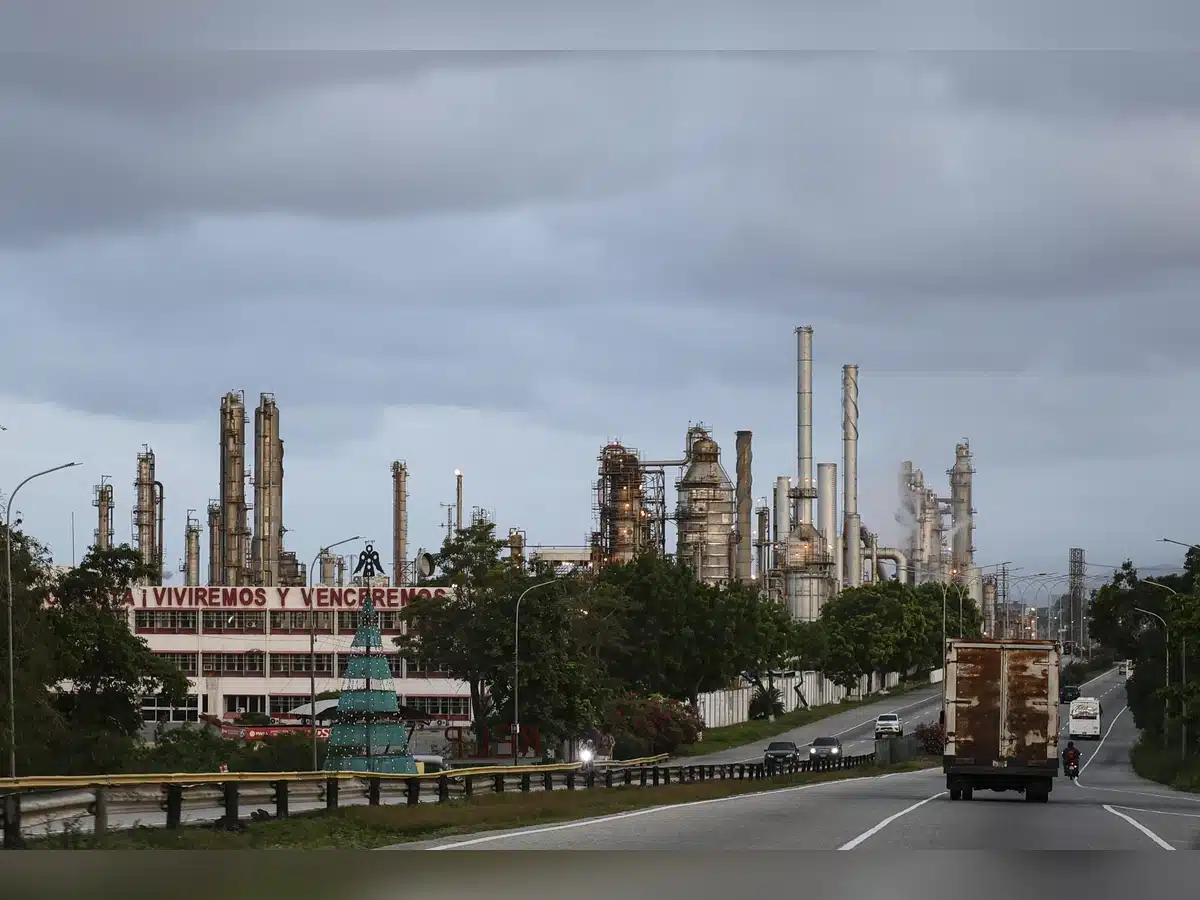
Venezuela’s oil exports are experiencing a significant resurgence, reaching their highest levels in over seven years. In April, the country’s crude exports surged by 14%, totaling 1.23 million barrels per day. This increase is largely attributed to heightened demand from the United States, India, and Europe, as Venezuela continues to rebuild its oil production capabilities following political upheaval. The recent supply agreement between the U.S. and Venezuela’s interim government has further facilitated this growth, allowing for a broader distribution of Venezuelan crude across global markets.
Surge in Crude Exports
In April, Venezuela’s crude oil exports rose sharply, with 66 tankers departing from its ports, compared to 61 in March. The total exports for April reached 1.23 million barrels per day, a notable increase from the previous month’s 1.08 million barrels per day. This marks the highest export level for Venezuela since late 2018, prior to the imposition of stringent U.S. sanctions on its oil sector. The uptick in exports is a result of Venezuela’s efforts to reduce stockpiles and ramp up production, following a period of political instability that saw the U.S. capture of President Nicolas Maduro.
Key Markets and Trading Partners
The United States remains the largest importer of Venezuelan crude, with imports rising to approximately 445,000 barrels per day in April, up from 363,000 barrels per day in March. India has also increased its purchases, receiving 374,000 barrels per day compared to 342,000 barrels per day the previous month. Exports to Europe have similarly grown, reaching around 165,000 barrels per day, up from 144,000 barrels per day. Additionally, 187,000 barrels per day of Venezuelan crude and fuel were sent to Caribbean storage hubs for further distribution. Trading houses played a crucial role in this export surge, handling about 691,000 barrels per day, which constitutes 56% of total shipments.
Impact of U.S. Supply Agreement
The recent supply agreement between the U.S. and Venezuela’s interim government has significantly impacted the country’s oil export landscape. This arrangement has allowed major trading firms, including Vitol and Trafigura, to engage with PDVSA, Venezuela’s state-run oil company, facilitating the lifting of Venezuelan crude for various global markets. Chevron has emerged as a key player, accounting for 308,000 barrels per day of exports in April, an increase from 267,000 barrels per day in March. The agreement has enabled Venezuela to diversify its customer base and expand its export reach, despite ongoing U.S. oversight of the country’s oil revenues.
Future Prospects and Additional Exports
Looking ahead, Venezuela’s oil exports are expected to continue on an upward trajectory. Reliance Industries of India is poised to increase its imports, with at least three supertankers scheduled to load at Venezuelan ports this month. In addition to crude oil, Venezuela exported 360,000 metric tons of oil byproducts and petrochemicals in April, slightly down from 382,000 metric tons in March. Meanwhile, naphtha imports have decreased to 141,000 barrels per day from 155,000 barrels per day in the previous month. As Venezuela navigates its recovery in the oil sector, the evolving dynamics of global demand and trading partnerships will play a crucial role in shaping its economic future.
Observer Voice is the one stop site for National, International news, Sports, Editor’s Choice, Art/culture contents, Quotes and much more. We also cover historical contents. Historical contents includes World History, Indian History, and what happened today. The website also covers Entertainment across the India and World.
Follow Us on Twitter, Instagram, Facebook, & LinkedIn

