

Understanding Trump’s $1 Million Gold Card: Implications for Indian EB-5 Visa Aspirants

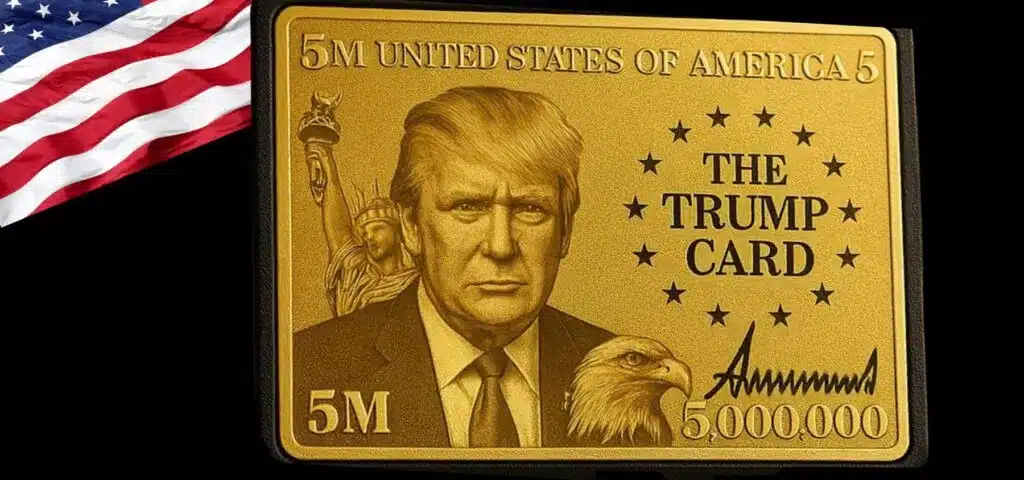
Indians aspiring to achieve the American dream have a new opportunity with the launch of President Donald Trump’s Gold Card program. Announced in the White House’s Roosevelt Room, this initiative aims to provide a pathway to legal status and eventual citizenship for foreign nationals willing to invest significantly in the United States. With a $1 million fee for individuals and $2 million for corporate applicants, the Gold Card is positioned as a more accessible alternative to the traditional Green Card, particularly amid long waiting times and stricter visa regulations.
Understanding the Gold Card Program
The Gold Card program is designed to attract exceptional talent to the United States while generating revenue for the federal government. Initially proposed at a $5 million fee, the cost was later adjusted to $1 million for individual applicants and $2 million for corporate entities. This investment is classified as a donation to the U.S. Department of Commerce, with all proceeds directed to government initiatives. The program offers a permanent residency status akin to a Green Card, with a clear pathway to citizenship.
President Trump emphasized that the Gold Card is “much better” than the Green Card, providing a stronger and more reliable route for skilled individuals. He noted that the program would help companies hire top graduates from prestigious universities, particularly from countries like China, India, and France. Commerce Secretary Howard Lutnick added that a $15,000 assessment fee per applicant would ensure thorough background checks, confirming eligibility for U.S. entry. This initiative aims to address the challenges faced by companies in recruiting international talent due to existing visa restrictions.
Comparing Gold Card and EB-5 Visa
The introduction of the Gold Card comes as many Indians seek alternatives to the lengthy Green Card process. The EB-5 visa program, which allows foreign investors to obtain a Green Card through significant investments, has been a popular choice. This program requires an investment of either $800,000 or $1,050,000, depending on the project location, and mandates the creation or maintenance of at least ten full-time jobs for American workers.
While the EB-5 program has been a viable option for many, the Gold Card presents a different approach. Unlike the EB-5, which functions as an investment opportunity with potential returns, the Gold Card requires a non-refundable payment. Additionally, the Gold Card does not specify job creation requirements, which are a key component of the EB-5 program. Legal experts have noted that the Gold Card could serve as a faster alternative for those looking to secure permanent residency, although it remains to be seen how it will be processed in relation to existing visa categories.
Implications for Indian Applicants
The Gold Card program is particularly appealing to high-net-worth individuals (HNIs) in India who wish to secure their children’s future in the United States. As the second-largest group of EB-5 applicants, Indians have increasingly turned to this route due to the lengthy wait times associated with traditional Green Card applications. The EB-5 program has attracted significant investments, with USCIS reporting that Indian nationals submitted approximately 1,050-1,150 applications following the implementation of the EB-5 Reform and Integrity Act in 2022.
Experts suggest that while the Gold Card may offer quicker processing times, the EB-5 program remains the most cost-effective and accessible pathway for many applicants. The EB-5 program does not require extraordinary ability or evidence of national interest, making it a more straightforward option for families seeking permanent residency. As the landscape of U.S. immigration continues to evolve, wealthy Indian families are likely to weigh the benefits and drawbacks of both programs carefully.
Observer Voice is the one stop site for National, International news, Sports, Editor’s Choice, Art/culture contents, Quotes and much more. We also cover historical contents. Historical contents includes World History, Indian History, and what happened today. The website also covers Entertainment across the India and World.

