

Understanding Force Majeure: The Reasons Gulf Countries Are Invoking It During the Iran vs. US-Israel Conflict

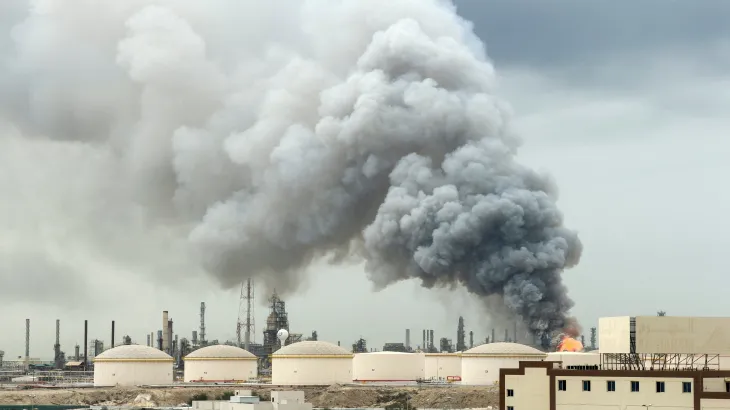
As tensions escalate in the Middle East due to the ongoing conflict between Iran, the United States, and Israel, the legal term “force majeure” has emerged as a critical topic of discussion. Several Gulf nations, including Qatar, Bahrain, and Kuwait, have invoked this clause to suspend oil and gas exports amid attacks and disruptions to shipping routes. This development raises significant concerns for global energy markets, as the implications of these declarations could ripple far beyond the region.
Understanding Force Majeure in the Context of the Conflict
Force majeure is a legal term that allows parties to a contract to suspend or cancel their obligations when extraordinary circumstances arise, making it impossible to fulfill those obligations. The term, which translates from French as “superior force,” encompasses events beyond anyone’s control, such as wars, natural disasters, or significant infrastructure damage. When invoked, force majeure enables companies to halt deliveries or operations without facing penalties for breaching contracts. In the energy sector, this often means stopping shipments of oil, gas, or other commodities when conflicts or logistical challenges render exports unsafe or unfeasible.
The current situation in the Middle East has prompted several Gulf energy producers to declare force majeure due to escalating violence and instability. The ongoing conflict has led to missile strikes, drone attacks, and heightened tensions in the region, particularly affecting critical shipping routes and energy infrastructure. As a result, countries like Qatar, Bahrain, and Kuwait have found it necessary to invoke this legal clause to protect their interests and manage the risks associated with exporting energy during such turbulent times.
The Impact of Gulf Nations’ Declarations
The recent declarations of force majeure by Gulf countries are directly linked to the regional conflict that intensified following US-Israeli strikes on Iran. This escalation has resulted in significant disruptions to shipping routes, particularly through the Strait of Hormuz, a vital passage for global oil and liquefied natural gas (LNG) shipments. Approximately 20% of the world’s oil and LNG flows through this narrow waterway, making any disruption a matter of global economic concern.
The invocation of force majeure by these nations is a response to various threats, including targeted attacks on energy facilities and the unpredictable security landscape that has emerged. The situation has led to a cascading effect, where the halting of shipments by one producer can trigger similar actions by others, creating a ripple effect throughout the global energy market. As Gulf nations grapple with these challenges, the implications for energy supply and pricing are becoming increasingly pronounced.
Qatar’s Gas Production Halt and Its Global Ramifications
One of the most significant developments in this context was Qatar’s decision to halt natural gas production and declare force majeure on contracts with buyers. As the world’s second-largest exporter of LNG, any disruption in Qatar’s supply has immediate repercussions for global energy markets. Following Qatar’s shutdown, several international companies that rely on Qatari gas also declared force majeure on their own deliveries, illustrating how quickly supply chain disruptions can escalate.
This situation has raised alarms among energy analysts, who emphasize the vulnerability of Gulf energy infrastructure amid regional conflicts. Given that the Gulf region supplies a substantial portion of the world’s oil, even temporary disruptions can lead to significant market fluctuations. The interconnectedness of global energy networks means that actions taken in one part of the world can have far-reaching consequences, affecting prices and availability in distant markets.
The Broader Implications for Global Energy Markets
The declarations of force majeure by Gulf nations have triggered a domino effect across global energy markets. When producers halt shipments, buyers scramble to secure alternative sources, leading to collapsed shipping schedules and rising prices due to uncertainty. In the current crisis, oil prices have surged past $100 per barrel, driven by fears of supply shortages and instability in the Gulf region. Energy companies worldwide are now reassessing their contracts, stockpiles, and shipping routes in response to the evolving situation.
The Strait of Hormuz remains a focal point of concern, as any threats to this critical maritime chokepoint can have immediate global repercussions. With a significant share of the world’s energy passing through this route, the ongoing conflict has forced companies to rethink their logistics and export strategies. As the situation develops, energy experts warn that further escalations could lead to additional force majeure declarations, potentially resulting in a substantial supply shock for oil and natural gas markets. This scenario could exacerbate inflation in importing countries and heighten economic uncertainty on a global scale.
Observer Voice is the one stop site for National, International news, Sports, Editor’s Choice, Art/culture contents, Quotes and much more. We also cover historical contents. Historical contents includes World History, Indian History, and what happened today. The website also covers Entertainment across the India and World.
Follow Us on Twitter, Instagram, Facebook, & LinkedIn

