

Temporary Support Recommended for Tariff-Affected Sectors

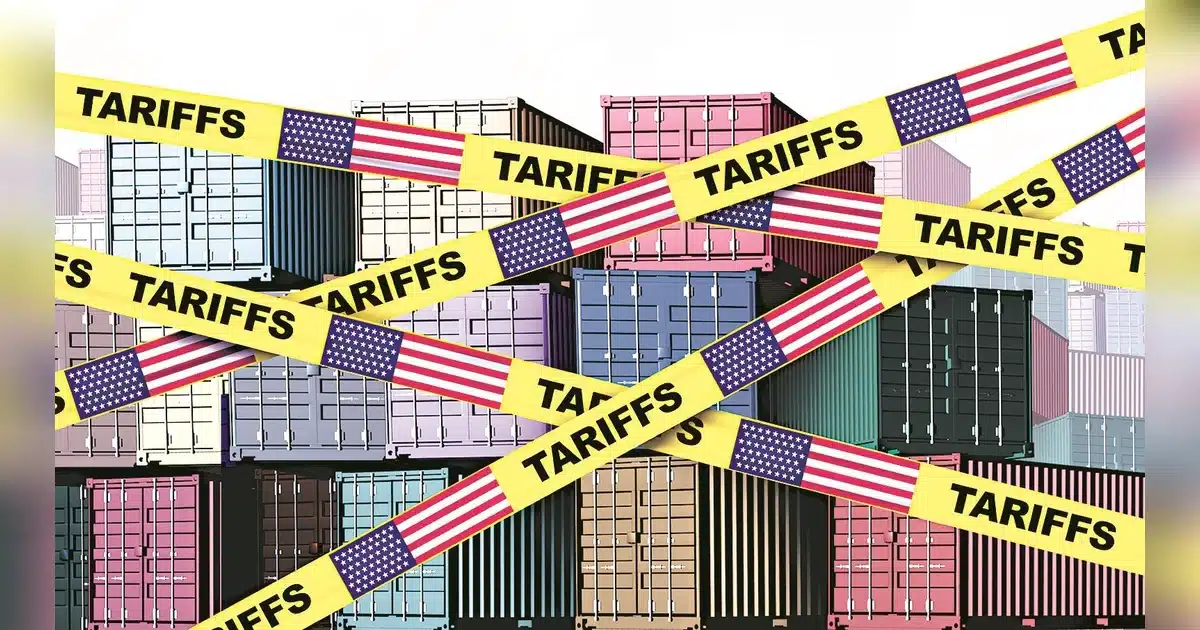
Albert Park, the chief economist at the Asian Development Bank (ADB), recently shared insights on India’s economic outlook amidst rising geopolitical tensions and the impact of tariffs imposed by the Trump administration. During an interview with the Times of India, Park discussed India’s growth prospects, the challenges posed by tariffs, and the importance of internal reforms. Despite facing a 50% tariff rate on certain exports to the U.S., he emphasized that India’s growth forecast remains strong at 6.5%, supported by robust domestic demand and investment.
India’s Economic Growth Amidst Tariff Challenges
Albert Park noted that India’s economic forecast has been slightly downgraded due to the geopolitical landscape, particularly the tariffs introduced by the Trump administration. Currently, India is experiencing one of the highest tariff rates, with 50% applied to some exports. However, Park reassured that the impact on India’s overall growth would be minimal, as the affected exports account for only about 1.2% of the country’s GDP. He highlighted that India’s growth rate of 6.5% is still one of the highest in Asia, reflecting strong domestic demand and significant investments from both public and private sectors. This resilience indicates that India is well-positioned to navigate the current economic challenges.
Navigating Tariff Challenges Through Negotiation and Reform
When discussing how India should respond to the challenges posed by tariffs, Park emphasized the importance of turning crises into opportunities. He suggested that India engage in negotiations with the U.S. to potentially lower tariffs and avoid further escalation. Additionally, he advocated for internal reforms to enhance India’s competitiveness in the global market. Park pointed out that reducing tariffs domestically could improve export competitiveness by allowing access to cheaper imported inputs, which are crucial for enhancing productivity and the quality of goods produced in India. He reiterated the ADB’s support for an open, multilateral trading system, which could benefit India’s economic landscape.
Selective Tariff Reductions and Trade Liberalization
The conversation also touched on the strategy India should adopt regarding tariff reductions. Park recommended a most-favored-nation approach to tariff cuts, which would promote greater trade liberalization. While acknowledging concerns about increased imports from China, he stressed that competition should not be feared. He noted that some goods from China could be beneficial for Indian consumers and producers, particularly as intermediate inputs. Park expressed hope that closer economic ties with China could lead to mutual benefits, including increased market opportunities for Indian goods in China and reciprocal investments.
Government Support for Affected Sectors
As the discussion progressed, Park addressed the demand for government support for sectors impacted by U.S. tariffs. He recognized the rationale for government intervention during sudden economic shocks to prevent firms from exiting the market and to protect employee welfare. However, he cautioned that such support should not be prolonged. Park emphasized the need for temporary assistance, advising that if a firm cannot demonstrate competitiveness or adaptability, extending support would not be beneficial. He highlighted the importance of ensuring efficient use of government resources while supporting industries in transition.
Observer Voice is the one stop site for National, International news, Sports, Editor’s Choice, Art/culture contents, Quotes and much more. We also cover historical contents. Historical contents includes World History, Indian History, and what happened today. The website also covers Entertainment across the India and World.
Follow Us on Twitter, Instagram, Facebook, & LinkedIn

