

Relapsing-Remitting MS vs Progressive MS: What the Difference Means for Treatment

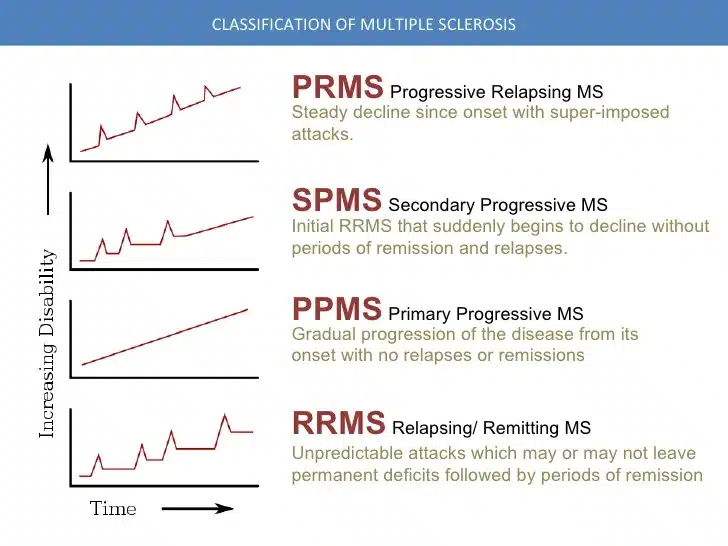
Imagine two people both diagnosed with multiple sclerosis, yet their disease journeys take completely different paths. One experiences unpredictable relapses where symptoms suddenly worsen, followed by recovery periods where symptoms improve. The other wakes up to gradually worsening symptoms day after day with no improvement—constant, relentless progression without reprieve. These represent two fundamentally different types of multiple sclerosis requiring dramatically different treatment approaches. Understanding the distinction between relapsing-remitting MS (RRMS) and progressive MS (primary progressive MS or secondary progressive MS) is crucial for patients, families, and doctors. This distinction determines treatment selection, predicts disease course, guides rehabilitation strategies, and shapes long-term expectations. Multiple sclerosis affects approximately 2.8 million people worldwide. About 85 percent of newly diagnosed MS patients have relapsing-remitting MS—the most common form. About 10 to 15 percent have primary progressive MS from disease onset. Another 50 to 60 percent of RRMS patients eventually transition to secondary progressive MS as years pass. The different types represent different disease mechanisms. RRMS is driven primarily by immune attack causing relapses. Progressive MS involves both immune attack and progressive neurodegeneration—the slow death of nerve cells over time. This difference in disease mechanism explains why treatments effective for RRMS may not work for progressive MS. Understanding these disease types and how they differ helps patients recognize their diagnosis, understand what to expect, and work with doctors to choose optimal treatment. In this comprehensive article, we will explore the defining characteristics of relapsing-remitting and progressive MS, how they progress differently over time, what causes the transition from RRMS to progressive disease, how disease type affects treatment selection, and what modern treatments now offer for both types.
Understanding Multiple Sclerosis Basics: The Foundation for Understanding Types
Before we explore the different MS types, we need to understand what multiple sclerosis fundamentally is and how it damages the nervous system. Multiple sclerosis is a chronic autoimmune inflammatory disease where the body’s immune system mistakenly attacks myelin—the protective coating around nerve fibers in the brain and spinal cord. Myelin functions like insulation around electrical wires, allowing electrical signals to transmit rapidly and accurately along nerve fibers. When myelin is damaged or stripped away through autoimmune attack, electrical signal transmission becomes disrupted. Signals slow down, become distorted, or stop completely. This disruption causes the varied symptoms of MS depending on which nerves are affected. MS is called “multiple sclerosis” because multiple areas of the brain and spinal cord become affected, and scar tissue (sclerosis) develops at sites of inflammation. The disease develops in genetically predisposed individuals when environmental triggers activate the immune system to attack myelin. The fundamental disease process in MS involves two main mechanisms. First, acute inflammatory attacks cause demyelination—stripping away of myelin from nerve fibers. These acute attacks are responsible for relapses in RRMS. Second, progressive neurodegeneration—slow death of nerve cells and axons—occurs from chronic inflammation and the body’s inadequate repair mechanisms. Progressive neurodegeneration causes progressive MS disability. Early in disease, acute inflammatory attacks dominate, causing the relapsing-remitting pattern. As disease progresses, neurodegeneration becomes increasingly important, eventually leading to progressive disease. Understanding this distinction between acute inflammatory attacks and progressive neurodegeneration is key to understanding why different MS types require different treatments. Treatments targeting immune attacks (reducing relapses) work well for RRMS. However, progressive disease driven by neurodegeneration requires different approaches. This is why the same treatments effective for RRMS are often ineffective for progressive MS, and why progressive MS remains more challenging to treat despite modern advances.
Relapsing-Remitting MS: Understanding the Most Common Form
Relapsing-remitting MS (RRMS) is the most common type of MS, affecting approximately 85 percent of newly diagnosed patients. Understanding RRMS characteristics helps patients and doctors recognize this form and select appropriate treatments. RRMS is defined by a characteristic pattern of disease activity alternating between relapses and remissions. A relapse (also called an exacerbation or attack) is a period when new symptoms develop or existing symptoms worsen significantly. Relapses are triggered by acute inflammation in the brain or spinal cord. During a relapse, demyelination—stripping away of myelin—occurs, disrupting nerve signal transmission. Symptoms during relapses can be severe and frightening. Vision loss, weakness, numbness, balance problems, cognitive changes, or fatigue might appear suddenly. Relapses typically develop over hours to days. Most relapses reach peak severity within days to weeks. A remission is a period when symptoms improve or resolve. Remissions occur as inflammation subsides and the body’s repair mechanisms restore myelin or allow nerve signal transmission to bypass damaged areas. Recovery from relapses varies between individuals and between different relapses. Some patients experience complete remission where all relapse symptoms resolve completely. Others experience incomplete remission where some residual symptoms persist. Recovery from relapses typically occurs gradually over weeks to months. Some patients recover within days, while others take months for maximum recovery. The pattern of relapses and remissions is unpredictable. Some patients experience frequent relapses—several per year. Others experience rare relapses—one every few years. Some RRMS patients go years without any relapses. This unpredictability creates psychological stress—patients never know when the next relapse might occur. The disease appears stable for months or years, then suddenly a new relapse strikes without warning. Some patients eventually experience no relapses at all while remaining on treatment, living in stable remission. This unpredictable pattern distinguishes RRMS from progressive MS, where disease worsens in more predictable fashion. However, a crucial reality of RRMS is that although individual relapses might be followed by good recovery, accumulation of incomplete recovery over years eventually causes disability. Each relapse ideally results in complete recovery of function. However, in practice, patients often retain some residual symptoms after each relapse. The accumulation of residual disability from multiple incomplete recoveries eventually causes progressive disability despite the relapsing-remitting pattern. This is why early aggressive treatment reducing relapse frequency is so important—fewer relapses mean less accumulation of permanent disability. Many RRMS patients remain in stable remission for decades with modern disease-modifying treatments. Some patients with RRMS maintain normal function and life expectancy if treatment effectively prevents relapses. However, without treatment or with inadequate treatment, RRMS typically progresses to secondary progressive MS within 10 to 20 years. With modern treatments initiated early, many RRMS patients may never develop progressive disease. The transition from RRMS to progressive disease occurs when the pattern of distinct relapses and remissions gradually changes. Disability worsens progressively without clear relapses. Patients transition from relapse-driven disease to progressive neurodegeneration. This transition is sometimes called “active progressive MS” because relapses and progression occur simultaneously, or “progressive-remitting MS” when relapses continue but disability progresses. The transition to progressive disease typically occurs 10 to 20 years after initial RRMS diagnosis, though timing is highly variable. Some patients transition within a few years. Others maintain RRMS for decades or never transition at all. Early aggressive treatment reducing relapse frequency might delay or prevent transition to progressive disease.
Progressive Multiple Sclerosis: Understanding the Progressive Forms
Progressive multiple sclerosis encompasses two main types—primary progressive MS (PPMS) and secondary progressive MS (SPMS). Both are characterized by progressive worsening of disability without clear relapse-remission patterns. Understanding progressive MS helps patients recognize this form and understand its unique challenges. Primary progressive MS (PPMS) is characterized by progressive disability from disease onset. Unlike RRMS, patients with PPMS never experience the relapse-remission pattern. From the moment symptoms first appear, disability worsens progressively. PPMS affects approximately 10 to 15 percent of MS patients. PPMS typically affects the spinal cord more than the brain, causing progressive paralysis and walking difficulties. Some patients experience progressive cognitive decline or progressive vision loss, but spinal cord involvement predominates in most cases. PPMS tends to have a more aggressive course than RRMS. Disability accumulates faster. Patients reach severe disability sooner. PPMS typically develops later in life than RRMS—usually after age 40, while RRMS typically appears in 20s to 40s. The later onset combined with more aggressive disease means PPMS patients might have less time to adapt before severe disability occurs. PPMS involves more axonal damage—damage to the nerve fibers themselves rather than just myelin damage. This axonal damage is largely permanent and difficult to repair, explaining why PPMS has worse prognosis than RRMS. The disease mechanisms in PPMS differ from RRMS. PPMS involves less prominent inflammatory attacks and more prominent neurodegeneration. Progressive nerve cell death dominates the disease course. This different mechanism explains why standard MS treatments developed for RRMS are often ineffective for PPMS. Recently, newer treatments including ocrelizumab (an anti-B cell therapy) have shown benefit in PPMS, but treatment options remain more limited than for RRMS. Secondary progressive MS (SPMS) develops when RRMS transitions to progressive disease. This transition typically occurs 10 to 20 years after initial RRMS diagnosis. The transition marks a shift in disease mechanisms from primarily relapse-driven to progressive neurodegeneration-driven. In SPMS, disability worsens progressively whether or not relapses occur. Patients transition from the predictable relapse-remission pattern to more consistent progressive worsening. Some patients experience superimposed relapses on top of progressive worsening—they experience progressive disease while also having occasional acute attacks. This “active progressive MS” combines features of both RRMS and progressive disease. Other patients have “inactive progressive MS” with pure progressive worsening without distinct relapses. SPMS has intermediate severity between RRMS and PPMS. It is worse than stable RRMS but often better than aggressive PPMS. However, SPMS still represents a significant disease milestone—the shift from primarily immune-driven to neurodegeneration-driven disease. This transition requires adjustment in treatment approach. Treatments that were effective for RRMS relapses might become less effective. Patients and doctors must reassess and adjust treatment strategy. Early aggressive treatment of RRMS might delay or prevent transition to SPMS. This is another reason why early RRMS treatment is so important—preventing progression to SPMS preserves better long-term function.
Key Differences Between RRMS and Progressive MS
Understanding the key differences between relapsing-remitting and progressive MS is crucial for diagnosis, treatment selection, and setting realistic expectations. Disease pattern is the most obvious difference. RRMS shows distinct relapses followed by remissions. Progressive MS shows continuous worsening without clear relapses. RRMS disability typically improves between relapses. Progressive MS disability worsens continuously. Disease mechanisms differ fundamentally. RRMS is primarily immune-driven—acute inflammatory attacks cause relapses. Progressive MS is driven by both immune attack and progressive neurodegeneration. Progressive MS involves more axonal damage—damage to nerve cells themselves. RRMS involves primarily myelin damage. Axonal damage is largely irreversible, explaining worse prognosis in progressive MS. Age of onset differs. RRMS typically develops in young adults aged 20 to 40 years. Progressive MS, particularly PPMS, typically develops later—often after age 40. PPMS is rare in children and adolescents. RRMS is more common in younger people. Spinal cord involvement differs. RRMS more commonly affects the brain with multiple lesions in various locations. Progressive MS more commonly affects the spinal cord causing progressive paralysis. Spinal cord involvement often correlates with progressive disease. Treatment response differs. RRMS typically responds well to disease-modifying treatments that reduce immune activity. Standard RRMS treatments are often ineffective for progressive MS. Progressive MS requires different treatment approaches. Prognosis differs significantly. RRMS has better prognosis than progressive MS. Many RRMS patients achieve stable disease or long remission periods. Progressive MS patients typically experience continuous disability progression. Life expectancy with well-treated RRMS approaches normal. Progressive MS still reduces life expectancy though modern treatments improve outcomes. Cognitive involvement differs. RRMS can affect cognition through acute brain inflammation. Progressive MS more commonly causes progressive cognitive decline. Cognitive changes in progressive MS are often more severe and progressive. Disability trajectory differs. RRMS disability is unpredictable—improving after relapses then worsening during new relapses. Progressive MS disability shows more consistent worsening over time. Progressive MS disability often reaches severe levels faster. These differences have major implications for treatment selection, as different disease types respond to different medications.
Treatment Differences: Why One Size Does Not Fit All
The fundamental differences between RRMS and progressive MS require different treatment approaches. Understanding why certain treatments work for one type but not the other helps patients understand treatment selection. Disease-modifying treatments (DMTs) for RRMS focus on reducing immune activity to prevent relapses. Interferon beta drugs reduce immune cell activity. Glatiramer acetate redirects immune attack away from myelin. Natalizumab blocks immune cells from entering the brain. These medications are highly effective for RRMS—reducing relapse frequency by 50 to 70 percent. However, these treatments are often ineffective for progressive MS. Why? Because progressive MS is not primarily driven by the type of immune attack these medications target. Progressive MS is driven more by neurodegeneration that these medications do not address. Using RRMS treatments in progressive MS wastes time and resources while disease progression continues. Different treatment approaches are needed for progressive MS. Ocrelizumab, which depletes B lymphocytes, shows benefit in both RRMS and PPMS. FDA approval for PPMS marked a major advance—the first medication showing clear benefit in primary progressive MS. However, ocrelizumab’s benefit in progressive MS is modest compared to its benefit in RRMS. Siponimod shows particular efficacy for secondary progressive MS. This medication affects lymphocyte trafficking differently than standard RRMS treatments. Neuroprotective approaches that protect nerve cells from damage are being studied for progressive MS. These would address the neurodegeneration driving progressive disease rather than just suppressing immune attack. Rehabilitation and symptomatic treatment become increasingly important in progressive MS. While RRMS treatment focuses on preventing relapses, progressive MS treatment includes symptom management, mobility assistance, and cognitive rehabilitation. Physical therapy helps maintain mobility and prevent contractures. Occupational therapy teaches adaptive techniques for daily living. Cognitive rehabilitation helps compensate for cognitive changes. Treating secondary complications becomes increasingly important. Spasticity management, pain control, and bladder management become major treatment components. The shift from relapse prevention to disability management represents a fundamental change in treatment philosophy. In RRMS, preventing relapses is the primary goal. In progressive MS, slowing progression and managing symptoms become the primary goals. This difference requires different doctor-patient conversations. RRMS patients receiving effective treatment might have conversations centered on preventing relapses and maintaining normal function. Progressive MS patients have conversations focused on slowing progression, managing progressive disability, and adapting to increasing functional limitations. Early aggressive RRMS treatment might prevent progression to progressive MS, underscoring the importance of early diagnosis and immediate treatment initiation.
The Transition: From RRMS to Secondary Progressive MS
Understanding the transition from RRMS to SPMS helps patients recognize this significant disease milestone and understand its implications. The transition from RRMS to SPMS occurs gradually in most patients. The pattern of distinct relapses and remissions gradually changes. Relapses become less frequent or less distinct. Disability worsens gradually between relapses rather than fully recovering. The transition can be subtle—some patients do not recognize it is happening until they realize they have not had a clear relapse in years while their disability has worsened significantly. This gradual transition contrasts with sudden disease onset. Factors affecting transition timing are incompletely understood. Disease severity at RRMS onset influences transition timing—patients with more severe initial disease transition sooner. Female sex, particularly being female and young at disease onset, is associated with earlier SPMS transition. Race and ethnicity influence transition—some populations show earlier transitions than others. Treatment history affects transition—early aggressive treatment reducing relapses might delay or prevent transition. This underscores the importance of early treatment. Genetic factors influence transition timing. The same genetic factors affecting disease severity influence transition timing. Understanding these factors helps predict which RRMS patients might be at high risk for early progression. Early aggressive treatment of high-risk RRMS patients might prevent or delay transition to SPMS. The transition requires adjustment in treatment approach. RRMS treatments that were effective might become less effective as progression increases. Newer treatments targeting progressive mechanisms might be more appropriate. Regular reassessment of disease activity and treatment response helps identify when transition is occurring and treatment adjustment is needed. Patients should not simply continue the same treatment indefinitely—periodic reassessment ensures treatment remains appropriate. The transition is important psychologically. Many RRMS patients adapt to relapses and remissions—they learn to recognize prodromal symptoms, seek treatment, recover, and resume normal activities. The transition to progressive MS changes this familiar pattern. Progressive worsening without recovery is psychologically different from unpredictable relapses with recovery. Patients must adapt to permanent increasing disability rather than temporary symptom increases. This psychological shift requires support from mental health professionals, support groups, and family. Understanding the transition helps patients recognize it early and adjust their expectations and strategies accordingly. Accepting progression and adapting to it promotes better psychological adjustment than denying progression and hoping it will reverse.
Brain and Spinal Cord Involvement: Location Matters
The location of MS lesions and inflammation—particularly whether disease primarily affects the brain versus the spinal cord—helps predict disease type and progression. Brain involvement is more common in RRMS. Multiple lesions in the brain characterize typical RRMS. Brain lesions cause varied symptoms depending on location—optic nerve lesions cause vision loss, cerebral cortex lesions cause weakness or sensory loss, cerebellum lesions cause balance problems. Multiple distinct brain lesions at different locations allow patients to experience different relapses affecting different body systems. The multiplicity of potential sites for new lesions contributes to unpredictable relapses in RRMS. Spinal cord involvement is more common in progressive MS. Primary progressive MS often begins with spinal cord inflammation. Spinal cord lesions cause progressive paralysis and progressive walking difficulties. Because the spinal cord is a continuous structure from neck to lower back, lesions affecting it tend to cause more globally progressive symptoms rather than the localized relapses seen with brain lesions. Spinal cord involvement portends worse prognosis than brain involvement because spinal cord damage often causes more severe disability. Spinal cord damage affecting motor neurons causes paralysis. Spinal cord damage affecting sensory pathways causes numbness. Both types of damage are highly disabling. Progressive worsening from spinal cord involvement is harder to treat than relapse-driven brain disease. Understanding whether disease primarily affects brain (suggesting RRMS) or spinal cord (suggesting progressive MS) helps predict disease course and treatment selection. MRI findings showing primarily spinal cord involvement might warrant more aggressive treatment or different treatment selection than findings showing primarily brain involvement.
Disability Progression: Understanding Disease Timelines
Understanding how disability progresses differently in RRMS versus progressive MS helps set realistic expectations. In RRMS, disability accumulation is unpredictable. Patients experience relapses that worsen symptoms acutely. Between relapses, symptoms improve, often but not always completely. The residual disability from incomplete recovery accumulates over years. A patient might have a relapse causing weakness that recovers 90 percent. Recovery is good, but 10 percent residual weakness persists. With multiple relapses over years, these small residual deficits accumulate. The Expanded Disability Status Scale (EDSS), a standardized measure of MS disability, typically worsens slowly in RRMS. Patients reaching EDSS 6 (requiring assistance to walk) typically take 10 to 20 years. Some patients reach EDSS 4 (walking 500 meters with difficulty) after decades. Other patients reach EDSS 6 within a few years. The variation is tremendous. With modern treatments reducing relapses, disability accumulation might be prevented or dramatically slowed. Some RRMS patients treated early remain at EDSS 0 or 1 (minimal or no disability) indefinitely. In progressive MS, disability progression is more relentless. Progressive worsening occurs continuously. The timeline to severe disability is faster than in RRMS. Patients reaching EDSS 6 typically do so within 10 to 15 years for SPMS, but within 5 to 10 years for PPMS. Some PPMS patients reach EDSS 6 within just a few years. Progressive MS disability often reaches severe levels faster than RRMS. This faster progression to severe disability has major life implications. Patients must adapt to increasing disability more rapidly. Career changes might be necessary sooner. Home modifications might become necessary sooner. Disability benefits might be necessary sooner. The accelerated disability timeline in progressive MS emphasizes the importance of early treatment to slow progression. Even if modern treatments cannot prevent progressive MS disability, slowing progression buys time—time to adapt, time to make life adjustments, time to maintain independence longer. Understanding disability timeline helps patients and families plan realistically for the future. RRMS patients can plan on potentially many years of normal function if treatment is effective. Progressive MS patients need to plan for increasing disability sooner. Financial planning, career planning, and home planning differ between RRMS and progressive MS.
Treatment Decisions: Choosing the Right Approach for Your MS Type
Treatment selection depends on MS type because different types respond to different medications. Understanding this helps patients understand why their doctor recommends specific treatments. For newly diagnosed RRMS, early aggressive treatment is recommended. Standard RRMS treatments including interferon beta, glatiramer acetate, natalizumab, or fingolimod are typically offered. The choice between these depends on efficacy, side effect profile, and patient preference. Early aggressive treatment reduces relapse frequency and prevents accumulation of permanent disability. Starting treatment immediately after diagnosis rather than waiting to see if disease is aggressive is now standard. The earlier treatment is started, the better the long-term outcome. For RRMS patients, the goal is reducing relapses to zero if possible. “No evidence of disease activity” (NEDA)—no new relapses, no new brain lesions on MRI, and no worsening disability—is the treatment goal. If the first treatment does not achieve NEDA, switching to a more effective medication is recommended. This escalation approach optimizes outcomes. For transitioning RRMS to SPMS, reassessing treatment is important. Standard RRMS treatments might become less effective. Ocrelizumab or siponimod might be considered. The conversation shifts from “preventing relapses” to “slowing progression.” For primary progressive MS, treatment options are more limited. Ocrelizumab is FDA-approved for PPMS but has more modest benefit than for RRMS. Rehabilitation and symptom management become increasingly important. Newer experimental treatments targeting neurodegeneration are being studied. For secondary progressive MS, if relapses are still occurring, treating relapses remains important. If progression predominates, treatments targeting progression become more appropriate. The transition to progressive disease requires reevaluation of treatment strategy. Treatment decisions should be individualized based on disease characteristics, efficacy of current treatment, and patient preferences. Regular reassessment ensures treatment remains appropriate as disease evolves. Some patients respond excellently to treatments and achieve long-term stability. Others have treatment-resistant disease requiring medication changes. Finding the right treatment sometimes takes time and multiple trials.
Living with RRMS vs Progressive MS: Different Challenges, Different Strategies
Living with RRMS versus progressive MS presents different challenges requiring different coping strategies. Understanding these differences helps patients and families prepare for the journey ahead. Living with RRMS means coping with unpredictability. Never knowing when the next relapse might occur creates psychological stress. Some patients develop anticipatory anxiety—constant worry about when the next relapse will occur. This anxiety can be paralyzing. Learning to accept uncertainty and live fully despite it is important psychological work. Maintaining normalcy between relapses is important. Many RRMS patients maintain full-time employment, raise families, and pursue hobbies with effective treatment preventing frequent relapses. Participating fully in normal activities between relapses helps maintain identity and life satisfaction. Recognizing early relapse symptoms allows prompt treatment seeking, potentially limiting relapse severity. Patients learn their personal “relapse signature”—early symptoms warning that a relapse is beginning. Reporting these symptoms immediately to neurologists allows early treatment. Planning for potential relapses includes arrangements for medical leave, family support, and necessary accommodations. Many RRMS patients find that with effective treatment, their MS remains stable and manageable, allowing near-normal lives. Living with progressive MS means coping with inevitable worsening. Unlike RRMS where relapses are sometimes followed by good recovery, progressive MS offers no respite—disability only worsens. Accepting inevitable progression is psychologically challenging. Many progressive MS patients experience grief over lost function and anticipated future losses. Mental health support is crucial. Adapting gradually to increasing disability becomes a way of life. Assistive devices become necessary sooner than in RRMS. Wheelchairs, walkers, or canes become essential for mobility. Home modifications including ramps, accessible bathrooms, and grab bars become necessary. Accepting these adaptations as tools enabling independence rather than symbols of defeat helps psychological adjustment. Career transitions become necessary sooner. Working full-time might become impossible within years. Disability benefits become necessary. This requires adjustment to changed financial circumstances and loss of work-based identity. Family roles shift. Dependence on family for assistance increases. This role reversal is emotionally challenging. Open communication helps families navigate these changes. Support groups specifically for progressive MS patients provide understanding from others facing similar challenges. Cognitive rehabilitation becomes increasingly important if cognitive changes develop. Strategies to compensate for memory and concentration problems help maintain independence. Pursuing meaningful activities despite disability helps maintain purpose and life satisfaction. Many progressive MS patients find meaning in their journey despite increasing disability. Hope comes from modern treatments slowing progression, from advancement in neurodegeneration research, and from inner strength discovering they never knew they possessed.
Frequently Asked Questions (FAQs)
Q1: Can relapsing-remitting MS turn into progressive MS?
Yes, many RRMS patients eventually transition to secondary progressive MS (SPMS). This transition typically occurs 10 to 20 years after initial RRMS diagnosis, though timing is highly variable. Some patients transition within years. Others maintain RRMS indefinitely. Early aggressive treatment reducing relapse frequency might delay or prevent transition to SPMS. With modern treatments started early, many RRMS patients might never develop progressive disease. Monitoring for transition includes watching for gradual worsening of disability without clear relapses—this suggests transition is occurring and treatment adjustment might be necessary.
Q2: Which type of MS is worse—relapsing-remitting or progressive?
Progressive MS generally has worse prognosis than RRMS. Progressive MS typically progresses to severe disability faster. RRMS disability accumulation is unpredictable—some patients remain stable for decades while others progress quickly. With early aggressive RRMS treatment, many patients achieve excellent outcomes maintaining near-normal function. Progressive MS offers no opportunity for recovery between relapses. Continuous disability worsening is inevitable. Progressive MS disability often reaches severe levels sooner than RRMS. However, modern treatments are improving progressive MS outcomes. Recent approvals of treatments effective for progressive MS (like ocrelizumab for PPMS) offer hope for better long-term outcomes.
Q3: Why are some MS treatments ineffective for progressive MS?
Many standard RRMS treatments are ineffective for progressive MS because RRMS and progressive MS are driven by different disease mechanisms. RRMS is primarily driven by acute inflammatory immune attacks causing relapses. Standard RRMS treatments target these immune attacks. Progressive MS is driven more by progressive neurodegeneration—slow death of nerve cells. Standard RRMS treatments that suppress immune attacks do not address this neurodegeneration. Treatment effective for progressive MS must target neurodegeneration or address the progressive mechanisms driving disease. This explains why different treatments are needed for different MS types.
Q4: How quickly does disability progress in progressive MS?
Progressive MS disability progression varies tremendously. Some progressive MS patients progress slowly—reaching severe disability over many years. Others progress rapidly—becoming severely disabled within a few years. Primary progressive MS typically progresses faster than secondary progressive MS. Patients with spinal cord involvement typically progress faster. Early aggressive treatment might slow progression, though options remain limited compared to RRMS. On average, progressive MS patients reach moderate disability (EDSS 6—needing assistance to walk) within 10 to 15 years for SPMS or 5 to 10 years for PPMS, though individual variation is tremendous.
Q5: Is it possible to prevent transition from RRMS to progressive MS?
Possibly. Early aggressive treatment of RRMS that effectively reduces relapses and prevents accumulation of damage might prevent or delay transition to progressive MS. With modern treatments achieving “no evidence of disease activity” (NEDA), some RRMS patients maintain stable disease indefinitely without transitioning. However, not all RRMS patients remain stable—some transition despite adequate treatment. We cannot yet reliably predict who will transition and who will remain stable. This emphasizes the importance of early diagnosis and aggressive RRMS treatment—even if we cannot guarantee prevention of transition, we can potentially delay it and prevent accumulated damage.
Key Takeaways
Relapsing-remitting MS (RRMS) is characterized by distinct periods of symptom worsening (relapses) followed by improvement (remissions). Progressive MS is characterized by continuous disability worsening without clear relapses. RRMS affects approximately 85 percent of newly diagnosed MS patients. Progressive MS includes primary progressive (10-15 percent) and secondary progressive (develops from RRMS over 10-20 years). Disease mechanisms differ—RRMS is primarily immune-driven; progressive MS involves both immune attack and progressive neurodegeneration. RRMS typically has better prognosis with longer time to severe disability. Progressive MS typically progresses to severe disability faster. Treatment approaches differ—RRMS treatment focuses on preventing relapses; progressive MS treatment focuses on slowing progression and managing symptoms. Standard RRMS treatments are often ineffective for progressive MS. Different MS types require different treatment strategies. Early aggressive RRMS treatment might delay or prevent transition to progressive MS. Understanding MS type helps set realistic expectations and guides treatment selection. Modern treatments have dramatically improved RRMS outcomes—many RRMS patients achieve stability and near-normal function. Progressive MS treatments are advancing—newer medications now offer benefit in progressive forms. Psychological adaptation to disease type is important for quality of life. RRMS patients must cope with unpredictability. Progressive MS patients must accept inevitable progression.
References
- World Health Organization (WHO). “Multiple Sclerosis: Disease Types and Progression.” Retrieved from https://www.who.int/
- National Multiple Sclerosis Society. “Types of MS and Disease Progression.” Retrieved from https://www.nationalmssociety.org/
- Mayo Clinic. “Multiple Sclerosis: Types and Progression.” Retrieved from https://www.mayoclinic.org/
- Cleveland Clinic. “Relapsing-Remitting vs Progressive MS: Key Differences.” Retrieved from https://my.clevelandclinic.org/
- National Institute of Neurological Disorders and Stroke. “MS Types and Progression Information.” Retrieved from https://www.ninds.nih.gov/
- American Academy of Neurology. “MS Classification and Progression Guidelines.” Retrieved from https://www.aan.com/
Related Articles on ObserverVoice.com
Explore more health and science topics on our platform:
- Multiple Sclerosis: Types, Progression, and Latest Treatment Options
- Understanding Autoimmune Diseases: When Your Immune System Attacks Itself
- Neurological Disorders: Understanding Diseases of the Brain and Spinal Cord
- Living with Chronic Illness: Adaptation and Coping Strategies
- Disease Progression: Understanding How Chronic Conditions Develop
- Disability Management: Living with Long-Term Neurological Conditions
Disclaimer
This article adapts publicly available information from WHO’s Multiple Sclerosis Disease Types and Progression page. This content is for informational and educational purposes only and does not constitute medical advice. [ObserverVoice.com] is a news and information platform — not a healthcare provider. If you suspect you have multiple sclerosis or are experiencing symptoms suggesting neurological disease, consult a qualified neurologist for proper evaluation. Early diagnosis and treatment are crucial for preventing permanent disability. Never ignore symptoms suggesting nervous system disease. Always seek guidance from licensed neurologists and healthcare specialists for proper diagnosis, treatment selection, and ongoing management of multiple sclerosis.
Observer Voice is the one stop site for National, International news, Sports, Editor’s Choice, Art/culture contents, Quotes and much more. We also cover historical contents. Historical contents includes World History, Indian History, and what happened today. The website also covers Entertainment across the India and World.

