

Parkinson’s Disease: Early Motor and Non-Motor Symptoms Often Overlooked

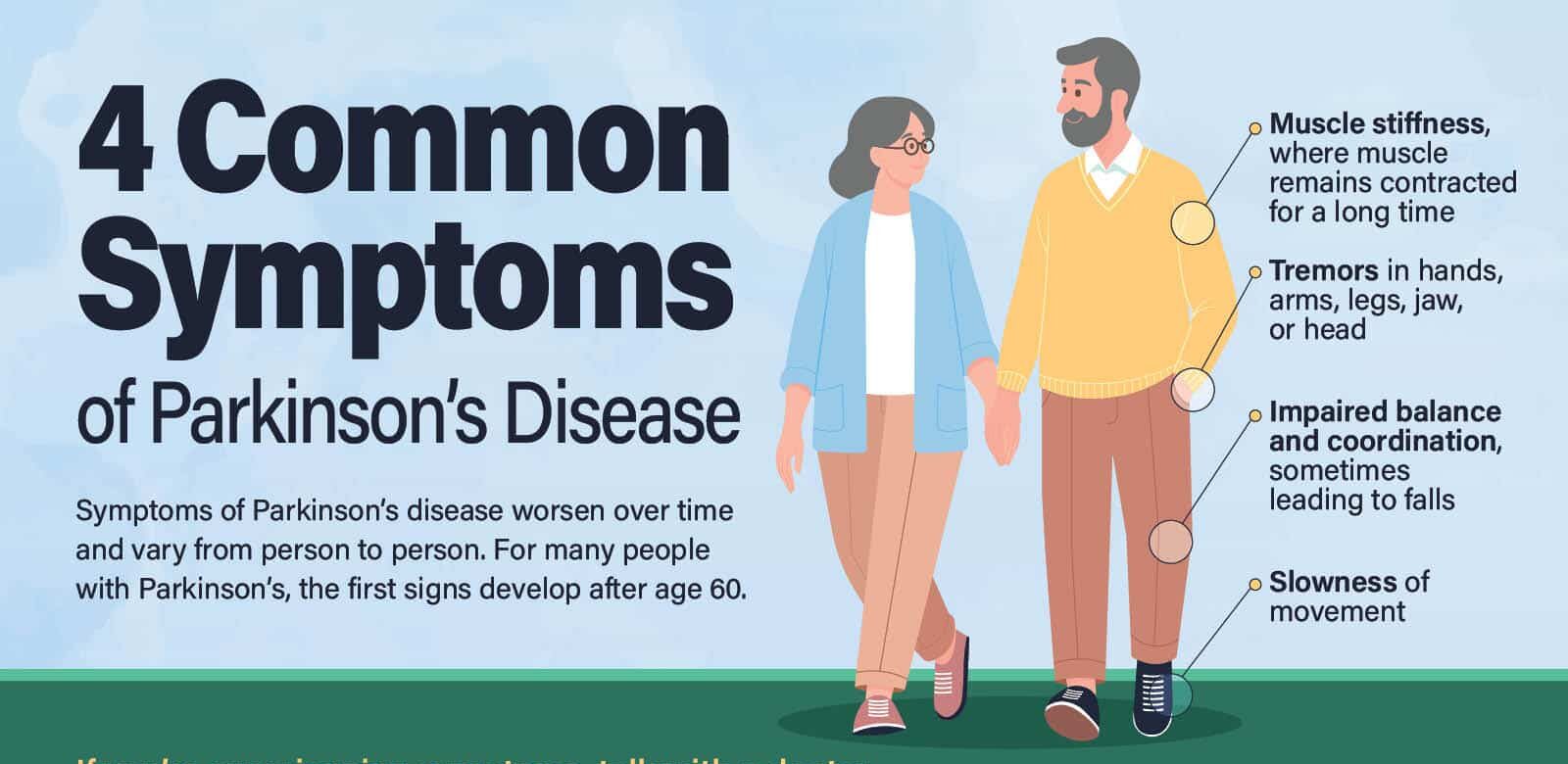
Imagine a subtle tremor in your hand that you first attribute to caffeine. Your handwriting gradually becomes smaller. Your facial expression gradually flattens. Your movements slow. You shuffle when walking. Your balance deteriorates. You fall frequently. Simultaneously, your sense of smell diminishes. Depression develops. You sleep poorly. Your thinking becomes foggy. You constipated chronically. These seemingly unrelated symptoms are the early manifestations of Parkinson’s disease—a progressive neurodegenerative disorder where loss of dopamine-producing neurons in the brain causes both motor dysfunction and widespread non-motor complications. Parkinson’s disease is a chronic progressive neurodegenerative disorder characterized by the gradual loss of dopamine-producing neurons in a brain region called the substantia nigra. As dopamine levels decline, movement control becomes impaired. Dopamine is crucial for coordinating voluntary movement. Without adequate dopamine, movement becomes difficult and abnormal. The hallmark symptoms are tremor, rigidity, bradykinesia (slow movement), and postural instability. However, non-motor symptoms including depression, cognitive changes, autonomic dysfunction, and sensory changes are equally important. The combination of motor and non-motor symptoms causes significant disability. Parkinson’s disease affects approximately 1 to 2 percent of people over age 65. The disease affects men slightly more than women. The disease typically begins in people age 50 to 60, though it can develop in younger people. Juvenile Parkinson’s disease develops before age 40. Young-onset Parkinson’s disease develops before age 50. What makes Parkinson’s disease particularly challenging is the insidious onset. Early symptoms are often subtle and attributed to aging or other causes. Diagnosis is frequently delayed by years. Dopamine replacement therapy can alleviate symptoms. However, dopamine does not stop disease progression. Over time, medication effectiveness decreases and side effects increase. Long-term disability and dependence develop. However, modern treatments including medication, deep brain stimulation, and rehabilitative therapy have significantly improved quality of life. Early recognition and treatment optimize outcomes. In this comprehensive article, we will explore what Parkinson’s disease is, understand dopamine’s role in movement, recognize early motor and non-motor symptoms, learn about disease progression and complications, understand diagnostic methods, explore available treatments, and discover management strategies for maintaining function and quality of life.
Understanding the Brain and Dopamine’s Role in Movement
Before we explore Parkinson’s disease, we need to understand how the brain controls movement and dopamine’s critical role. The brain contains approximately 86 billion neurons. Movement is controlled by a complex system of brain circuits. The motor cortex—the area controlling voluntary movement—is located in the frontal lobe. The motor cortex sends signals through the corticospinal tract to the spinal cord. The spinal cord relays signals to muscles. Muscles contract producing movement. However, the motor cortex does not work alone. The basal ganglia—a group of brain structures deep within the brain—are crucial for movement coordination. The basal ganglia include the substantia nigra, striatum, globus pallidus, and subthalamic nucleus. The basal ganglia regulate the planning and execution of movement. The substantia nigra contains dopamine-producing neurons. These neurons project to the striatum. The dopaminergic neurons release dopamine. Dopamine binds to receptors on striatal neurons. The dopamine stimulation coordinates movement selection and execution. Dopamine is essential for smooth, coordinated movement. Without adequate dopamine, movement becomes impaired. Tremor develops. Rigidity develops. Movement slows. Balance becomes impaired. Additionally, dopamine is involved in motivation, reward, mood, and cognition. Dopamine projects to the prefrontal cortex affecting executive function and mood. Dopamine projects to the limbic system affecting emotion. Dopamine projects to other brain regions affecting memory and attention. Therefore, dopamine deficiency causes non-motor symptoms including depression, cognitive changes, and emotional dysfunction. The basal ganglia circuits maintain homeostasis through a balance of excitation and inhibition. The direct pathway facilitates movement. The indirect pathway inhibits movement. Dopamine stimulates direct pathway and inhibits indirect pathway. This creates a net facilitation of movement. In Parkinson’s disease, dopamine loss tips the balance toward inhibition. The indirect pathway becomes overactive. Movement is excessively inhibited. Movement initiation becomes difficult. Movement execution becomes slow. Tremor develops from abnormal oscillating activity. Rigidity develops from excessive muscle tone. The loss of dopamine in basal ganglia explains the motor symptoms. The loss of dopamine in other brain regions explains non-motor symptoms. Understanding dopamine’s widespread role helps explain why Parkinson’s disease affects so many brain functions.
What is Parkinson’s Disease?
Parkinson’s disease is a progressive neurodegenerative disorder caused by selective loss of dopamine-producing neurons in the substantia nigra. The disease is characterized by pathologic hallmarks visible under microscope. Lewy bodies are the pathologic hallmark. Lewy bodies are abnormal protein aggregates. Alpha-synuclein is the main protein component. Alpha-synuclein normally exists in neurons. In Parkinson’s disease, alpha-synuclein misfolds. The misfolded protein aggregates. Lewy bodies form. Lewy bodies damage and kill neurons. The neuronal death is irreversible. As dopamine neurons die, dopamine levels decline. Progressive dopamine deficiency develops. Symptoms appear when approximately 50 to 60 percent of dopamine neurons are lost. By the time symptoms develop, substantial neuronal loss has already occurred. The disease continues progressive neurodegeneration. Additional neurons die. Dopamine levels continue declining. Symptoms progress and worsen. Why alpha-synuclein misfolds and aggregates in Parkinson’s disease is incompletely understood. Genetic factors influence risk. SNCA gene mutations cause familial Parkinson’s disease. LRRK2, PINK1, PARKIN, and other genes increase susceptibility. However, most Parkinson’s disease is sporadic—not hereditary. Environmental factors contribute. Pesticide exposure increases risk. Herbicide exposure increases risk. Heavy metal exposure increases risk. Head injury increases risk. Viral infections have been suspected. Neuroinflammation might trigger neurodegeneration. Microglia activation releases inflammatory mediators damaging neurons. Mitochondrial dysfunction might contribute. Mitochondrial damage in dopamine neurons might trigger apoptosis—cell death. Oxidative stress might contribute. Free radicals damage neuronal proteins and DNA. The combination of genetic predisposition and environmental factors results in Parkinson’s disease development. Parkinson’s disease is progressive. The neurodegenerative process is irreversible and continuous. Dopamine replacement slows symptoms but does not stop neurodegeneration. The disease progresses at variable rates. Some patients progress slowly. Others progress rapidly. Younger patients often progress more slowly. Older patients often progress more rapidly. The variable progression makes predicting individual outcomes difficult. Parkinson’s disease has motor and non-motor components. Motor symptoms result from basal ganglia dopamine loss. Non-motor symptoms result from dopamine loss in other brain regions and involvement of other neurotransmitter systems.
Recognizing Early Motor Symptoms: Movement Dysfunction
Parkinson’s disease motor symptoms develop gradually. Early symptoms are often subtle. Recognizing them prompts earlier diagnosis. Tremor is the most recognizable symptom. A fine rhythmic tremor develops. Most commonly affects the hands. The tremor is present at rest—the hands shake when not being used. Action tremor—tremor with intentional movement—is less prominent. “Pill-rolling” tremor is characteristic. The thumb and fingers move as if rolling a pill. The tremor is usually unilateral initially—affecting one side. The tremor progresses to bilateral as disease advances. Not all Parkinson’s disease patients have tremor—approximately 30 percent have non-tremor dominant disease. Bradykinesia (slow movement) develops. Movement becomes noticeably slower. Simple tasks take longer. Buttoning shirts becomes difficult. The slow movement results from difficulty initiating movement. Starting to move requires conscious effort. Once movement begins, it progresses slowly. The patient walks slowly. Facial expressions decrease—the face becomes expressionless. Speech slows and becomes quieter. Handwriting becomes smaller—micrographia is characteristic. Rigidity develops. Muscles become stiff. Passive motion—moving a limb by another person—meets resistance. “Lead pipe” rigidity feels like bending a lead pipe. “Cogwheel” rigidity has a ratcheting quality. Rigidity usually affects muscles bilaterally but might be asymmetric initially. Rigidity contributes to postural abnormalities. Stooped posture develops. The patient leans forward. The head droops forward. Postural instability develops. Balance becomes impaired. The patient becomes unsteady. Falling risk increases. Patients turn slowly—the entire body turns as a unit rather than turning the head and shoulders separately. This turning abnormality is characteristic. Freezing of gait develops in advanced disease. The patient suddenly cannot move forward. The feet feel glued to the floor. The freezing lasts seconds to minutes. Freezing usually occurs when walking through doorways or crowded spaces. Falls are a major complication from postural instability and gait freezing. Facial masking develops. The face becomes expressionless. Reduced eye blinking occurs. Reduced spontaneous facial movements. The expressionless appearance can be misinterpreted as depression or lack of interest. Speech changes develop. Speech becomes quieter. Voice volume progressively decreases. Speech rate decreases. Speech becomes monotone. Articulation becomes imprecise. The listener must strain to hear. Swallowing becomes impaired—dysphagia develops. Swallowing difficulty is often unnoticed initially. As disease progresses, swallowing becomes severely impaired. Aspiration risk increases—food or liquids enter the airway. Aspiration pneumonia is a serious complication. Fine motor control deteriorates. Dexterity decreases. Manual tasks become difficult. Handwriting becomes progressively smaller and more illegible. These motor symptoms significantly impact quality of life. Simple daily activities become challenging or impossible.
Recognizing Early Non-Motor Symptoms: The Overlooked Manifestations
Non-motor symptoms are often overlooked or attributed to other causes. These symptoms frequently precede motor symptoms by years. Recognizing non-motor symptoms might allow earlier diagnosis. Loss of smell (anosmia) is very common. The sense of smell diminishes or disappears. Approximately 70 to 90 percent of Parkinson’s disease patients have anosmia. The anosmia often precedes motor symptoms by years. Patients report they cannot smell food, flowers, or other odors. The loss of smell is not detected by patients initially. It is often discovered when spouse notes it. Anosmia can be objectively tested with smell identification tests. Depression develops in many patients. Mood becomes persistently low. Interest in activities decreases. Energy decreases. Sleep disturbances worsen depression. Approximately 30 to 40 percent of Parkinson’s disease patients have depression. The depression is partly from dopamine deficiency. The depression is partly reactive to diagnosis and disability. Depression significantly worsens quality of life. Antidepressants help some patients. Anxiety develops. Generalized anxiety occurs. Panic attacks sometimes develop. Anxiety often accompanies motor symptoms. Cognitive changes develop. Memory becomes impaired. Concentration becomes difficult. Processing speed slows. Decision-making becomes difficult. Mild cognitive impairment develops in approximately 20 to 30 percent of Parkinson’s disease patients. Parkinson’s disease dementia develops in approximately 30 percent of patients. Cognitive changes significantly impact quality of life. Sleep disturbances are extremely common. Insomnia develops. The patient lies awake unable to sleep. Frequent nighttime awakening disrupts sleep. Daytime somnolence develops—the patient is sleepy during the day. Sudden sleep attacks occur—the patient unexpectedly falls asleep. REM sleep behavior disorder develops. The patient acts out dreams—thrashing, punching, or yelling. Dreams are violent or vivid. The bed partner is disturbed or injured. Restless leg syndrome develops. The legs feel uncomfortable requiring movement. The discomfort worsens with rest. Movement provides temporary relief. Autonomic dysfunction develops. Blood pressure regulation becomes impaired. Orthostatic hypotension develops—blood pressure drops upon standing. Dizziness or fainting upon standing. The low blood pressure can cause falls. Sweating regulation becomes impaired. Excessive sweating occurs. Alternately, insufficient sweating causes heat intolerance. Constipation develops. Bowel movements become infrequent. Stool becomes hard. Straining is necessary for defecation. Constipation often precedes motor symptoms. Chronic constipation is very common. Urinary urgency develops. The patient has urgent need to urinate. Nocturia—frequent nighttime urination—disrupts sleep. Incontinence sometimes develops. Sexual dysfunction develops. Erectile dysfunction in men. Decreased sexual interest. Sexual dysfunction results from dopamine deficiency and autonomic dysfunction. Cognitive changes and depression contribute. Pain develops. Musculoskeletal pain from rigidity and abnormal posture. Joint pain. Back pain. Neuropathic pain—burning or tingling. Pain is often attributed to other causes. Sensory changes develop. Numbness or tingling in extremities. Impaired pain sensation. These non-motor symptoms significantly impact quality of life. They are often overlooked in early disease. Recognition of non-motor symptoms allows earlier diagnosis and more comprehensive treatment.
Understanding Disease Progression: From Early to Advanced Stages
Parkinson’s disease progresses over years to decades. Understanding disease progression helps predict future outcomes. Early stage is characterized by mild symptoms. Motor symptoms might be unilateral. Non-motor symptoms might be minimal. The patient is largely independent. Work and daily activities continue. Early stage typically lasts 2 to 4 years. Treatment effectively controls symptoms. Mid-stage disease is characterized by more prominent symptoms. Motor symptoms become bilateral. Symptoms interfere with daily activities. Balance problems develop. The patient is usually still independent but with some assistance. Work might become difficult. Mid-stage typically lasts 5 to 20 years. Treatment becomes more complex. Advanced stage is characterized by severe symptoms. Motor symptoms are profound. Mobility is severely restricted. The patient is dependent on others for care. Cognitive changes are severe. Non-motor symptoms are severe. Advanced stage typically lasts the final years of life. Palliative care becomes increasingly important. The progression varies enormously between patients. Some patients remain relatively stable for decades. Others progress rapidly. Age at onset influences progression. Younger patients often progress more slowly. Older patients often progress more rapidly. Additionally, the dominant symptom type influences progression. Tremor-dominant disease often progresses more slowly. Akinetic-rigid disease often progresses more rapidly. Postural instability and gait difficulty indicate faster progression. Additionally, motor complications develop. Motor fluctuations occur—periods of good symptom control alternating with periods of poor control. “On-off” fluctuations develop—dyskinesia (involuntary movements) develops from dopaminergic medication. Dyskinesia can be as disabling as the Parkinson’s symptoms themselves. Non-motor complications also develop. Dementia develops in advanced disease. Psychosis develops—hallucinations and delusions. Severe autonomic dysfunction causes multiple complications. Falls become increasingly frequent. Aspiration pneumonia becomes increasingly likely. Palliative care becomes necessary in advanced disease. Pain management. Comfort care. End-of-life care.
Diagnosis: Recognizing Parkinson’s Disease
Diagnosing Parkinson’s disease is based on clinical criteria. No definitive blood test or imaging test confirms Parkinson’s disease. Clinical history is crucial. Doctors ask about symptom onset and progression. They ask about tremor, slowness, rigidity, and balance problems. They ask about non-motor symptoms. Family history of Parkinson’s disease. Exposure to pesticides or other environmental factors. Head injury history. Physical examination documents motor findings. Tremor assessment. Rigidity assessment—passive movement resistance. Bradykinesia assessment—timing rapid finger taps or walking speed. Postural stability assessment—pulling the patient backward (pull test). Facial expression assessment. Gait assessment. Speech and voice assessment. The motor examination focuses on cardinal signs: tremor, rigidity, bradykinesia, and postural instability. The UK Parkinson’s Disease Society Brain Bank Criteria are used for diagnosis. Diagnosis requires: parkinsonism (bradykinesia plus at least one of: resting tremor or rigidity) plus at least three of: unilateral onset, progressive course, asymmetry, excellent response to levodopa, or levodopa-induced dyskinesia. MRI brain might be performed. MRI rules out other causes—stroke, tumor, or normal pressure hydrocephalus. MRI typically shows no specific changes in Parkinson’s disease. Functional imaging (PET or SPECT) can assess dopamine loss. Reduced striatal dopamine uptake confirms dopaminergic neuronal loss. However, functional imaging is expensive and not routinely used. Genetic testing is performed in younger patients or familial disease. SNCA, LRRK2, PINK1, PARKIN mutations are tested. Genetic testing helps confirm genetic Parkinson’s disease. EEG is usually normal. It rules out seizures. Lumbar puncture is not routinely performed. CSF analysis in specialized research settings shows reduced dopamine metabolites. Smell testing (olfactory testing) documents anosmia. Smell identification testing (UPSIT or similar) quantifies smell loss. Neuropsychological testing assesses cognitive function. Standardized tests measure memory, attention, executive function. The diagnosis of Parkinson’s disease is clinical—based on motor findings. Early diagnosis allows early treatment. Early treatment of symptoms improves quality of life. Early recognition of non-motor symptoms allows comprehensive treatment.
Treatment: Managing Motor and Non-Motor Symptoms
Parkinson’s disease treatment aims to alleviate symptoms and maintain quality of life. No treatment stops disease progression. Levodopa is the gold-standard dopamine replacement. Levodopa is a dopamine precursor. Levodopa crosses the blood-brain barrier—dopamine itself does not. Levodopa is converted to dopamine in the brain. Carbidopa or benserazide inhibit levodopa conversion in the periphery. This prevents systemic dopamine effects and preserves levodopa for the brain. Levodopa-carbidopa is given orally. Typical doses range from 300 to 1000 mg levodopa daily in divided doses. Levodopa is highly effective alleviating motor symptoms. Tremor decreases. Rigidity decreases. Bradykinesia improves. Walking improves. Handwriting improves. Speech improves. However, levodopa does not stop disease progression. Over time, medication effectiveness decreases. More frequent dosing becomes necessary. Higher doses become necessary. Eventually, motor complications develop. Long-acting dopamine agonists—bromocriptine, pergolide, pramipexole, ropinirole—stimulate dopamine receptors. These medications are less effective than levodopa but prevent motor complications longer. They are often used in younger patients. MAO-B inhibitors—selegiline and rasagiline—reduce dopamine breakdown. These medications have modest symptom-relieving effects. They might slow disease progression slightly. COMT inhibitors—entacapone and tolcapone—reduce levodopa breakdown. These medications extend levodopa duration. Anticholinergic medications reduce tremor particularly in young patients. These medications are now used sparingly due to cognitive side effects. Amantadine reduces dyskinesia in advanced disease. Deep brain stimulation (DBS) is performed in appropriate candidates. Electrodes are surgically implanted in the subthalamic nucleus or globus pallidus. Continuous electrical stimulation suppresses tremor and rigidity. Movement improves. Dyskinesia decreases. DBS allows levodopa dose reduction. DBS is considered when medication no longer controls symptoms adequately. Physical therapy helps maintain function. Walking programs. Stretching and flexibility. Balance training. Occupational therapy helps with daily activities. Speech therapy helps with voice and swallowing. Psychiatric medications help depression and anxiety. Antidepressants for depression. Anti-anxiety medications for anxiety. Cognitive therapy helps with mood. Sleep medications help insomnia. Behavioral modifications help sleep. Constipation management includes increased fiber, hydration, stool softeners, and laxatives if needed. Autonomic dysfunction management includes compression stockings, increased fluid intake, and medication adjustment.
Living with Parkinson’s Disease: Managing Progressive Disability
Living with Parkinson’s disease requires medication adherence, symptom management, and adaptation to progressive disability. Taking levodopa exactly as prescribed is essential. Levodopa must be taken on schedule. Food interferes with absorption. Levodopa should be taken 30 to 60 minutes before meals or 2 hours after. Consistent timing optimizes medication effectiveness. Regular medication review ensures optimal dosing. As disease progresses, medication needs change. Dose adjustments optimize control. Additional medications might be added. Regular neurology follow-up monitors disease progression. Neurological examination assesses motor and cognitive function. Medication side effects are monitored. Complications are assessed. Early intervention prevents severe complications. Physical activity is crucial. Exercise helps maintain strength, flexibility, and balance. Walking programs help maintain gait. Stretching maintains flexibility. Balance training prevents falls. Resistance training maintains strength. Cognitive activities help maintain mental function. Reading. Puzzles. Learning new skills. Social engagement helps maintain mood and cognitive function. Fall prevention is important. Home modifications prevent falls. Removing trip hazards. Grab bars in bathrooms. Good lighting. Appropriate footwear. Physical therapy improves balance. Nutrition supports brain health. Adequate protein intake. Adequate vitamins and minerals. Antioxidant-rich foods might help. Hydration is important. Sleep hygiene improves sleep quality. Regular bedtime and wake time. Avoiding caffeine in afternoon. Comfortable sleeping environment. Mental health support helps cope with disease. Counseling addresses psychological effects of progressive disease. Antidepressants help depression. Support groups provide understanding from others. Family support is crucial. Educating loved ones about disease. Support through progression. Caregiving becomes necessary in advanced disease. Work considerations. Many patients work initially. As disease progresses, work becomes difficult. Some patients benefit from flexible work arrangements. Disability becomes necessary as disease advances. Disability benefits help. Financial planning accounts for long-term care costs. Advanced care planning. Living will. Healthcare proxy designation. Discussing preferences for end-of-life care. Palliative care. As disease progresses, palliation becomes increasingly important. Pain management. Comfort care. Support for family.
Frequently Asked Questions (FAQs)
Q1: Is Parkinson’s disease hereditary?
Parkinson’s disease has genetic and non-genetic forms. Approximately 10 to 15 percent of Parkinson’s disease patients have a family history of the disease. Specific gene mutations (SNCA, LRRK2, PINK1, PARKIN) cause hereditary Parkinson’s disease. However, most Parkinson’s disease is sporadic—genetic mutations are present but not inherited. Environmental factors contribute to sporadic disease. Family members of Parkinson’s disease patients have increased risk but are not guaranteed to develop the disease.
Q2: Can Parkinson’s disease be cured?
Parkinson’s disease cannot be cured because the neurodegeneration is irreversible. Current medications alleviate symptoms but do not stop dopamine neuron loss. Research into disease-modifying therapies continues but no proven treatments stop progression exist yet. Deep brain stimulation provides symptom relief but does not cure disease. With symptomatic treatment, many patients maintain good quality of life for decades.
Q3: Why is early diagnosis important in Parkinson’s disease?
Early diagnosis allows early treatment of symptoms improving quality of life. Early recognition of non-motor symptoms allows comprehensive treatment of depression, sleep problems, and cognitive changes. Early physical therapy and exercise might slow functional decline. Some research suggests early treatment might slow disease progression. Early diagnosis also allows genetic testing and family education. Early diagnosis provides prognostic information helping with planning.
Q4: Do all Parkinson’s disease patients develop dementia?
No, not all Parkinson’s disease patients develop dementia. Approximately 30 percent develop Parkinson’s disease dementia. Approximately 70 percent maintain normal or near-normal cognition. Cognitive changes that develop include slowed processing and impaired executive function but not full dementia. Age at onset, disease duration, and dominant symptom type influence dementia risk. Younger patients and tremor-dominant disease have lower dementia risk.
Q5: What is the life expectancy for someone with Parkinson’s disease?
With modern treatment, life expectancy is nearly normal. Parkinson’s disease is not typically fatal. However, complications including falls, aspiration pneumonia, and swallowing difficulties can be serious. Advanced disease and dementia contribute to mortality. Most Parkinson’s disease patients live 15 to 25 years or more after diagnosis. Quality of life depends on disease severity and treatment effectiveness.
Key Takeaways
Parkinson’s disease is a progressive neurodegenerative disorder from dopamine neuron loss in the substantia nigra. The disease causes motor symptoms including tremor, rigidity, bradykinesia, and postural instability. Non-motor symptoms including loss of smell, depression, cognitive changes, and autonomic dysfunction are equally important. Non-motor symptoms frequently precede motor symptoms by years. Early recognition of non-motor symptoms allows earlier diagnosis. Lewy bodies containing misfolded alpha-synuclein are the pathologic hallmark. Genetic and environmental factors contribute to disease development. Approximately 50 to 60 percent of dopamine neurons are lost before symptoms appear. Progression is variable—some patients progress slowly, others rapidly. Diagnosis is clinical based on motor examination. Levodopa is the gold-standard treatment. Other dopaminergic medications help symptom management. Deep brain stimulation helps advanced disease. No treatment stops disease progression. Quality of life depends on symptom management and adaptation. Early diagnosis and comprehensive treatment optimize outcomes. Most patients achieve good quality of life despite progressive disease.
References
- World Health Organization (WHO). “Parkinson’s Disease and Neurodegeneration.” Retrieved from https://www.who.int/
- American Parkinson Disease Association. “Parkinson’s Disease: Clinical Guidelines.” Retrieved from https://www.apdaparkinson.org/
- Mayo Clinic. “Parkinson’s Disease: Causes and Treatment.” Retrieved from https://www.mayoclinic.org/
- Cleveland Clinic. “Parkinson’s Disease: Complete Information.” Retrieved from https://my.clevelandclinic.org/
- National Institute of Neurological Disorders and Stroke. “Parkinson’s Disease.” Retrieved from https://www.ninds.nih.gov/
- Michael J. Fox Foundation. “Parkinson’s Disease Patient Resources.” Retrieved from https://www.michaeljfox.org/
Related Articles on ObserverVoice.com
Explore more health and science topics on our platform:
- Understanding Neurodegenerative Diseases: Progressive Brain Damage
- The Brain: Structure, Function, and Neurological Health
- Movement Disorders: Understanding Motor Dysfunction
- Depression and Anxiety: Understanding Mood Disorders
- Cognitive Changes: Understanding Memory and Dementia
- Living with Chronic Illness: Adaptation and Support Strategies
Disclaimer
This article adapts publicly available information from WHO sources. This content is for informational and educational purposes only and does not constitute medical advice. [ObserverVoice.com] is a news and information platform — not a healthcare provider. If you suspect you have Parkinson’s disease, experiencing tremor, slowness, balance problems, or loss of smell, consult a qualified neurologist for proper evaluation. Early diagnosis allows optimal symptom management and treatment. Always seek guidance from licensed healthcare specialists for diagnosis and treatment.
Observer Voice is the one stop site for National, International news, Sports, Editor’s Choice, Art/culture contents, Quotes and much more. We also cover historical contents. Historical contents includes World History, Indian History, and what happened today. The website also covers Entertainment across the India and World.
Follow Us on Twitter, Instagram, Facebook, & LinkedIn

